How Does an ATM Work? The Cash Machine Process, Step by Step
The ATM process step by step: chip, PIN, the LINK network and your bank's decision, what's inside a cash machine, UK fees, safety tips and how it was invented in Enfield.
 9 min read
Comments: 0Views: 2
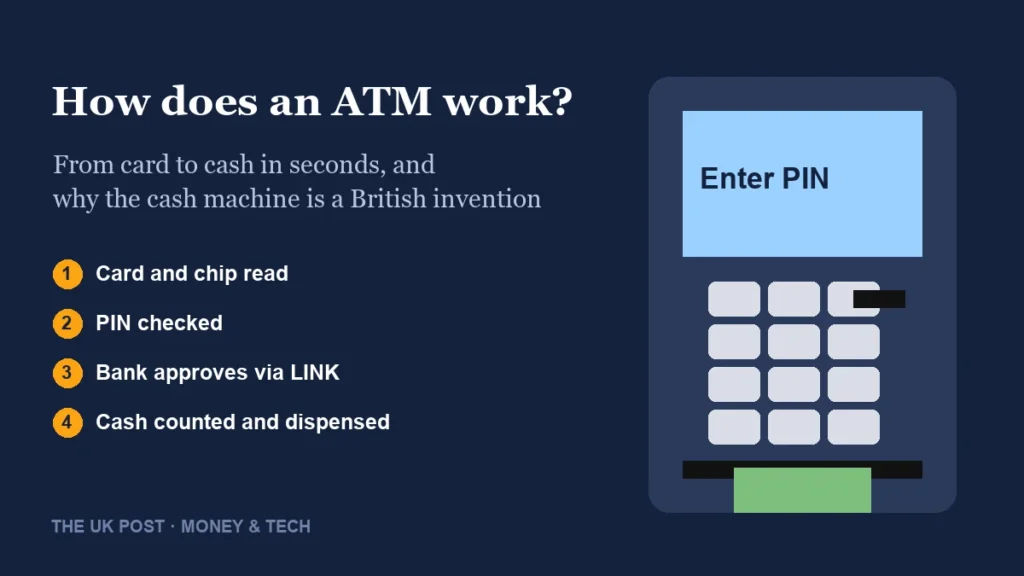
Short answer: when you use a cash machine (ATM), it reads your card’s chip, checks your PIN, and sends an encrypted request through the LINK network to your bank, which checks your balance and approves or declines it, usually within a few seconds. If approved, the machine counts and checks the notes, dispenses them, and your bank deducts the money. Almost every UK cash machine is connected to LINK, and around 95% of withdrawals by UK cardholders are free. The cash machine is also a British invention: the world’s first was unveiled at Barclays in Enfield, north London, on 27 June 1967.
The ATM Process, Step by Step
A cash withdrawal in six steps
- Card in (or tap): you insert your card, or tap it on newer contactless-enabled machines. The ATM reads the EMV chip, which creates a one-time code for each transaction, making it far harder to clone than the old magnetic stripe.
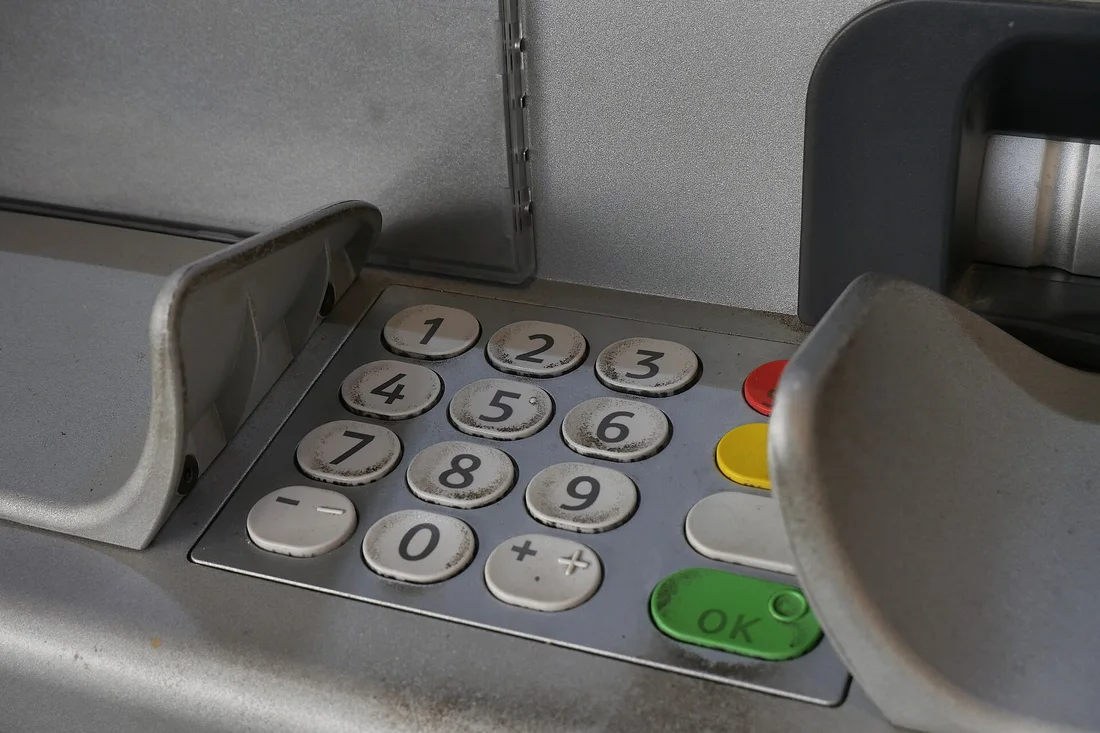
- PIN entry: you type your PIN on an encrypting keypad. The PIN is scrambled inside the keypad itself, so it never travels in plain text. With chip cards, the PIN is usually checked by the card or your bank, depending on the transaction.
- Choose the service: cash, balance, mini statement, PIN change or mobile top-up.
- Request sent: the ATM sends an encrypted authorisation request to the machine’s operator, which passes it through the LINK switch (if the machine belongs to a different bank or operator) to your card issuer.
- Bank decision: your bank checks that the card is valid and not reported lost, the PIN is right, you have enough money, and you are within your daily withdrawal limit. Fraud systems check whether the request looks unusual.
- Approval: an approval message comes back the same way, usually in a few seconds.
- Cash dispensed: the machine’s dispenser picks notes from its cassettes, uses sensors to check it has not picked two stuck together, presents the cash and, if you want one, prints a receipt.
- Settlement: the money comes out of your account, and banks settle between themselves later. If your card’s bank does not own the machine, it pays the operator a small fee, called interchange, through LINK.
If you do not take your cash within a short time, the machine usually retracts it, and the withdrawal should be reversed. Contact your bank if it is not.
What Is Inside a Cash Machine?
| Part | What it does |
|---|---|
| Card reader | Reads the chip (and stripe as a fallback); contactless reader on newer machines |
| Encrypting PIN pad | Scrambles your PIN the moment you type it |
| Screen and buttons | The menus you use; many have audio sockets for people with sight loss |
| Computer | Runs the ATM software and handles secure communication with the network |
| Cash dispenser and cassettes | Stores notes by value and counts them out; sensors check thickness and count |
| Safe | Heavy steel enclosure protecting the cash, often with dye or ink systems that stain notes if attacked |
| Receipt printer | Prints receipts and balances |
| Cameras and sensors | Security monitoring and anti-tamper detection |
A British Invention
- 1966James Goodfellow patents the PIN-and-card idea.
- 27 Jun 1967First cash machine opens at Barclays, Enfield; Reg Varney makes the first withdrawal.
- 1970sPlastic cards with magnetic stripes replace vouchers.
- 1986LINK network launches, letting cards work at other banks’ machines.
- 2000sChip and PIN arrives in the UK.
- 2020sContactless-enabled machines; free ATMs decline.
- Sep 2024FCA access-to-cash rules come into force.
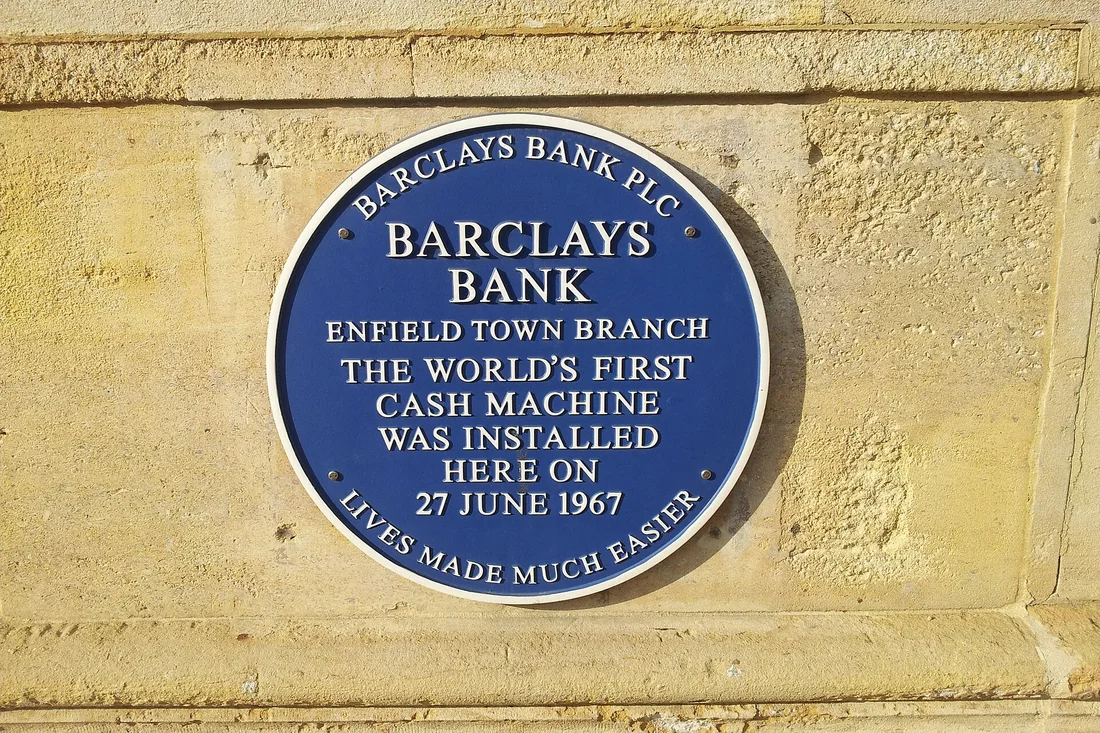
The world’s first cash machine was unveiled at Barclays’ Enfield Town branch on 27 June 1967. It was devised by John Shepherd-Barron of De La Rue, and the first person to use it was the actor Reg Varney, star of On the Buses. It did not use cards: customers bought paper vouchers marked with a slightly radioactive compound, which the machine detected, matched against a PIN, and paid out a fixed £10. A Scottish engineer, James Goodfellow, patented the idea of a PIN with a card in 1966. A story often told is that Shepherd-Barron planned a six-digit code, but settled on four because his wife could only remember four numbers.
Cash Machines in the UK Today
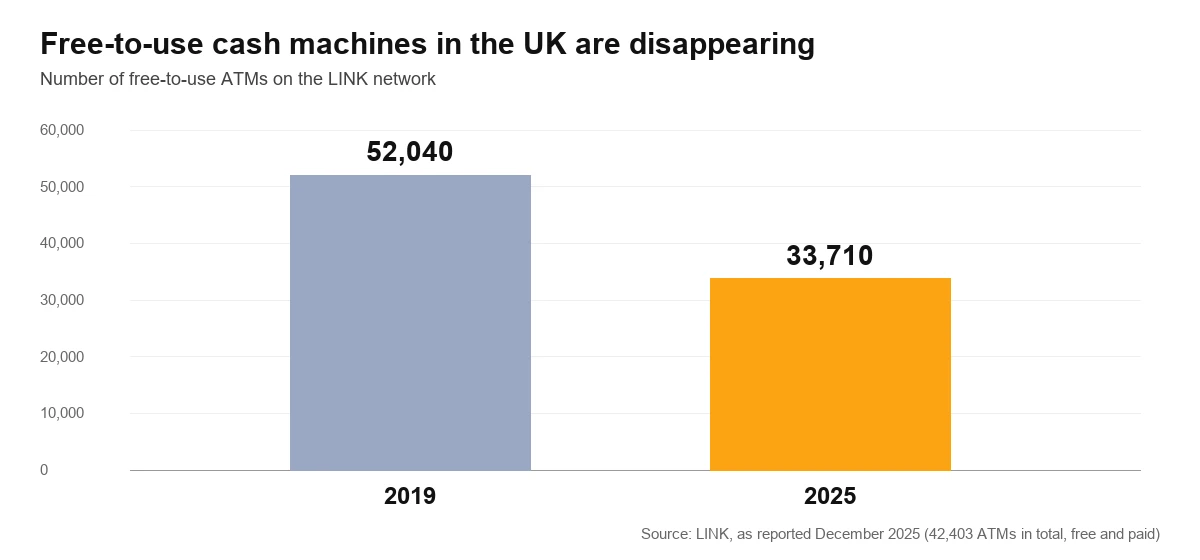
Almost every UK cash machine is connected to the LINK network, so you can use any UK bank card in almost any machine. But the network is shrinking as more people pay by card and phone. LINK reported 42,403 cash machines in operation by December 2025, about 5% fewer than a year earlier. Free-to-use machines have fallen much faster.
Cash still matters: LINK says about £76 billion was withdrawn from cash machines in 2025, and the average UK adult took out £1,352. To protect access, FCA rules in force since September 2024 require the biggest banks and building societies to assess and fill gaps in local cash access, and LINK can recommend new free machines, deposit services or shared “banking hubs” where communities lose their last bank. LINK also subsidises free machines that are more than 1km from any alternative.
Fees and Limits
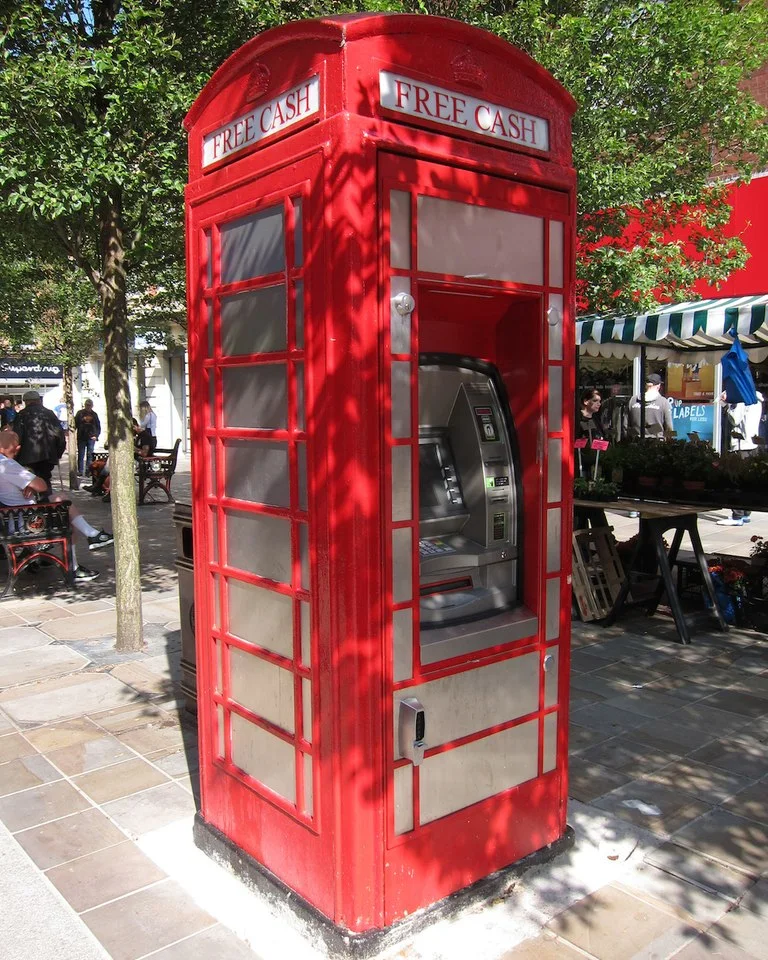
- Free machines: most are free, especially those in bank branches and supermarkets.
- Fee-charging machines: some, often in convenience stores, pubs and petrol stations, charge a fee (commonly £1 to £2). The machine must show the charge on screen before you go ahead, so you can cancel.
- Daily limits: banks set a daily withdrawal limit, often around £300 to £500, which you can sometimes change in your app.
- Credit cards: withdrawing cash on a credit card usually costs a fee and interest from day one. Avoid it if you can.
- Abroad: foreign machines may charge, and some offer to convert into pounds at a poor rate. Always choose to be charged in the local currency; our smart travel hacks explain why.
Staying Safe at a Cash Machine
- Cover the keypad with your other hand when typing your PIN.
- Check for tampering: loose or bulky card slots, extra parts on the keypad or a strange camera can be signs of skimming.
- Be aware of people nearby, and never accept “help” from a stranger.
- If the machine keeps your card, contact your bank straight away from your phone, ideally while still at the machine.
- Use machines inside branches or shops where you can, especially at night.
- Check your statements, and use your banking app to freeze a card if anything looks wrong.
Banks increasingly use AI to spot fraud in real time, which is one reason a withdrawal can sometimes be declined; see our guide to AML AI software for how that monitoring works. For wider protection, read our tips on staying safe online.
My advice: if a cash machine screen looks unusual, or the card slot feels wrong, walk away and use another one. It is never worth the risk.
Frequently Asked Questions
How does an ATM work?
It reads your card’s chip, takes your PIN, sends an encrypted request to your bank through the LINK network, and dispenses cash if your bank approves.
How does an ATM know my balance?
It does not store it. The machine asks your bank, which checks your account and replies within seconds.
What is LINK?
The UK’s cash machine network, connecting almost every ATM, so you can use your card at machines run by other banks and operators.
Who invented the cash machine?
John Shepherd-Barron’s team at De La Rue built the first, unveiled at Barclays in Enfield on 27 June 1967. James Goodfellow patented the PIN-and-card concept in 1966.
Are cash machines free in the UK?
Most are. Around 95% of withdrawals by UK cardholders are free, but some machines charge, and must show the fee before you continue.
Can I use a contactless card at a cash machine?
Some newer machines accept contactless cards and phones; you still enter your PIN.
What happens if the ATM does not give me my cash?
Contact your bank. If money was taken from your account but not dispensed, the bank will investigate the machine’s records and refund you if the cash was not paid out.
Why does a cash machine keep my card?
Usually after several wrong PINs, if the card is reported lost or stolen, or if you do not take it back in time. Call your bank straight away.
How much can I take out of a cash machine?
It depends on your bank’s daily limit, often £300 to £500, and the machine’s own maximum.
Why are cash machines disappearing?
Card and phone payments have reduced cash use, making machines less profitable. Free machines fell from about 52,000 in 2019 to under 34,000 by 2025.
Final Thoughts
A cash machine withdrawal is a small marvel of secure engineering: chip, encrypted PIN, a network hop and a bank decision, all in the time it takes to put your purse away. It is also a British success story that started in Enfield in 1967. Cash machines are fewer than they were, but the rules now protect access to cash, so if your area loses its last free machine, tell LINK.
Sources: LINK data and news releases (2025–2026); FCA access to cash rules (in force September 2024); Barclays and Wikipedia histories of the automated teller machine, John Shepherd-Barron and James Goodfellow; Which? on cash machine closures; UK Finance and bank guidance on ATM safety.