
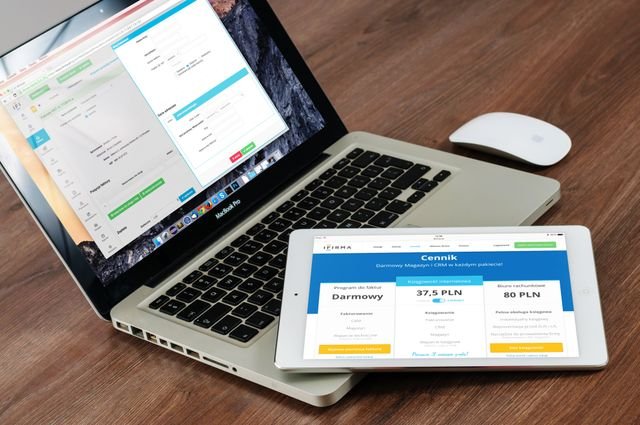
CRM demand is strong and still rising. Depending on how the market is defined, global CRM software was worth between about $79.6 billion (Grand View Research) and $112.91 billion (Fortune Business Insights) in 2025. Forecasts point to roughly 9.3% to 12.4% yearly growth over the next eight years. The figures differ because each research firm counts different things, so this guide shows the numbers side by side instead of picking one.
CRM Demand at a Glance
- 2025 market size: $79.6 billion (Grand View Research) or $112.91 billion (Fortune Business Insights).
- 2026 estimate: $86.4 billion (Grand View) or $126.17 billion (Fortune).
- Forecast: $161.3 billion by 2033 (9.3% a year) or $320.99 billion by 2034 (12.40% a year).
- Market leader: Salesforce held 20.0% of the worldwide CRM market in 2025, according to IDC data published by Salesforce.
- Adoption: 28.51% of EU businesses with 10 or more employees used CRM software in 2025 (Eurostat).
- Biggest demand drivers: cloud software, better customer experience and AI features.
Figures last checked on 3 November 2026. Forecasts are projections, not results.
What Counts as the CRM Market?
CRM stands for customer relationship management. CRM software helps a business store customer details, track sales, run marketing and handle customer service in one place. When people talk about “CRM demand”, they usually mean how much businesses spend on this software.
Two points are worth knowing before you read any figure:
- There is no single market boundary. Some reports count only CRM software. Others add services such as set-up, training and consulting.
- “CRM demand” can mean other things. It is also used for demand generation (marketing that creates leads) and for demand forecasting (predicting future sales). This article covers software market demand only.
Global CRM Market Size: Latest Estimates
Research firms publish very different totals for the same year. That is normal, because they measure different things. Do not average these numbers or mix them in one calculation.
| Source | 2025 | 2026 | Type |
|---|---|---|---|
| Grand View Research | $79.6 billion | $86.4 billion | Estimate (2026 is a forecast) |
| Fortune Business Insights | $112.91 billion | $126.17 billion | Estimate (2026 is a forecast) |
| Research and Markets | $287.26 billion | $334.48 billion | Estimate (much broader scope) |
| HG Insights | About $53 billion expected spend over the next 12 months | Spend estimate, not revenue | |
Gartner reports a different measure again: worldwide CRM software vendor revenue of about $107.5 billion in 2023 and $128 billion in 2024, up 13.4% a year, according to coverage of its public summary. Treat these as historical vendor revenue, not as a match for the forecasts above.
Why Do CRM Market Size Estimates Differ?
If you only remember one section, make it this one. A $79.6 billion figure and a $287 billion figure are not a contradiction. They answer different questions.
| Reason | What it means |
|---|---|
| Scope | Software only, or software plus set-up, training and consulting |
| Functions counted | Sales only, or sales, marketing, service, commerce and analytics together |
| Base year | A 2024, 2025 or 2026 starting point changes every later figure |
| Method | Vendor revenue tracking, company spend data and forecast models are not interchangeable |
| Vendor bias | A vendor sharing analyst findings will stress its own lead |
A simple rule: pick one source, keep its definition, and quote it by name. If you must compare, compare growth rates and year-on-year changes within the same source.
CRM Market Forecast to 2034
Both main publishers expect steady growth, but at different speeds because they start from different bases.
| Publisher | 2026 estimate | Forecast | Yearly growth (CAGR) |
|---|---|---|---|
| Grand View Research | $86.4 billion | $161.3 billion by 2033 | 9.3% (2026 to 2033) |
| Fortune Business Insights | $126.17 billion | $320.99 billion by 2034 | 12.40% (2026 to 2034) |
How to Check a CAGR Figure
CAGR is the steady yearly growth rate that links a start value to an end value. The formula is: CAGR = (end value ÷ start value) ^ (1 ÷ years) − 1.
Using Grand View’s own numbers: ($161.3 billion ÷ $86.4 billion) ^ (1 ÷ 7) − 1 gives about 9.3%, which matches the published rate. The forecast period matters. The same end value gives a different rate if you start from 2025 instead of 2026.
What Is Driving Demand for CRM Software?
The publicly supported drivers are few and clear. Research firms and analysts describe them as trends, not measured shares of the market.
- Cloud delivery. Subscriptions need less upfront spend than installed software, so smaller firms can start quickly.
- Customer experience. Businesses want one view of each customer across sales, marketing and support. Customers now talk to firms on social platforms too, with services such as Snapchat users numbering in the millions, so teams want those conversations logged in one system.
- Sales productivity. Automation of reminders, forecasts and follow-ups saves time. Software firms that sell CRM tools also depend on strong lead generation, a topic covered in our guide to B2B marketing for technology companies.
- AI features. Vendors now add AI assistants and agents to draft emails, score leads and clean data. This is a demand narrative, not yet a measured market. No verified standalone “AI CRM” market size exists in the public sources used here.
- Large customer databases. Retailers handle huge customer volumes, as shown in these Walmart stats, and need systems built to keep that data organised.
CRM Demand by Deployment: Cloud vs On-Premise
Cloud is the larger and faster-growing choice. Grand View data, as reported by a secondary roundup, puts cloud at 59.4% of CRM revenue in 2025. Check this figure on the primary page before quoting it.
| Factor | Cloud CRM | On-premise CRM |
|---|---|---|
| Upfront cost | Low (monthly or yearly subscription) | High (servers and licences) |
| Scaling | Easy to add or remove users | Needs hardware planning |
| Data control | Held by the provider under contract | Held in-house |
| Upkeep | Handled by the vendor | Handled by your IT team |
| Typical user | Most new buyers, including small firms | Heavily regulated organisations |
CRM Demand by Company Size
Large firms use CRM far more than small ones. Eurostat’s 2025 survey of EU businesses with 10 or more employees found that 28.51% used CRM software, up 2.68 percentage points from 2023. A secondary roundup of the Eurostat tables reports 24.69% for small firms and 65.43% for large firms. Verify the size split on Eurostat before quoting it.
Large enterprises are widely reported to account for the biggest share of CRM spend, while smaller firms are the growth story as cloud pricing makes CRM easier to afford. Reliable public splits by company size for the global market are not confirmed, so none are shown here.
CRM Demand by Region
North America is the largest region in every public summary, though the share differs by source: about 40.4% (Grand View, 2025) and about 31.7% (Fortune Business Insights, 2025).
United States
Grand View Research puts US CRM revenue at $24.63 billion in 2025, rising to $26.34 billion in 2026 and a forecast $44.02 billion by 2033 (7.6% a year). HG Insights separately expects about $19.6 billion of US CRM spend, around 37% of its global estimate. These two measure different things, so do not compare them directly.
Europe and the United Kingdom
Eurostat is the strongest public source for Europe, and it measures adoption, not spend. A separate UK-only market size or adoption rate was not confirmed in the public sources used for this article, so none is quoted. Data protection rules such as GDPR shape how European firms store and use customer records.
India and Asia-Pacific
HG Insights expects about $1.69 billion of CRM spend in India, from roughly 307,555 companies. Several forecasts name Asia-Pacific as a fast-growing region, but a confirmed regional revenue split is not publicly available.
How AI Is Changing CRM Demand
AI is the main reason vendors say buyers are upgrading. Common features include lead scoring, sales forecasting, email drafting, chatbots and automatic data clean-up. Analysts describe generative AI and AI agents as a growth driver and a source of new competition.
Keep this in proportion. AI demand is a trend with early evidence, not a number you can add to the market total. Data quality is the practical limit: in a 2026 Validity survey of 500 marketers, only 21% said their CRM data was “very well prepared” for AI. That survey is vendor-sponsored, so read it as a signal, not a universal rate.
CRM Market Share and Leading Vendors
IDC’s April 2026 software tracker, as published by Salesforce, ranks Salesforce first for the 13th year running, with 20.0% of the worldwide CRM market in 2025. Coverage of the same data lists Oracle at about 4.1%, Microsoft about 4.0%, Adobe about 3.4% and SAP about 3.1%. The market is spread across many vendors.
One warning: a vendor’s total revenue is not the CRM market size. Only the share figure above relates to the CRM market.
Challenges That Hold CRM Demand Back
- Poor data quality. In the Validity 2026 survey, 62% of marketers said bad CRM data had caused direct revenue loss. Clean records start with sound database design, including basics such as the types of keys in DBMS that stop duplicates.
- Low staff take-up. A CRM nobody updates is worth little.
- Cost and integration. Subscriptions, add-ons and links to other systems add up.
- Privacy rules. Firms must handle customer data lawfully, especially in Europe and the UK.
You will often see a “CRM failure rate” of 18% to 70%, or an “80% of CRM projects fail” claim attributed to Gartner. These come from older studies with different definitions of failure, and the Gartner claim could not be confirmed on a primary Gartner page. Avoid quoting them as fact.
How to Check CRM Statistics Before You Use Them
- Find the original publisher, not a roundup.
- Read the market definition and base year.
- Separate historical figures from forecasts.
- Check adoption claims against official surveys such as Eurostat.
- Trace vendor share claims to the named analyst tracker and date.
We follow our editorial policy when compiling statistics, and if you spot an error, our correction policy explains how to report it. Full methodologies from Grand View, Fortune Business Insights and HG Insights are not public, so exact inclusions are unconfirmed.
Frequently Asked Questions About CRM Demand
How big is the global CRM market in 2026?
Grand View Research estimates $86.4 billion and Fortune Business Insights estimates $126.17 billion. The gap comes from different market definitions.
How fast is the CRM market growing?
Forecasts range from 9.3% a year (Grand View, 2026 to 2033) to 12.40% a year (Fortune Business Insights, 2026 to 2034). Gartner-reported vendor revenue grew 13.4% in 2024.
Is CRM a growing industry?
Yes. Every major public forecast expects growth through the early 2030s, though forecasts can change as new reports appear.
Which region has the highest CRM demand?
North America, with roughly 31.7% to 40.4% of the market depending on the source.
What percentage of businesses use a CRM?
In the EU, 28.51% of businesses with 10 or more employees used CRM software in 2025. A trusted global figure is not publicly confirmed.
Is cloud CRM more popular than on-premise?
Yes. Cloud is reported at about 59.4% of CRM revenue in 2025 and is where most new demand sits.
Is AI increasing demand for CRM software?
Vendors and analysts say so, and AI features now drive many upgrades. However, there is no verified standalone AI CRM market size yet.
Who is the leading CRM provider?
Salesforce, with 20.0% worldwide share in 2025 according to IDC data published by Salesforce.
Conclusion: Where CRM Demand Is Heading
CRM demand is growing steadily, led by cloud delivery and the push to add AI. The market sat between roughly $80 billion and $113 billion in 2025, depending on the source, and is forecast to roughly double by the early 2030s or later. Large firms already use CRM widely, so the next wave of growth is expected to come from smaller businesses and from upgrades to AI-enabled platforms. When you use any figure, name the source, state the year and say whether it is an estimate or a forecast.
Sources
- Grand View Research: Customer Relationship Management Market
- Grand View Research: US CRM Market Outlook
- Fortune Business Insights: CRM Market
- HG Insights: CRM Market Share Report
- Eurostat: E-business integration
- Salesforce newsroom: IDC CRM market share ranking 2026
- Research and Markets: CRM Software Market Report