Dentiloquent: Meaning, Pronunciation and Origin of a Rare Word
Dentiloquent means speaking through your teeth. Its meaning, pronunciation, Latin roots, related words and everyday alternatives.
 5 min read
Comments: 0Views: 0
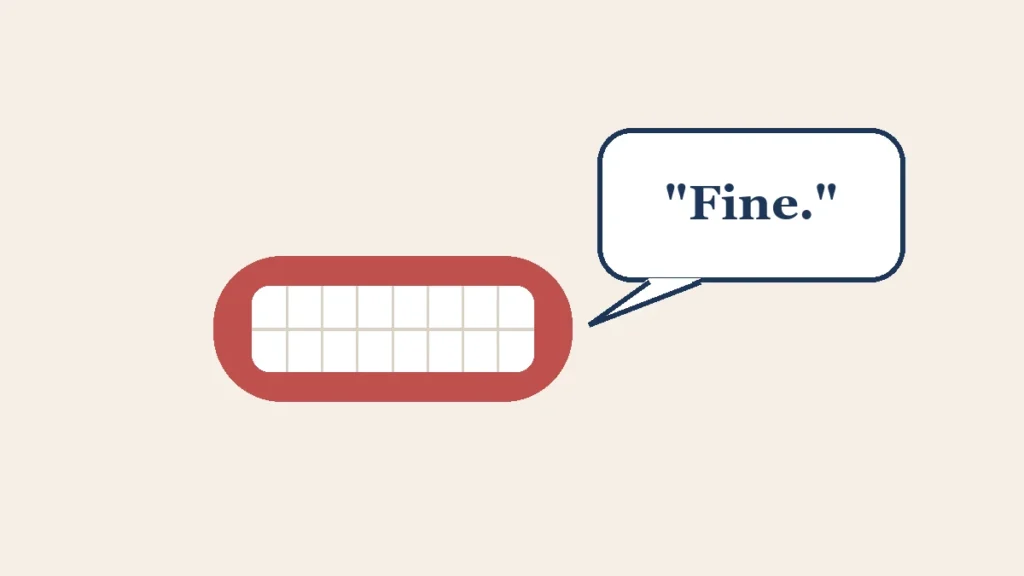
Dentiloquent means speaking through your teeth, with your teeth closed or clenched. It is an extremely rare English adjective, built from the Latin dens (tooth) and loqui (to speak). If someone answers you through gritted teeth because they are furious, or a ventriloquist talks without moving their mouth, you could, in theory, call them dentiloquent.
It belongs to the same family as everyday words such as eloquent and ventriloquist. You will not find it in most modern dictionaries, though. It survives mainly in collections of rare words, while its noun form, dentiloquy, appears in older dictionaries.
Dentiloquent at a Glance
| Details | |
|---|---|
| Word type | Adjective |
| Meaning | Speaking through the teeth, or with the teeth closed or clenched |
| Pronunciation | den-TIL-uh-kwent (stress on the second syllable, like grandiloquent) |
| Origin | Latin dens, dentis (tooth) + loqui (to speak) |
| Related words | dentiloquy (the habit of speaking this way); dentiloquist (a person who does it) |
| How common | Very rare. Mostly found in rare-word lists, not in everyday writing |
| Everyday alternative | “through gritted teeth”, “through clenched teeth” |
What Does Dentiloquent Mean?
A dentiloquent person talks without fully opening their mouth, so the words come out through the teeth. There are three common situations where this happens:
- Anger or forced politeness. When someone is annoyed but trying to stay civil, they often speak through clenched teeth: “Thank you so much,” she said, dentiloquently. In everyday English we would say she spoke through gritted teeth.
- Ventriloquism. A ventriloquist keeps their lips and teeth almost still so the audience believes the puppet is talking. That is a skilled form of dentiloquy.
- Physical reasons. Someone whose jaw is wired after an injury, or who is shivering with cold, may have no choice but to speak through closed teeth.
The word describes the manner of speaking, not the mood. Context tells you whether the speaker is angry, performing or simply unable to open their mouth.
Where the Word Comes From
Dentiloquent is built from two Latin roots that appear in many English words:
- dens, dentis (tooth), as in dentist, dental, denture and dentition.
- loqui (to speak), as in eloquent, loquacious, soliloquy and ventriloquist.
The noun dentiloquy appears in Noah Webster’s American Dictionary of the English Language of 1828, defined as “the habit or practice of speaking through the teeth, or with them closed.” The person is a dentiloquist. The adjective dentiloquent follows the same pattern as other -loquent words, but it has never been in general use. Today it turns up mainly in lists of unusual words, such as the Phrontistery’s list of words for styles of speech.
Is Dentiloquent a Real Word?
Yes, but it is a rare one. It is formed correctly from Latin roots, its noun appears in a well-known 19th-century dictionary, and it is recorded in collections of English vocabulary. However, you will not find dentiloquent in most modern standard dictionaries, and very few people would recognise it.
That makes it fun for word games, quizzes and playful writing, but a poor choice for anything where you need to be understood. In normal writing, “through gritted teeth” or “through clenched teeth” says the same thing and everyone knows what it means.
How to Use Dentiloquent in a Sentence
- “After losing the final on penalties, the manager gave a dentiloquent interview, smiling for the cameras through clenched teeth.”
- “The ventriloquist’s dentiloquent delivery was so smooth that the children kept staring at the puppet.”
- “With his jaw wired shut after the accident, he managed only a dentiloquent mumble.”
- “‘Lovely to see you,’ she said, in a dentiloquent tone that suggested otherwise.”
The adverb is dentiloquently, and the noun for the habit is dentiloquy: “Her dentiloquy gave away how angry she was.”
The -loquent Family of Words
Dentiloquent is one of a group of English words describing how someone speaks. Some are common, and others are as rare as dentiloquent itself:
| Word | Meaning | How common |
|---|---|---|
| eloquent | speaking fluently and persuasively | Very common |
| loquacious | talkative | Common |
| grandiloquent | using pompous, inflated language | Fairly common |
| magniloquent | speaking in a lofty, boastful style | Uncommon |
| soliloquy | a speech made to oneself, as in a play | Common |
| ventriloquism | making your voice seem to come from elsewhere | Common |
| breviloquent | speaking briefly | Rare |
| dulciloquent | speaking softly and sweetly | Rare |
| somniloquy | talking in your sleep | Rare (used in medicine) |
| dentiloquent | speaking through the teeth | Very rare |
Other Ways to Say It
If you want to describe someone speaking this way in plain English, these are clearer choices:
- through gritted teeth: the standard British idiom, usually for forced politeness or controlled anger;
- through clenched teeth: the same idea, slightly more physical;
- muttered or mumbled: spoke quietly and unclearly;
- hissed: spoke sharply through the teeth, usually in anger;
- ground out: said with effort and suppressed anger, common in novels.
Like many unusual words, dentiloquent is easy to misremember or confuse with others that look similar. If you enjoy word puzzles like this, our guide to commonly confused words explains more than 50 pairs that trip people up, with British spelling tips.
Frequently Asked Questions
What does dentiloquent mean?
It means speaking through the teeth, or with the teeth closed or clenched. It comes from the Latin dens (tooth) and loqui (to speak).
How do you pronounce dentiloquent?
den-TIL-uh-kwent, with the stress on the second syllable, in the same way as grandiloquent.
Is dentiloquent a real word?
Yes, but it is very rare. It is mainly found in collections of unusual words. Its noun, dentiloquy, appears in Noah Webster’s 1828 American Dictionary.
What is dentiloquy?
The habit or practice of speaking through the teeth or with them closed. A person who does this is a dentiloquist.
What is a more common way to say dentiloquent?
“Through gritted teeth” or “through clenched teeth”, as in “she thanked him through gritted teeth.”
Is a ventriloquist dentiloquent?
In a sense, yes. Ventriloquists speak without visibly moving their lips or teeth, which is a skilled form of speaking through the teeth.
Sources
- Webster’s American Dictionary of the English Language (1828): “dentiloquy”
- The Phrontistery: Styles of Speech (dentiloquent and other -loquent words)
- Wiktionary: dentiloquist (Latin dens + loqui)