
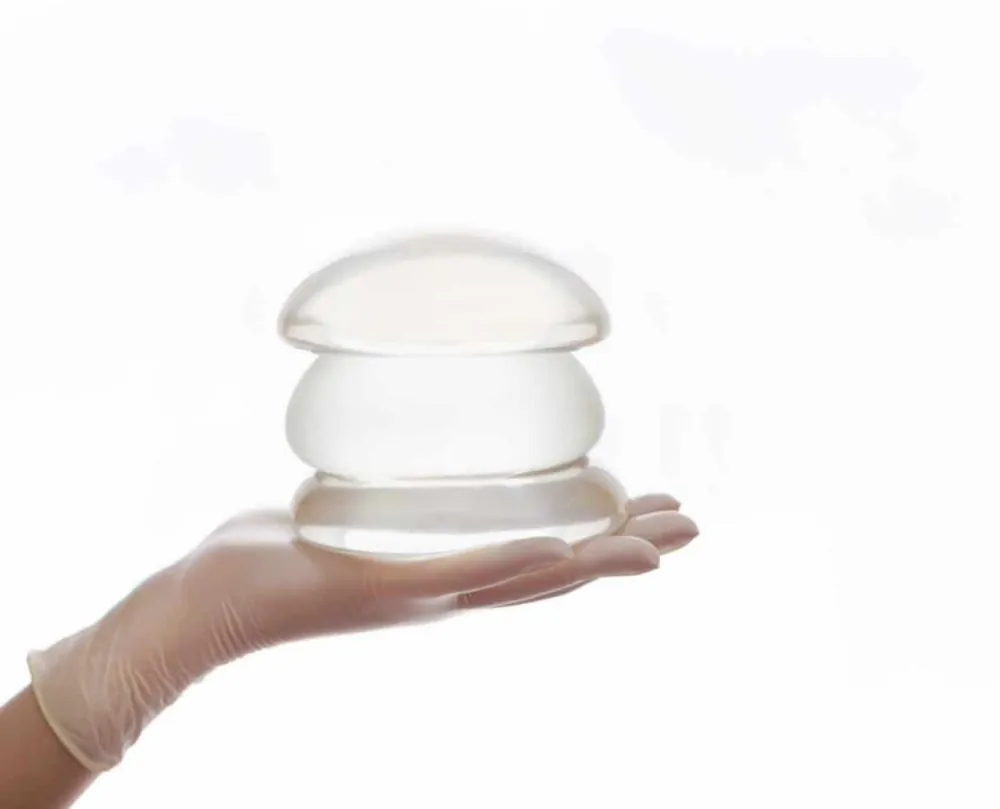
Breast enlargement costs roughly £3,500 to £8,000 in the UK according to the NHS — usually excluding consultations and follow-up care, and excluding any future surgery, which you also pay for.
This page is about borrowing money for an elective operation, so the risks come before the finance. The previous version named six lenders and explained how to qualify for credit without telling the reader what can go wrong with the surgery. That has been fixed.
Last updated: 26 October 2026.
Two things worth knowing before you read anything about paying for this. Implants do not last a lifetime — the NHS says replacement is likely and some women need further surgery around ten years later, at their own cost. And there is no legally mandated cooling-off period: the GMC has deliberately not set one. What you can insist on is that the surgeon who will operate takes your consent personally.
The short version
- NHS cost estimate: £3,500–£8,000, excluding follow-up
- On the NHS? Generally no — limited exceptions, varies by area
- Lifetime device? No — further surgery often needed ~10 years on
- BIA-ALCL: 114 UK cases, ~1 per 12,187 implants sold
- Cooling-off: no legal period — clinic policy only
- Credit: must be FCA-authorised — check the register
- Red flag: price, discount or deadline-led offers
What this article covers
The Risks the Old Page Did Not Mention

Image source: pinterest.com
Every item below is from the NHS page on breast enlargement, and none of it appeared on this page before.
| Risk | What it means | Note |
|---|---|---|
| Capsular contracture | Scar tissue hardens around the implant, changing shape and causing pain | A common reason for further surgery |
| Rupture, rippling, rotation, creasing | The implant fails or visibly deforms | May require replacement |
| Nerve changes in the nipples | Altered or lost sensation | Can be permanent |
| Reduced breast milk | Slightly less milk when breastfeeding, per the NHS | Worth raising if you may want to breastfeed |
| Standard surgical risks | Bleeding, blood clots, infection, allergic reaction | As with any operation |
| BIA-ALCL | A rare cancer of the immune system linked to implants — see the section below | MHRA publishes UK figures |
| “Breast implant illness” | Reported symptoms including tiredness and joint pain | Listed by the NHS as reported |
| PIP implants | Banned in the UK in 2010. Higher rupture risk | Need medical review if you have them |
| They do not last a lifetime | Replacement is likely at some point; some women need further surgery around 10 years later | Budget for this before you borrow — the loan may outlive the implant |
NHS — breast enlargement. This is a summary, not a complete list — discuss risks with a surgeon on the GMC register.
The financial point hiding in that table: if implants are not lifetime devices and further surgery is often needed within about ten years, a five-year loan can still be running when the next operation is due. That is the calculation a financing page ought to put in front of you.
BIA-ALCL: The MHRA Figures

Image source: pinterest.com
The old page gave this one sentence: “A rare lymphoma, BIA-ALCL, has been linked to textured implants.” MHRA publishes actual UK data, and it is both more reassuring and more useful than that.
| As at 31 December 2024 | |
|---|---|
| Confirmed UK cases | 114 where surgery took place in the UK, plus 6 operated abroad |
| Reporting rate | About 1 per 12,187 implants and tissue expanders sold — MHRA’s own estimate, since not all cases are reported and not all implants sold are used |
| Deaths reported in the UK | 1 |
| Five-year survival | 89%, and 93% of appropriately treated patients were disease-free at three years |
| Time to symptoms | 7–10 years after implantation, on average |
| Implant type | Most cases linked to macrotextured implants. Of UK primary cases, all 62 textured-implant cases were recorded against textured devices and none against smooth. MHRA says there is not enough evidence that any one model or manufacturer solely causes it |
| Do implants need removing? | No — not unless symptoms develop, per MHRA. Removal surgery is more complex and carries more risk than the original operation |
| Symptoms to watch for | A late seroma — fairly quick, painless breast swelling over a few weeks, sometimes on both sides — or, less often, a lump in the capsule. See a surgeon or GP if swelling or a lump appears more than a year after implantation |
MHRA — breast implants and anaplastic large cell lymphoma (ALCL).
MHRA — five-year survival 89%. Survival is higher for Stage I disease, and 93% of appropriately treated patients were disease-free at three years. Percentages.
The practical takeaway, which is worth more than the statistics. Symptoms typically appear 7–10 years after surgery, and the commonest sign is a late seroma — fairly quick, painless swelling of the breast over a few weeks, sometimes on both sides. If you get swelling or a lump more than a year after implants, see your surgeon or GP. MHRA does not advise removing textured implants unless symptoms develop, because removal is riskier than the original operation.
The Implant Registry
- The Breast and Cosmetic Implant Registry was launched in 2016 to record implant procedures, so patients can be traced if a safety issue or recall arises.
- It covers England, Scotland and Northern Ireland — not just England, as this page previously said.
- Clinicians are legally required to record patient details, and patient consent is not needed for this. The old version told readers to “ask your clinic to register you” — it is a legal duty, not a favour you request.
- It exists to catch safety signals early. The PIP scandal is why.
- Do still ask which implants you have been given — make, model and batch — and keep the record. That is the question worth asking.
What It Actually Costs

Image source: pinterest.com
The NHS gives £3,500–£8,000, usually excluding consultations and follow-up care. The London clinic range is drawn from clinic and price-comparison sites. Those are commercially sourced — every one comes from a business selling the procedure — so treat the NHS figure as the independent one.
- Get a written quote itemising the surgeon’s fee, facility fee, anaesthesia, implants, and how many follow-up appointments are included.
- Ask what a revision would cost before you sign anything. If they will not say, that is information too.
- The NHS figure usually excludes consultations and aftercare. So does most advertising.
- Cheaper is not the saving it looks like if corrective surgery follows.
- Breast enlargement is generally not available on the NHS, though there are limited exceptions and the criteria vary by area — your GP can explain the local position. Reconstruction after cancer surgery is a different matter.
Finance, Done Carefully

Image source: pinterest.com
Clinics commonly work with specialist medical finance providers — CareCredit, PatientFi, LendingUSA and Alphaeon Credit in the United States, Chrysalis Finance and Medifinance in the UK. The old version of this page called them “trusted financial partners” offering “low-interest” plans. We cannot source either claim, so both are gone. Here is what to check instead.
| Check | Why | Where |
|---|---|---|
| Check the lender on the FCA register | Any credit offered in the UK must come from a firm authorised by the Financial Conduct Authority. It is free to search | FCA register |
| Read the APR and the total amount payable | The monthly figure is the one clinics quote; the total is the one that matters. A 0% deal that reverts to a high rate after the promotional term can cost more than a plain loan | What APR means |
| Know what happens if you cannot pay | Medical finance is unsecured consumer credit. Missed payments affect your credit file, and the debt survives whether or not you are happy with the result | FCA consumer guidance |
| Do not let the finance set the timetable | An approval that expires is a sales tool, not a medical deadline. The NHS advises meeting the surgeon before the procedure, and nothing about credit should compress that | NHS guidance |
| Budget for the surgery you have not had yet | Revision, replacement and corrections are your cost. Implants are not lifetime devices | NHS |
| Be wary of discounts tied to paying early | This page previously encouraged asking for them. It should not have. Price-led and deadline-led offers are exactly what patients are advised to treat with caution | RCS cosmetic surgery standards |
FCA authorisation is a legal requirement for consumer credit in the UK. This page does not recommend any lender.
- 0% is only 0% for the promotional term. Find out the rate afterwards and what happens if you are late.
- A personal loan from your own bank may beat clinic finance. Compare before you are sitting in a consultation room.
- Paying by credit card can give you Section 75 protection on purchases over £100 — worth understanding before choosing how to pay.
- Never borrow on the assumption of a result. The debt is fixed; the outcome is not guaranteed.
- If the finance application is being handled by the clinic, ask who the lender is and check them yourself.
- Watch how the cost is presented to you. A low monthly figure with no total attached is a sales technique, and the same pattern turns up across endorsement-led marketing.
- For a comparable look at medical credit, see our piece on dental financing. Borrowing costs move with the base rate too — see our note on the Bank of England holding rates.
Checking the Surgeon and the Clinic

Image source: pinterest.com
- GMC register, with a licence to practise — and ideally on the specialist register for plastic surgery. This is the UK equivalent of what American sites call board certification.
- CQC registration for the clinic or hospital in England, or the equivalent regulator elsewhere in the UK.
- BAAPS or BAPRAS membership is a useful additional signal.
- The NHS advises being cautious with clinics that pay for search-listing adverts. That is a striking thing for the NHS to say, and worth remembering about any cosmetic surgery result you reach by clicking an advert.
- Always book an appointment to meet the surgeon before the procedure — the NHS says so in terms.
- Ask about their complication and revision rates, the implant make and model, and what follow-up is included.
- Advertising Standards Authority rules apply to cosmetic surgery advertising. If a promotion feels designed to rush you, that is worth noting rather than ignoring.
Consent, and the Cooling-Off Myth
This is the correction most worth reading.
- There is no statutory cooling-off period for cosmetic surgery. The GMC has deliberately not specified one, saying the time needed is a clinical decision depending on how invasive, complex, permanent and risky the procedure is — and that whether same-day treatment is acceptable is a judgement for the treating clinician.
- So “mandatory 14-day cooling-off” claims are clinic policy or marketing, not law. Many clinics do apply two weeks and that is good practice. Just do not assume a legal protection you do not have.
- What the GMC does require is firm: the doctor who will carry out the procedure must seek your consent personally, and must not delegate it. See the GMC’s guidance for doctors offering cosmetic interventions.
- If you have only spoken to a salesperson or a “patient co-ordinator”, you have not had a consultation. That is the single most useful sentence on this page.
- Take the time you want regardless. No reputable clinic will lose interest because you waited a fortnight, and one that does has told you something.
- RCS England publishes cosmetic surgery standards covering consultation and consent, which are worth reading before a first appointment.
A Word on Why, Not Just How Much
No guide should push anyone towards or away from cosmetic surgery — it is a personal decision and plenty of people are glad they had it. But a page about borrowing for it should say one thing plainly: decide first, then work out the money. Doing it the other way round, because a finance approval has a deadline on it, is how people end up in debt for a procedure they had not finished thinking about.
If body image rather than cost is the live question, our pieces on habits that improve mental health and how the influencer economy works may be more use than any finance comparison. And for the general principle of checking health claims before you pay, see our reviews of cosmetic health products, hair loss causes and the posture claims made for office chairs.
Corrections Made to This Page

Image source: pinterest.com
| What it said | Why it changed |
|---|---|
| No risks section at all | The single biggest problem. The page explained how to borrow thousands for elective surgery while never saying what can go wrong. The full NHS risk list is now near the top |
| BIA-ALCL in one sentence | MHRA publishes UK figures: 114 confirmed cases, ~1 per 12,187 implants sold, one death, 89% five-year survival, symptoms at 7–10 years, and no need to remove textured implants unless symptomatic |
| Nothing on implant lifespan in the cost discussion | Implants are not lifetime devices and some women need further surgery around 10 years later — which may be before a five-year loan is repaid |
| “Verified 2025 cost ranges” | Nothing was verified against anything, and the title said 2026 while the heading said 2025. Replaced with the NHS figure of £3,500–£8,000, with clinic figures labelled as commercially sourced |
| Lenders described as “trusted financial partners” offering “low-interest” plans | Two unsourced claims about named credit providers. Names kept, claims removed, FCA register check added |
| “Some clinics offer 5–10% discounts… if you pay in full” | Directly contradicted the page’s own warning, two sections earlier, to “be wary of offers that focus on price, discounts or deadlines”. Removed |
| “Many surgeons recommend at least two weeks”, framed as professional guidance | The GMC deliberately sets no fixed period. “Mandatory 14-day cooling-off” is clinic policy, not law — and the page now says what the GMC does require |
| “In England, the Breast and Cosmetic Implant Registry… ask your clinic to register you” | Two errors. It covers England, Scotland and Northern Ireland, and clinicians are legally required to record details with no patient consent needed |
| “Board-certified”, twice, including in the disclaimer | A US term with no UK meaning. Here it is the GMC register and specialist register |
| “anesthesia”, “centers”, “programs” | US spellings on a UK site |
| No sources, no tables, no Gutenberg blocks, one internal link | On a health-and-credit page. NHS, MHRA, GMC, CQC, FCA, RCS, BAAPS and ASA now linked |
All corrections made on 26 October 2026. All eight images and both original links were kept.
Frequently Asked Questions
How much does breast enlargement cost in the UK?
The NHS puts it at roughly £3,500 to £8,000, and notes that this usually excludes consultations and follow-up care, and that you pay for any future surgery yourself. London clinics quote higher — £6,500 to £9,500 is typical. Treat clinic and comparison-site figures as commercially sourced, because every one of them comes from a business selling the procedure.
What are the actual risks of breast implants?
The NHS lists: capsular contracture; rupture, rippling, rotation and creasing; nerve changes in the nipples, which can be permanent; slightly reduced breast milk when breastfeeding; bleeding, clots, infection and allergic reaction; BIA-ALCL; and reported “breast implant illness” symptoms. PIP implants, banned in the UK in 2010, carry a higher rupture risk. The previous version of this page had no risks section at all.
Do breast implants last forever?
No. The NHS is explicit that implants do not last a lifetime, that replacement is likely at some point, and that some women need further surgery around 10 years later. If you are borrowing over five years, plan for the possibility that the loan outlives the implant.
How serious is the BIA-ALCL risk?
Rare but real, and MHRA publishes the UK numbers. As at 31 December 2024: 114 confirmed cases where surgery took place in the UK, a reporting rate of about 1 per 12,187 implants sold, one death, and 89% five-year survival. Symptoms appear 7–10 years after surgery on average. See MHRA guidance.
Should I have textured implants removed?
MHRA says no — not unless you develop symptoms. Removal surgery is more complex and carries more risk than the original operation, so the benefits and risks should be discussed with a surgeon rather than acted on from a news page.
What symptoms should I look out for afterwards?
A late seroma — fluid building up, causing fairly quick, painless swelling of the breast over a few weeks, sometimes on both sides — or, less commonly, a lump in the scar tissue around the implant. If swelling or a lump appears more than a year after your implants, see your surgeon or GP.
Is there really a mandatory 14-day cooling-off period?
No, and it is worth knowing that. The GMC has deliberately not specified a time period, saying it is a clinical decision, and that whether same-day treatment is acceptable is a judgement for the treating clinician. So “mandatory 14-day cooling-off” is clinic policy or marketing, not law. Many clinics do apply two weeks, which is good practice — just do not assume the law is protecting you.
What can I insist on, then?
That the doctor who will operate takes your consent personally. GMC guidance requires doctors to seek consent themselves rather than delegate it. If you have only met a salesperson or a “patient co-ordinator”, you have not had a consultation. The NHS also advises: always book an appointment to meet the surgeon before the procedure.
How do I check a surgeon and clinic in the UK?
Three checks. The surgeon should be on the GMC register with a licence to practise, and ideally on the specialist register for plastic surgery. The clinic should be registered with the Care Quality Commission in England, or the equivalent regulator elsewhere in the UK. And look for BAAPS or BAPRAS membership. “Board-certified” is an American term and means nothing here — this page used it twice.
Is finance from the clinic safe?
Only if the lender is FCA-authorised — check it yourself. Any credit offered in the UK must come from a firm authorised by the Financial Conduct Authority, and the FCA register is free to search. Read the APR and the total amount payable, not just the monthly figure.
Should I ask for a discount for paying upfront?
We are no longer suggesting that, and the old version of this page was wrong to. It told readers clinics offer 5–10% off for paying early, two sections after warning them to be wary of offers focused on price, discounts and deadlines. Price-led inducements are the thing to be careful of, not an opportunity.
Is breast enlargement available on the NHS?
Generally no. The NHS says it is usually paid for privately, with exceptions in cases such as very uneven breasts or no breasts — and criteria vary by area, so your GP can explain the local position. Reconstruction after cancer surgery is different and is available.
What about having surgery abroad?
The money saved can be lost on the aftercare. Follow-up, complications and corrective surgery are difficult to arrange from another country, and a UK surgeon who did not perform the original operation may be reluctant to revise it. Factor in the cost of things going wrong, not just the quoted price.
Final Thoughts
The NHS figure is £3,500 to £8,000, the implants will probably need replacing, and the loan does not care how you feel about the result. Those three facts together are the honest basis for deciding whether to finance this.
Then do the two checks that actually protect you: the surgeon on the GMC register and the clinic with the CQC, and the lender on the FCA register. And insist that the person who will operate on you is the person who takes your consent. More from The UK Post.
Sources
- NHS — breast enlargement: cost, risks and choosing a surgeon
- MHRA — breast implants and anaplastic large cell lymphoma (BIA-ALCL), UK figures to 31 December 2024
- GMC — guidance for doctors who offer cosmetic interventions
- GMC — cosmetic interventions FAQs, including time for reflection
- RCS England — cosmetic surgery standards
- Care Quality Commission — check a clinic’s registration
- FCA — Financial Services Register
- FCA — consumer guidance on credit
- BAAPS — British Association of Aesthetic Plastic Surgeons
- Advertising Standards Authority
- Annual percentage rate explained
Disclaimer
This article is general information and is not medical, financial or legal advice. It does not recommend any surgeon, clinic or lender. Discuss the risks and benefits of surgery with a doctor on the GMC register with a licence to practise, and check any clinic with the CQC or the equivalent regulator for your part of the UK. Check any credit provider on the FCA register before you sign. Costs are estimates and vary; the NHS figure is given as the independent one and clinic figures are commercially sourced. If you develop breast swelling or a lump more than a year after implants, see your surgeon or GP. Information correct as at 26 October 2026.

Image source: pinterest.com

Image source: freepik.com