UK Influencers Net Worth 2026: Instagram & Social Media Stars Earnings
Who are the UK's richest creators? See published wealth estimates, how influencers really earn, and the UK tax and advertising rules.
 Updated
8 min read
Comments: 0Views: 162
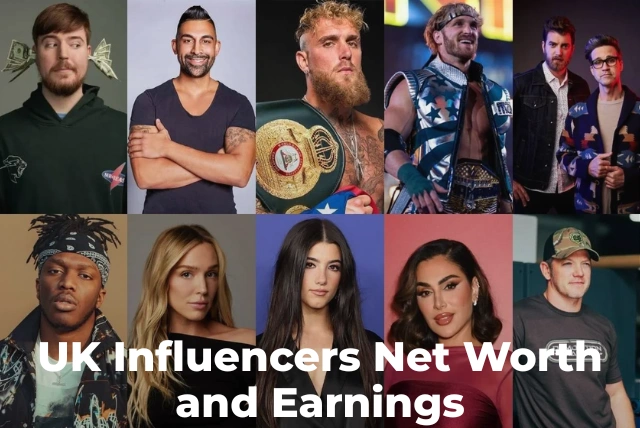
Among UK creators with a published wealth estimate, podcaster and entrepreneur Steven Bartlett leads at about £36 million, according to heat magazine’s 2025 Rich List. The same list puts Molly-Mae Hague and Tommy Fury at a joint £22.1 million. Most UK influencers earn far less, and many make a modest part-time income from brand deals, affiliate links and platform payments.
There is no official ranking of influencer wealth. Most figures online are estimates based on follower counts and assumed sponsorship rates, so this guide uses a named source wherever it gives a number. It also explains how creators really make money, what they can charge, and what tax and advertising rules apply in the UK.
UK influencers and creators by estimated wealth
The most useful recent UK reference is heat‘s Rich List, published on 28 October 2025. It does not have a dedicated influencer category, but its top UK podcasters list and overall under-30 ranking include several of the country’s best-known online personalities.
| Name | Known for | heat estimate (2025) |
|---|---|---|
| Steven Bartlett | The Diary of a CEO podcast, business | £36m |
| Abbey Clancy and Peter Crouch | That Peter Crouch Podcast, TV, modelling, football | £30m (joint) |
| Chris and Rosie Ramsey | Shagged. Married. Annoyed. podcast, comedy | £26m (joint) |
| Molly-Mae Hague and Tommy Fury | Social media, brand work, boxing | £22.1m (joint) |
| James Acaster and Ed Gamble | Off Menu podcast, comedy | £17m (joint) |
Read these numbers with care. Heat describes them as estimated earnings and does not publish its method. Joint figures cover two people, and several names on the list have earned much of their money from comedy, sport or television as well as online work. For a platform-specific view, see our guide to UK YouTubers’ net worth, and for a wider list, our guide to the UK’s richest influencers.
Why the richest creators are really business owners
The clearest pattern among high-earning creators is that their wealth rarely comes from social media posts alone. Richestubers describes the biggest UK influencers as business owners who invest in start-ups, launch products and hold shares in companies.
Steven Bartlett is the obvious example. Heat estimates that his podcast brings in about £15 million a year from advertising, but the podcast also supports a wider business and investing career. KSI has similarly moved beyond YouTube into music, boxing and business ventures. Molly-Mae Hague went from reality television to a personal brand built on social media, products and commercial partnerships. If you are interested in that route, our guide to UK reality TV stars’ net worth covers it in more detail.
This matters because a follower count does not equal wealth. A creator who owns a successful product or company can build an asset that keeps its value when the algorithm changes. A creator who relies only on one-off sponsored posts has an income, but not necessarily lasting wealth.
How UK influencers make money
- Brand partnerships: payment for sponsored posts, videos or campaigns. This is the main income for many creators.
- Long-term ambassador deals: Influencer Matchmaker notes these are becoming more common because they offer steadier income than one-off posts.
- Affiliate links and discount codes: commission when followers buy through a creator’s link or code.
- Platform payments: advertising revenue and creator programmes on platforms such as YouTube and TikTok.
- Own products: clothing, beauty, fitness, food or digital products. This has the highest potential, but also carries real business risk.
- Subscriptions and fan support: paid communities, memberships, live gifts and exclusive content.
- Media work: podcasts, television, books, events and personal appearances.
How much do UK influencers charge per post?
Rates are private and vary widely, so published figures should be treated as rough guides. Unifresher reports that top influencers can charge more than £60,000 per post, with mid-level creators earning between £10,000 and £30,000. Unifresher UK also reports that TikTok creators can earn more than £14,000 per post when their content performs well.
Those numbers describe the upper end of the market. Most creators will not receive them, and many smaller accounts are paid in products rather than cash. Several factors decide what a brand will pay:
- Engagement: comments, saves, shares and watch time usually matter more than a raw follower total.
- Audience: a UK audience with buying power is worth more to a UK brand than a larger audience elsewhere.
- Niche: finance, beauty, parenting, technology and fitness can attract advertisers with strong budgets.
- Usage rights: brands pay more if they can reuse the content in their own adverts.
- Exclusivity: agreeing not to work with competitors should cost the brand extra.
- Format: a dedicated video takes more work than a single story and is normally priced higher.
Do you need millions of followers?
No. Audience size helps, but a smaller creator with a trusted, specific audience can still be valuable to a brand. A local food account or a specialist gardening page may sell more of the right product than a much bigger general lifestyle page. Amra & Elma’s list of the most-followed UK influencers shows how large the top accounts have become, but reach at that level is not the only route to a living. Our list of rising UK influencers to watch in 2026 looks at newer names.
Why influencer net worth estimates vary so much
If you search for one influencer, you can easily find figures that differ by millions. That usually happens for four reasons:
- Revenue is mistaken for wealth. A £1 million company turnover is not £1 million in someone’s pocket.
- Costs are ignored. Agents, staff, production, stock and tax all reduce what is left.
- Follower counts are used as a shortcut. Many websites multiply followers by an assumed post rate, without knowing how many deals were actually signed.
- Private assets are hard to value. A stake in a private company may be worth a lot on paper, or very little.
For a more reliable picture, look at filed accounts at Companies House when a creator trades through a UK company. They are not a full record of personal wealth, and small company accounts can be brief, but they are real filings rather than guesses.
Tax on influencer income in the UK
HMRC treats content creation as a source of income, and that includes more than cash. Its guidance says you must include the value of any gifts or services you receive from promoting products online.
You have a single £1,000 tax-free trading allowance each tax year, shared across all your side hustles. If your income from content creation and other side work is above £1,000 before expenses, you need to tell HMRC, normally by registering for Self Assessment. Keep full records of income, gifts and business expenses from the start.
A simple example
Imagine a part-time creator receives £3,000 from brand deals and £500 worth of gifted products in a tax year. Their total income is £3,500, so they need to report it. They can either deduct the £1,000 allowance, leaving £2,500, or deduct actual allowable expenses instead. If those expenses were £1,400, claiming them would leave a lower figure of £2,100. You cannot normally use both against the same income.
Influencer ads must be labelled
UK advertising rules apply to creators as well as brands. Guidance from the Competition and Markets Authority says content counts as advertising if you have been incentivised in any way to promote a product or brand. That includes payment, free gifts, loans, affiliate links, discount codes and promotion of your own brand.
The label must be clear and visible as soon as someone sees the post. The CMA recommends wording such as “ad” or “advert”. Tagging a brand is not enough, and terms such as “#gifted”, “#aff”, “#sponsored” or “in association with” should not be relied on. The Advertising Standards Authority also publishes a dedicated influencers’ guide, updated in 2026.
Can you make a living as a UK influencer?
Yes, but it is best treated as building a small business. Income can be irregular, platforms can change their rules overnight, and a few brand deals can disappear quickly. The creators most likely to last usually:
- Serve a specific audience rather than chasing every trend
- Build an email list or community they control
- Earn from more than one platform and income stream
- Put money aside for tax as soon as they are paid
- Use written contracts covering fees, deadlines and usage rights
FAQs
Who is the richest influencer in the UK?
There is no official ranking. Among UK creators in heat’s 2025 Rich List, Steven Bartlett has the highest individual estimate at about £36 million, though his wealth also comes from business and investing.
What is Molly-Mae Hague’s net worth?
Heat’s 2025 Rich List gave Molly-Mae Hague and Tommy Fury a joint estimate of £22.1 million. It did not publish a separate figure for each of them.
How much do UK influencers earn per post?
It varies hugely. Unifresher reports more than £60,000 for top influencers and £10,000 to £30,000 for mid-level creators, but many smaller creators earn far less or are paid in products.
Do influencers pay tax on free gifts?
Gifts received for promoting products count as income. HMRC says creators must include their value when working out income from content creation.
When does an influencer need to tell HMRC?
If income from content creation and other side hustles is more than £1,000 in a tax year before expenses, you need to tell HMRC, normally through Self Assessment.
Do gifted posts need to be labelled as ads?
Yes. The CMA says posts about gifts received for free need a clear label, even if the brand did not require you to post anything.