Best Makeup for a Humid Climate: A Routine That Won’t Melt
How to make makeup last in humid weather, from muggy UK heatwaves to holidays abroad: the routine, the formulas to choose, sun protection and touch-up tricks.
 8 min read
Comments: 0Views: 2
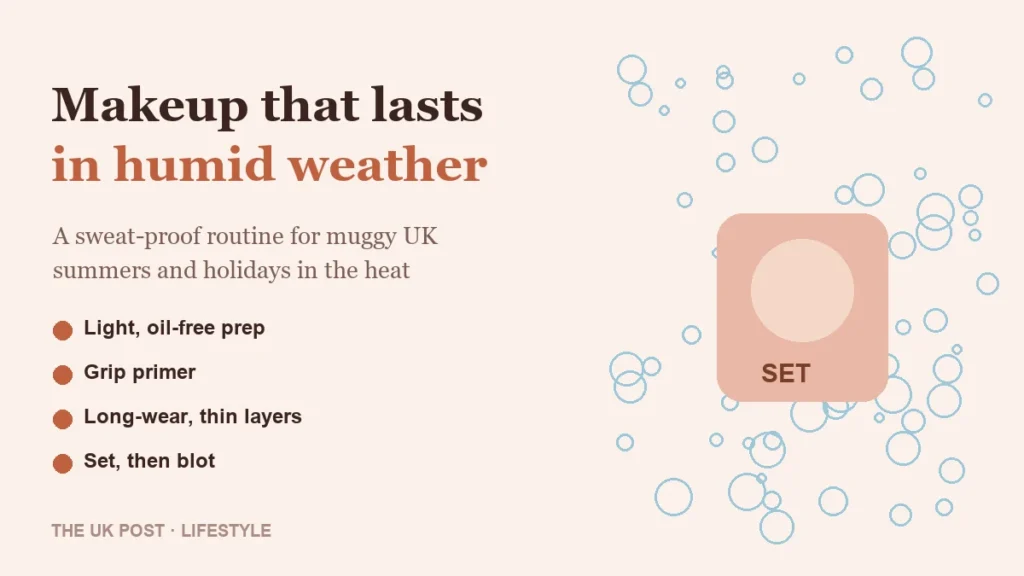
Short answer: the best makeup for a humid climate is light, oil-free and long-wearing, applied in thin layers and locked in place. Start with a gel moisturiser and a sunscreen of at least SPF 30 with a 4- or 5-star UVA rating, use a mattifying or “gripping” primer, choose a long-wear or water-resistant foundation (or a tinted skin tint if you prefer less coverage), set the T-zone with a little translucent powder, and finish with a setting spray. Swap powder shadows and blush for cream versions set with powder, use waterproof mascara and brow gel, and carry blotting papers rather than piling on more powder. Whether it is a muggy British heatwave or a holiday in Spain, Dubai or Thailand, the secret is less product, not more.
Why Humidity Ruins Makeup
Humidity is moisture in the air. When it is high, sweat cannot evaporate easily, so it sits on your skin, mixes with oil and breaks down makeup. The Met Office points out that the “dew point” is a better guide to how sticky it feels than temperature alone: the higher the dew point, the more moisture in the air and the harder it is for your body to cool down. British summers have become noticeably more humid in recent heatwaves, so this is not just a holiday problem.
The result is familiar: foundation slides, mascara smudges, powder cakes and the T-zone shines by lunchtime. The fixes below tackle each of those.
The Humid-Weather Routine, Step by Step
Humid-weather makeup in six steps
- Cleanse and cool. Start with a gentle cleanser and splash with cool water. If your skin is oily, a toner with a gentle exfoliant used a few times a week can help keep pores clear.
- Moisturise lightly. A gel or lotion moisturiser hydrates without grease. Skipping moisturiser often backfires, as dehydrated skin can produce more oil.
- Apply sunscreen. Use at least SPF 30 with high UVA protection, as the NHS advises, and let it settle for a few minutes. Lightweight fluid or gel sunscreens sit best under makeup.
- Prime where you need it. A mattifying primer on the T-zone, or a “gripping” primer all over, helps foundation stay put. Use only a thin layer.
- Base in thin layers. Choose a long-wear, oil-free or water-resistant foundation, and apply a little at a time with a damp sponge or brush, building only where needed. Many people prefer a skin tint or tinted sunscreen in hot weather.
- Conceal sparingly. Use a long-wear concealer only where you need it, and set it straight away.
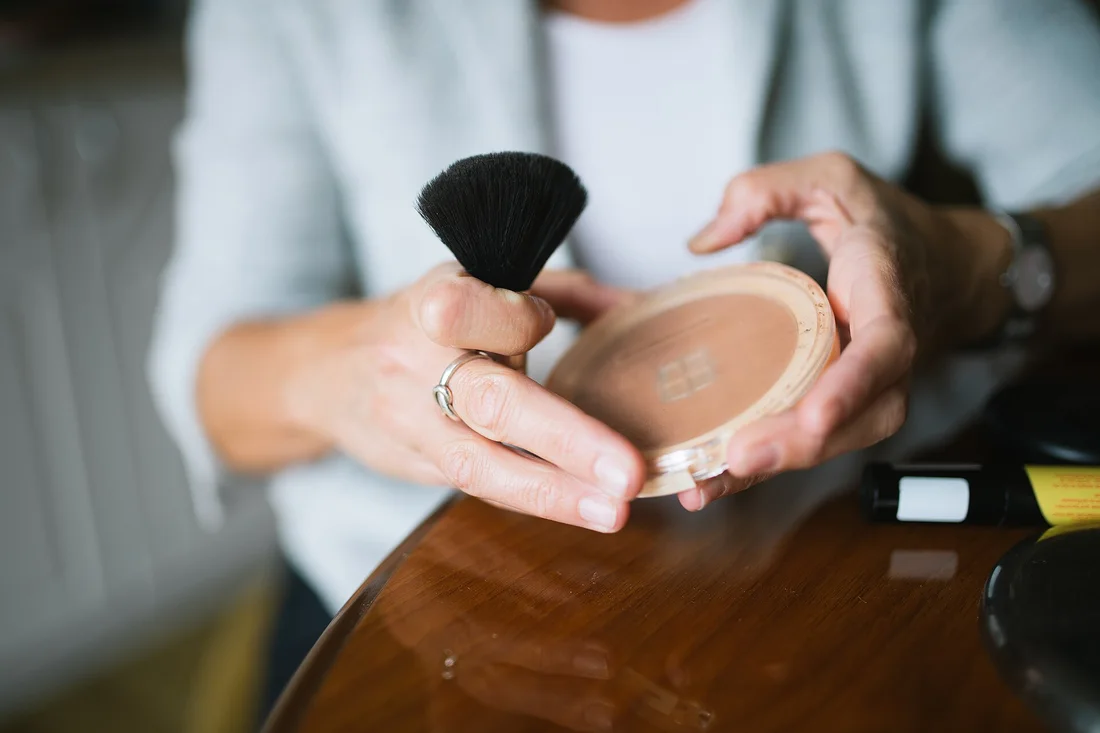
- Set strategically. Press a small amount of translucent powder onto the forehead, nose, chin and under the eyes. Avoid powdering the whole face heavily, which can cake as you sweat.
- Use cream-to-powder colour. Cream blush and bronzer melt into skin; set them lightly with a matching powder for staying power.
- Waterproof the eyes. Eyeshadow primer, then waterproof mascara and eyeliner, and a tinted brow gel.
- Finish with setting spray. Mist evenly and let it dry. Long-wear or “control” sprays help most in humidity.
What to Look for on the Label
| Product | Look for | Avoid in humidity |
|---|---|---|
| Moisturiser | Gel, “oil-free”, “non-comedogenic” | Rich creams and facial oils in the day |
| Sunscreen | SPF 30+, 4- or 5-star UVA, fluid or gel texture | Relying on SPF in foundation alone |
| Primer | “Mattifying”, “gripping”, “long-wear” | Heavy silicone primers layered thickly |
| Foundation | “Long-wear”, “transfer-resistant”, “water-resistant”, “oil-free” | Dewy, very emollient formulas if you are oily |
| Powder | Finely milled translucent setting powder | Heavy coloured powders all over |
| Eyes | Waterproof mascara and liner, eyeshadow primer, brow gel | Standard mascara and pencil liner |
| Lips | Lip stains, tints, long-wear liquid lipsticks | Thick glosses that slide |
You do not need expensive brands to get this right: many high-street ranges sold in UK chemists and supermarkets have long-wear and oil-free versions. What matters more is the formula and how much you use.
Sun Protection Comes First
Humid places are often sunny places, and UV damage happens even on hazy, cloudy days. The NHS recommends sunscreen with at least SPF 30 and at least 4-star UVA protection, reapplied at least every two hours and after sweating, swimming or towel drying. It also warns that the SPF in makeup is no substitute: SPF makeup is often below SPF 30, and you would need to apply far more than normal to get the stated protection.
To top up over makeup, use an SPF spray or mist, or pat cream sunscreen on with a damp makeup sponge. And do not forget eyes: good sunglasses protect both your eyes and your eyeliner from squinting; see our guide to choosing sunglasses and lens categories.
Touch-Ups Through the Day
- Blot, do not powder. Press a blotting paper on shiny areas to lift oil without adding product. Then add a tiny amount of powder only if needed.
- Fix smudges with a cotton bud dipped in a little micellar water.
- Re-mist with setting spray or a facial mist to refresh caked powder.
- Keep a mini kit: blotting papers, a mini powder, cotton buds, lip tint and SPF spray.
- Stay cool: shade, water and a small fan do more for makeup than any product.
Tips for Different Skin Types
- Oily skin: mattifying primer and long-wear oil-free base, powder on the T-zone, blot regularly.
- Dry skin: keep a light hydrating layer underneath and skip heavy powder; a satin skin tint often wears better than matte foundation.
- Combination skin: treat zones differently: mattify the centre, hydrate the cheeks.
- Sensitive or acne-prone skin: choose fragrance-free, non-comedogenic products and patch-test new ones. Sweat and heavy makeup can trigger breakouts, so cleanse thoroughly at night. See a pharmacist or GP if heat rash or acne flares.
- Deeper skin tones: check that translucent powders do not leave a white cast, especially in flash photos; tinted or “banana” setting powders can work better.
My advice: on a properly hot, sticky day, do less. A good sunscreen, a skin tint, concealer where you need it, brow gel, waterproof mascara and a lip stain will look fresher at 5pm than a full face that started melting at 11am.
If you fancy treating your skin after a summer of sun and sweat, our guide to luxury spas in the UK lists places for a proper facial.
Frequently Asked Questions
What is the best makeup for humid weather?
Light, oil-free, long-wear products: a gel moisturiser, high-protection sunscreen, mattifying or gripping primer, long-wear or water-resistant foundation in thin layers, a little translucent powder, waterproof mascara and setting spray.
How do I stop my makeup melting in the heat?
Use less product, prime the oily areas, set the T-zone with powder, finish with setting spray, and blot through the day instead of adding more powder.
Is powder or liquid foundation better in humidity?
A thin layer of long-wear liquid set with powder usually lasts best. Heavy powder foundation can cake when you sweat.
Does setting spray really work?
Long-wear setting sprays can help makeup last longer in humidity, especially combined with primer and thin layers. They do not make makeup sweat-proof.
Should I skip moisturiser if my skin is oily?
No. Use a light gel moisturiser. Dehydrated skin can produce more oil.
Is SPF in foundation enough?
No. The NHS advises wearing a separate sunscreen of at least SPF 30 with high UVA protection and reapplying it regularly.
How do I reapply sunscreen over makeup?
Use an SPF spray or mist, or press cream sunscreen on with a damp makeup sponge.
What mascara is best for humid climates?
Waterproof or “tubing” mascaras, which resist sweat and smudging better than standard formulas.
How do I stop shine without caking?
Blot with blotting papers first, then add only a tiny amount of powder where needed.
What should I pack for a holiday in a hot, humid country?
Sunscreen and an SPF spray, a skin tint or long-wear foundation, concealer, translucent powder, waterproof mascara, brow gel, lip stain, setting spray and blotting papers.
Final Thoughts
Humidity wins against heavy makeup every time, so work with it: prep lightly, protect your skin from the sun, use long-wear formulas in thin layers, lock them in, and blot rather than pile on. Keep it simple and your makeup will survive both a sticky British July and a tropical holiday.
Sources: NHS, “Sunscreen and sun safety”; British Association of Dermatologists sunscreen fact sheet; Met Office explainers on humidity and dew point (2025–2026); Which? on common sunscreen mistakes.