
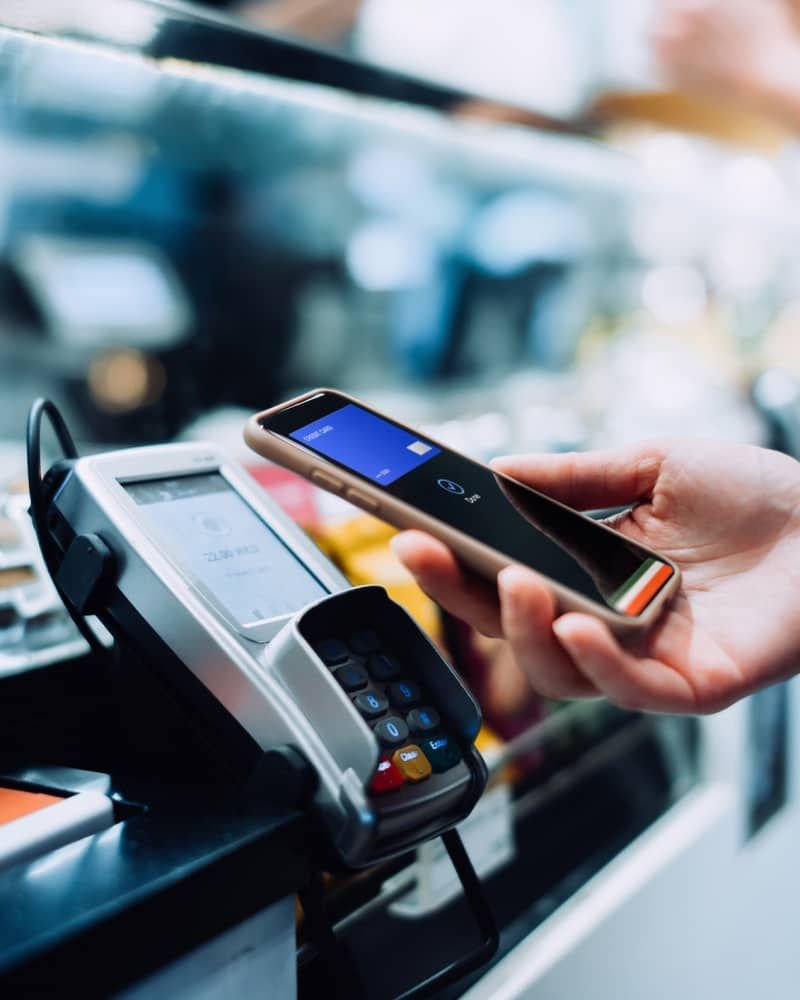
Two things decide whether paying abroad goes well, and most guides mention neither. Always decline to pay in pounds, and put anything over £100 on a credit card — because Section 75 of the Consumer Credit Act 1974 makes the card provider jointly liable with the retailer, and it works on foreign transactions.
And before you load a travel card: money held with an e-money firm is not FSCS protected. That is the FCA’s own position, and it is the thing to know before you move a few thousand pounds onto an app for a holiday.
Last updated: 27 October 2026.
The short version
- At the terminal: always choose local currency
- Over £100: credit card — Section 75 applies abroad
- Section 75 range: over £100, up to £30,000
- Not covered: debit, prepaid, e-money, crypto, cash
- Travel cards: great rates, no FSCS — load trip money only
- Safest to present: phone wallet — tokenised
- Always: a second card, kept separately
What this article covers
- Dynamic currency conversion: the quiet cost
- Section 75, the right nobody mentions
- What each payment method actually gives you
- If the company fails: FSCS versus safeguarding
- Where cryptocurrency actually fits
- Public wifi and the first ten minutes
- The small habits that prevent most problems
- Corrections made to this page
- Frequently asked questions
Dynamic Currency Conversion: The Quiet Cost
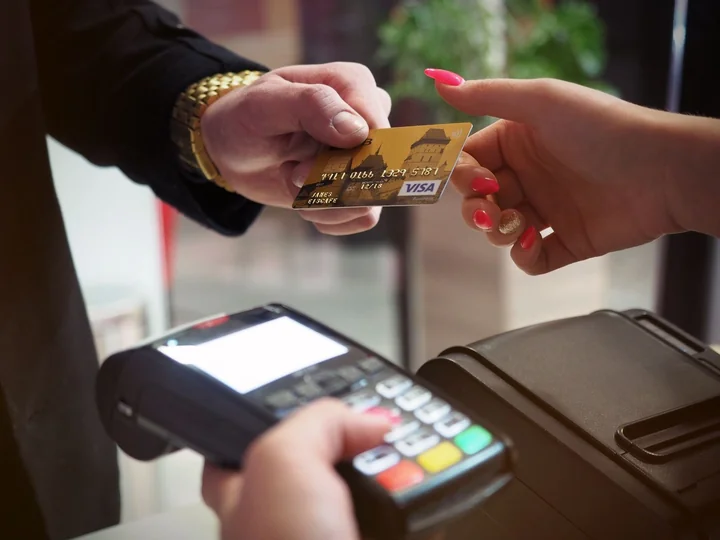
Image source: pexels.com
This remains the single most useful thing on this page. When a foreign card machine asks whether you want to pay in pounds or in the local currency, choosing pounds hands the exchange rate to the merchant’s provider rather than your card network. That rate is almost always worse, and the difference is buried in a screen you tap without reading.
- Always choose the local currency. Every time, on every terminal, including cash machines.
- It is offered because it is profitable for the merchant, not because it is convenient for you.
- Cash machines do it too, often with a screen that makes declining look like cancelling the whole transaction.
- If a terminal converts without asking, the receipt will show the sterling amount and a rate — keep it, because that is a chargeback case.
- Your card network’s rate is the one you want. It is close to the interbank rate; the merchant’s is not.
Section 75, the Right Nobody Mentions

Image source: pexels.com
Section 75 is a statutory right. Chargeback is not. Under Section 75 of the Consumer Credit Act 1974, for a single item or service costing over £100 and up to £30,000 paid directly by credit card, the card provider is jointly liable with the retailer — and it applies to foreign transactions. Chargeback, by contrast, is a voluntary card-scheme process with deadlines set by the networks. The previous version of this page mentioned chargeback and never named Section 75 at all.
Consumer Credit Act 1974, section 75. The purchase price of a single item or service must exceed £100 and not exceed £30,000. Explainer.
- It is the price of the item that matters, not what you paid on the card. Putting a £50 deposit on a credit card for a £600 holiday still brings the whole £600 within Section 75.
- It covers you if the company goes bust — the airline, the hotel, the tour operator — which is exactly when you need it.
- It does not apply to debit or prepaid cards. Those get chargeback only.
- Pay the retailer directly. Some third-party booking platforms break the chain, which is a known weak point.
- Under £100 or over £30,000 falls outside it, which surprises people at both ends.
- MoneySavingExpert keeps a current comparison of travel credit cards with no foreign transaction fees.
What Each Payment Method Actually Gives You

Image source: pexels.com
| Method | Protection | In practice |
|---|---|---|
| Credit card | Yes — Section 75 on single purchases over £100 and up to £30,000, including abroad | The one to use for anything substantial — hotels, tours, car hire. Pay it off in full |
| Debit card | No Section 75. Chargeback only | Fine for small spending. Money leaves your account immediately, so a dispute is you chasing it back |
| Prepaid travel card | No Section 75. Chargeback only | Good at limiting exposure — only the loaded balance is at risk |
| E-money / multi-currency account | No Section 75, and no FSCS protection either — safeguarding instead | Excellent exchange rates. Read the protection section below before loading a large balance |
| Phone wallet | Inherits whatever the underlying card gives you | Safer to present than the card itself — tokenised, so the merchant never sees your real number |
| Cash | None whatsoever | Gone is gone. Carry a little as backup, not as the plan |
Section 75 position per the Consumer Credit Act 1974; e-money position per the FCA.
Credit card only. Debit cards, prepaid travel cards, e-money balances and cash do not carry Section 75 protection.
The practical arrangement that follows: a credit card for anything substantial, a travel card or e-money account for day-to-day spending at a good rate, a second card from a different provider kept somewhere else, and a little cash. Put the credit card in the phone wallet and you get the protection and the tokenisation at once.
If the Company Fails: FSCS Versus Safeguarding

Image source: pexels.com
This is the part the old page left out while recommending these products.
| Where the money is | Protection | What it means |
|---|---|---|
| Bank account (UK bank or building society) | FSCS protected | Compensation if the firm fails, up to the FSCS limit |
| E-money institution | NOT FSCS protected — safeguarding applies | The firm must hold your money in a separate account at a bank, or insure it. The FCA says you should get most of it back — but it may take time and may not be the full amount, because an administrator can deduct costs |
| Cryptocurrency | No FSCS protection, no Section 75 | A lost key is unrecoverable in a way a lost card is not |
| Cash | No protection at all | Obvious, but worth saying |
| If an e-money firm fails | You contact its administrator, not the FSCS | The provider should publish details naming the insolvency practitioners |
- Money with an electronic money institution is not FSCS protected. That is the FCA’s position, stated plainly.
- Safeguarding is the protection that applies instead — the firm must hold your money in a separate account at a bank, or cover it with insurance.
- The FCA’s own wording is that you should get most of your money back if the firm fails — but that it may take time, and may not be the full amount, because an administrator can deduct costs.
- You would deal with an administrator, not the FSCS. The provider should publish details naming the insolvency practitioners.
- None of this makes these accounts a bad idea. The rates are genuinely better. It makes them a bad place to keep a large balance.
- Load the trip, not the savings. That one habit resolves the whole issue.
- For more on how these firms are regulated, see this overview of UK money transfer rules and our piece on open banking platforms.
Where Cryptocurrency Actually Fits

Image source: pexels.com
Cryptocurrency comes up in every conversation about paying abroad and deserves an honest answer rather than an enthusiastic one.
- Very few ordinary tourist businesses accept it directly. That has not changed much.
- The value can move noticeably between booking and arriving, which is the opposite of what you want from holiday money.
- A lost key is genuinely unrecoverable in a way a lost card is not.
- It has no FSCS protection and no Section 75. If something goes wrong there is no provider standing behind the transaction.
- Where it does have a use is moving money between countries outside banking hours.
- If you are going to hold any, the wallet matters more than the coin — 99Bitcoins compares crypto wallets in the UK on the criteria that matter.
Public Wifi and the First Ten Minutes

Image source: pexels.com
- Do not log into a bank on open public wifi. Modern apps are encrypted, so the realistic risk is a fake network rather than interception — but that risk is real in airports and stations.
- Use mobile data or an eSIM for anything financial. See our guide to eSIMs for travel.
- In the first ten minutes after landing: turn on data, check your banking app opens, and confirm your backup card is where you think it is.
- Tell your bank you are travelling only if it still asks you to. Most no longer need it, and some flag the call itself as unusual.
- Screenshot your card provider’s overseas lost-and-stolen number — the one that works from abroad, which is rarely the 0800 number.
- Keep the second card somewhere separate from the first. One card and one phone in one pocket is the standard failure.
The Small Habits That Prevent Most Problems
- Decline pounds. Every time.
- Big things on the credit card, small things on whatever has the best rate.
- Freeze, do not cancel, the moment a card goes missing — it is reversible.
- Keep receipts for anything disputed. A chargeback or Section 75 claim is a paperwork exercise.
- Check what your packaged account already covers before buying insurance twice — and check the exclusions, not just the headline.
- Set a low contactless limit or use the phone wallet, which needs your face or a code.
- More travel reading: travel essentials, flight cancellation rights, saving money, cybersecurity and lost or stolen number plates.
Corrections Made to This Page

Image source: pexels.com
| What it said | Why it changed |
|---|---|
| Section 75 was never mentioned | The most valuable protection in the whole subject. The page referred to “chargeback rights” instead — chargeback is a voluntary scheme, Section 75 is a statutory right covering single purchases over £100 and up to £30,000, including abroad |
| Travel cards and multi-currency accounts recommended with no protection warning | Money with an e-money institution is not FSCS protected. Safeguarding applies instead, and the FCA says you may not get the full amount back if the firm fails |
| The crypto section did not state the protection position | No FSCS protection and no Section 75. Now said plainly |
| No Gutenberg blocks | The article had a wp: block count of zero, and its one table was raw HTML. Rebuilt |
| No structured data | FAQ JSON-LD added |
All corrections made on 27 October 2026. All fifteen images and every original link were kept, including the crypto wallet link.
Frequently Asked Questions
Should I pay in pounds or local currency abroad?
Always the local currency. Choosing pounds is dynamic currency conversion, which hands the exchange rate to the merchant’s provider rather than your card network. That rate is almost always worse, and the cost is buried in a screen you tap in a hurry. This is the cheapest habit to fix on the whole page.
What is Section 75 and why does it matter abroad?
Section 75 of the Consumer Credit Act 1974 makes your credit card provider jointly liable with the retailer for a single item or service costing over £100 and up to £30,000 — and it applies to foreign transactions too. If the hotel never existed or the tour operator folds, you claim from the card company. This page never used to mention it.
Is chargeback the same thing as Section 75?
No, and the difference matters. Section 75 is a statutory right. Chargeback is a voluntary card-scheme process with time limits set by the networks, not by law. Chargeback is what you fall back on with a debit or prepaid card; Section 75 is stronger, and credit-card only.
Does Section 75 work on a debit card or a travel card?
No. It applies to credit cards only — not debit cards, not prepaid travel cards, and not an e-money balance. That is the single best reason to put a big booking on a credit card even if you pay it off the same day.
Are travel cards and multi-currency accounts protected if the company fails?
Not by the FSCS. Per the FCA, money held with an electronic money institution is not covered by the Financial Services Compensation Scheme. Safeguarding applies instead: the firm must keep your money in a separate account at a bank or insure it. The FCA says you should get most of it back if the firm fails — but it may take time and may not be the full amount, because an administrator can deduct costs.
So should I avoid them?
No — just do not treat them as a bank. The exchange rates are genuinely much better than a high-street bank’s. Load what you need for the trip, not your savings, and keep a credit card for anything over £100.
Is it safer to use a phone wallet or the card?
The phone wallet. It is tokenised, so the merchant never receives your real card number, and it cannot be skimmed or shoulder-surfed at a terminal. It also inherits whatever protection the underlying card gives you — so a credit card in a phone wallet still carries Section 75.
Should I take cash on holiday?
A small amount, as a backup. Cash has no protection of any kind — lost is lost. It is for taxis, markets and the places where the terminal is “broken”, not for carrying the cost of the trip.
What should I do if my card is stolen abroad?
Freeze it in the app first — seconds, and reversible if it turns up. Then report it, then use your backup card. Carry a second card from a different provider, kept somewhere separate from the first. One card and one phone in one pocket is the common failure.
Can I actually pay with cryptocurrency while travelling?
Rarely, and it is the least protected option. Very few ordinary tourist businesses accept it, the value moves between booking and arriving, and a lost key is unrecoverable. Crypto has no FSCS protection and no Section 75. Where it has a genuine use is moving money between countries outside banking hours.
Do I still need travel insurance if my bank card covers me?
Check before you assume, and check what is excluded. Packaged account cover is real but often has age limits, activity exclusions and a requirement that you paid for the trip with that account. Section 75 covers the purchase, not your medical bills — they are different problems.
Is public wifi really a risk for banking?
Less than it used to be, but do not log into a bank on it. Modern banking apps are encrypted, so the realistic risk is a fake network rather than interception. Use mobile data or an eSIM for anything financial — see our guide to eSIMs.
Final Thoughts
Decline pounds at the terminal, and put anything over £100 on a credit card. Those two habits save more money and prevent more trouble than every other tip on this page combined, and neither costs anything.
Use the travel card for the good rate, but load the trip rather than your savings — because if that firm fails, the FSCS is not the one picking up the phone. More from The UK Post.
Sources
- Consumer Credit Act 1974, section 75 — joint liability
- Section 75 protection explained — the £100 to £30,000 range
- FCA — using payment service providers (e-money and safeguarding)
- Financial Services Compensation Scheme
- MoneySavingExpert — travel credit cards
- Overview of UK international money transfer rules
- 99Bitcoins — crypto wallet comparison, UK
Disclaimer
This article is general information, not financial advice, and does not recommend any card, account or provider. Section 75 and FSCS rules are summarised and have conditions and exceptions — check the position with your own provider before relying on it. Money held with an electronic money institution is not FSCS protected. Cryptocurrency is high risk, is not FSCS protected and is not covered by Section 75; you should be prepared to lose all the money you put in. Information correct as at 27 October 2026.

Image source: pexels.com

Image source: pexels.com

Image source: pexels.com

Image source: pexels.com

Image source: pexels.com

Image source: pexels.com

Image source: pexels.com

Image source: pexels.com