
In July 2026, UK open banking passed one billion payments. It took about eight years. The second billion will not take nearly as long, and if you take payments for a living that matters more than any product pitch you will read.
Here are the current official numbers, published by Open Banking Limited and covering June 2026: 40.16 million payments in the month, 18.81 million user connections, and 2.81 billion API calls — the highest monthly volume yet recorded.
This guide is written for merchants rather than for developers. What it costs, how fast the money arrives, how reliable the rails actually are, and the questions worth asking before you sign anything.
Last updated: 20 October 2026. All figures from Open Banking Limited’s published release of 30 July 2026 covering June 2026.
UK open banking, June 2026
- Payments in the month: 40.16 million
- Cumulative payments: 1 billion+, passed July 2026
- User connections: 18.81 million (15m in July 2025)
- Sweeping VRPs: 7.73 million, up 6.7% in a month — about 19% of all payments
- API calls: 2.81 billion, a record
- Availability: 99.80% weighted
- Average response: 349ms, 50ms faster than the previous period
What this article covers
The Numbers a Merchant Should Know
| Live since | January 2018, ordered by the CMA alongside PSD2 |
| Scale | One billion cumulative UK payments passed in 2026 |
| Active users | 16.5 million connections in December 2025, up 36% in a year |
| 2025 volume | 351 million payments, up 57% year on year |
| June 2026 | Over 40 million payments; a record 2.81 billion API calls |
| Growth area | Variable recurring payments, roughly 16% of transactions |
Vendors quote selective statistics. These are the official ones, from the body that runs the standard.
| Measure | June 2026 | Change |
|---|---|---|
| Total payments | 40.16 million | First passed 40m in May 2026 |
| Single domestic payments | 32.43 million | −1.2% month on month |
| Sweeping VRPs | 7.73 million | +6.7% month on month |
| User connections | 18.81 million | −4.2% month on month |
| API calls | 2.81 billion | +4.4% — highest ever recorded |
| Weighted availability | 99.80% | — |
| Average response time | 349ms | 50ms faster than the previous period |
| Cumulative payments | 1 billion+ | Milestone passed July 2026 |
| Cumulative API calls | 100 billion+ | Across the CMA9 banks |
Source: Open Banking Limited, 30 July 2026. Figures cover the CMA9 banks. Monthly updates are published on the API performance page.
Two things to notice. Single domestic payments fell slightly while sweeping VRPs rose 6.7% — the growth is coming from the recurring side, not the one-off side. And user connections dipped 4.2% in the month, which is a reminder that adoption is not a straight line even in a strongly growing market.
What Those Payments Actually Are
Open banking payments by type, June 2026, in millions. Sweeping VRPs are about 19% of the total. Source: Open Banking Limited.
Roughly one in five open banking payments is now a sweeping VRP, and that is before commercial VRPs have scaled at all. Sweeping moves money between a customer’s own accounts — into a savings pot, or to avoid an overdraft. Commercial VRPs, which let a customer authorise a business to take varying amounts, are the version that changes things for merchants.
Is It Reliable Enough To Take Money With?

Image source: pexels.com
This is the question that actually decides whether you adopt it, and it is the one vendors answer least clearly. The published figures answer it properly.
| Metric | June 2026 | What it means at your till |
|---|---|---|
| Weighted availability | 99.80% | Roughly 1.4 hours of downtime across a month, spread across many banks |
| Unweighted availability | 99.35% | The average across providers, including smaller ones |
| Average API response | 349ms | About a third of a second — fast enough that the customer does not notice |
| Direction of travel | 50ms faster than the previous period | It is still improving |
Source: Open Banking Limited. Performance is published monthly and varies by bank, so check the banks your customers actually use.
A third of a second and 99.8% availability is payment-grade. It is also published monthly and bank by bank, which is more transparency than the card networks offer. If a provider will not tell you which banks perform worst, the performance data is public and you can check it yourself.
Why Card Fees Built This Market

Image source: pexels.com
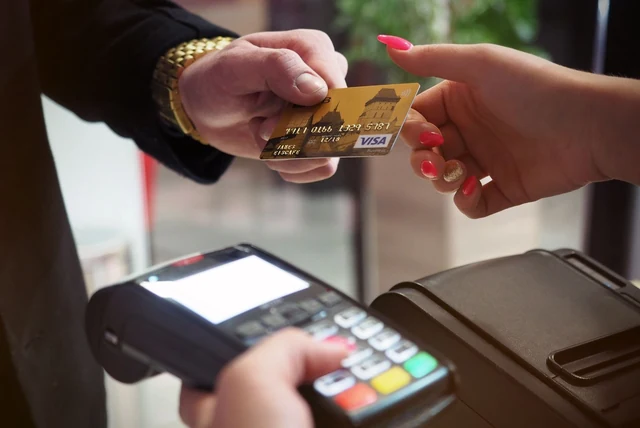
Open banking did not grow because merchants love new technology. It grew because card acceptance costs money on every single transaction, forever.
A card payment carries interchange, scheme fees and an acquirer margin, usually quoted as a percentage plus a fixed amount. An open banking payment goes bank to bank over Faster Payments, so the card schemes are not in the chain at all. Providers generally charge a flat fee per transaction instead.
The honest caveat: pricing varies a great deal by provider and volume, and we are not quoting rates here because we cannot verify current ones for every provider. Get a flat per-transaction fee in writing, and compare it against your effective card rate — total card costs divided by total card turnover — rather than the headline rate on your statement. The gap between those two numbers is usually where the surprise lives.
Settlement Speed Changes Cash Flow
Open banking payments run over Faster Payments, so money typically lands in seconds. Card settlement usually takes two to three working days.
For a small business that difference is not a technical detail, it is working capital. Three days of turnover permanently tied up in settlement is three days you have had to fund from somewhere else. With rates where the Bank of England has held them, the cost of financing that gap is real money rather than a rounding error.
There is a second benefit that rarely gets mentioned: there are no chargebacks in the card sense. The customer authorised the payment in their own banking app. That removes a category of cost and administration entirely — though it also means your refund process has to be good, because the customer has no card issuer to appeal to.
Variable Recurring Payments, the Next Wave

Image source: pexels.com
If you only take one thing from this page for the next two years, take this.
Commercial VRPs matter because they do what a direct debit does, but instantly, with the customer setting the limits in their own banking app, and without the direct debit guarantee machinery behind it. For subscriptions, variable utility-style billing and top-ups, that is a genuine alternative to both cards and direct debit for the first time. OBL’s own VRP pages and its commercial scheme announcement are worth reading before a provider explains it to you.
The Questions To Ask Any Provider
- What is the flat fee per transaction, in writing? Not a range, and not “from”.
- Which banks do you cover, and what is their individual availability? Coverage of the CMA9 is table stakes; smaller banks and building societies are where gaps appear.
- What happens when a bank is down? Does the checkout fall back to cards automatically, or does the sale fail?
- How does refunding work, and how fast is it? With no chargeback route, your refund process is your customer service.
- Do you support commercial VRPs, and on what timetable?
- How does it reconcile? Payments arriving individually in seconds is a different bookkeeping problem from a single daily card settlement.
- Are you FCA-authorised, and in what capacity? Ask for the firm reference number and check it on the register yourself.
That last point is not a formality. Providers such as Noda and others operate in a regulated space, and the register is free to search. If you outsource any of the integration work, our guide to IT outsourcing covers the contracting side.
Where It Fits Beside Cards

Image source: pexels.com
| Cards | Open banking | |
|---|---|---|
| Cost per transaction | Percentage plus fixed fee | Usually a flat fee |
| Settlement | Two to three working days | Seconds |
| Card data held | Yes, with all that follows | None |
| Chargebacks | Yes | No — so refunds matter more |
| Customer familiarity | Universal | Growing, but not universal |
| Recurring billing | Mature | VRPs arriving now |
| Best for | Everything, by default | Higher-value baskets, top-ups, repeat customers |
Open banking is a second rail, not a replacement. Most merchants should run both.
The sensible position for almost every merchant is to offer both and let the customer choose. Watch the mix over a few months: if a meaningful share picks bank payment when it is offered, that is real evidence about your customers, and it is worth more than any projection. For related reading on payments while travelling, see our travel guide.
Frequently Asked Questions
What is an open banking platform?
A service that lets a business take payments straight from a customer’s bank account, using the bank’s own app to authorise it, instead of putting a card through a card network. The platform handles the bank connections, the checkout and the reconciliation.
How many people use open banking in the UK?
Open Banking Limited recorded 18.81 million user connections in June 2026. The same body reported 15 million users in July 2025, so adoption has risen roughly a quarter in under a year.
How many open banking payments are made?
40.16 million in June 2026 alone, and the ecosystem passed one billion payments in total in July 2026, alongside more than 100 billion API calls.
Are open banking payments cheaper than cards?
Usually yes, because they bypass the card schemes and interchange entirely. Providers price differently, so ask for a flat per-transaction fee in writing and compare it against your effective card rate, not your headline rate.
How fast do open banking payments settle?
They run over Faster Payments, so funds typically arrive in seconds rather than in the two to three working days a card settlement takes.
Is open banking reliable enough to take money with?
The published availability for June 2026 was 99.80% weighted, with an average API response time of 349 milliseconds — 50ms faster than the previous period. That is a payment-grade service, and the figures are published monthly.
What are variable recurring payments?
Standing permissions that let a business take varying amounts within limits the customer sets. “Sweeping” VRPs, which move money between a customer’s own accounts, are already live and made up 7.73 million payments in June 2026. Commercial VRPs — for paying businesses — are the next wave.
What share of open banking payments are VRPs?
About 19% of June 2026’s total, and growing faster than any other type. That is sweeping VRPs alone, before commercial VRPs scale.
Is open banking safe for customers?
The customer authorises each payment inside their own banking app, using the same security they already use. No card number is entered, stored or transmitted, so there is no card data for a merchant to lose.
Do I still need to accept cards?
Yes. Open banking is a strong second rail, not a replacement. Offer both and let the customer choose — and watch the mix, because that tells you more about your customers than any survey will.
Final Thoughts
One billion payments, 100 billion API calls, 18.81 million user connections and 99.8% availability at 349 milliseconds. Open banking in Britain is no longer a pilot, and the figures are published monthly by the body that runs the standard rather than by the people selling it to you.
For a merchant the case is straightforward: lower cost per transaction, money in seconds instead of days, and no card data to lose. The case against is equally straightforward: not every customer will use it yet. Run both rails, ask the seven questions above, and let your own payment mix tell you how fast to move.
Sources
- Open Banking Limited — one billion payments and 100 billion API calls, 30 July 2026
- Open Banking Limited — monthly API performance statistics
- Open Banking Limited — variable recurring payments
- Open Banking Limited — the UK’s commercial open banking scheme, December 2025
- Open Banking Limited — Q&A on the definition of sweeping, March 2026
Disclaimer
All statistics are taken from Open Banking Limited’s published release of 30 July 2026, covering June 2026, and from its monthly performance data, read on 20 October 2026. Figures cover the CMA9 banks and are updated monthly. No provider pricing is quoted because current rates could not be verified across providers — obtain quotations in writing. This article is information for merchants, not financial or regulatory advice. More from The UK Post.
Image source: pexels.com