RLP Letter: What It Is and Do You Have to Pay? A UK Guide
An RLP letter is a civil recovery demand from Retail Loss Prevention, not a fine. Whether you must pay, your options, and free UK advice.
 12 min read
Comments: 0Views: 4
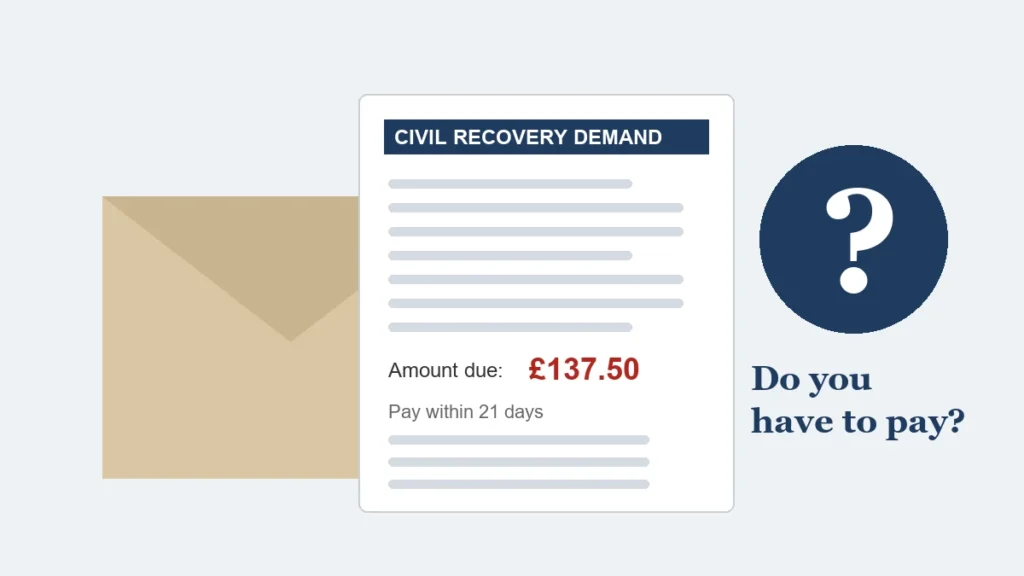
Short answer: an RLP letter is a “civil recovery” demand from Retail Loss Prevention Ltd, a company that acts for many UK retailers. It asks you to pay a sum, often between about £90 and £250, as compensation after you were accused of shoplifting or, if you work in retail, of theft from your employer. It is not a fine, not a court order and not a criminal penalty. Paying it does not affect any police action, and not paying it does not give you a criminal record. The retailer can only make you pay by suing you in the county court and proving its losses, something Citizens Advice found has rarely happened for low-value cases. Before you pay, deny or ignore it, read this guide and get free advice from Citizens Advice.
What Is an RLP Letter?
RLP stands for Retail Loss Prevention, a Nottingham-based company that sends civil recovery demands on behalf of high street retailers. Citizens Advice names RLP and the law firm Drydens as the two agents that act for many UK retailers.
Civil recovery means a business trying to recover its losses through the civil law rather than the criminal courts. If a shop’s staff stop you and accuse you of shoplifting, the shop may pass your details to RLP. Weeks later, a letter arrives asking you to pay a set sum to cover the retailer’s “losses”: staff time, administration, and security costs.
This happens whether or not the police were called, and whether or not the goods were recovered. In Citizens Advice’s analysis of hundreds of cases, the goods were recovered intact for resale in four out of five shoplifting cases.
The same system is used against retail employees who are accused of theft or of causing losses. Those demands are usually larger, sometimes more than £5,000.
RLP Letter at a Glance
| Question | Answer |
|---|---|
| Who sends it? | Retail Loss Prevention Ltd, acting for a retailer |
| Is it a fine? | No. It is a demand for compensation, not a penalty from a court or the police |
| Is it a criminal matter? | No. It is a civil claim. It does not create a criminal record |
| Typical amount | Roughly £90 to £250 for alleged shoplifting; more for employee cases |
| Can they make me pay? | Only by suing you in the county court (sheriff court in Scotland) and proving their claim |
| Can I be taken to court? | Yes, in theory. It has been rare for low-value shoplifting claims |
| Will it affect my credit file? | Not unless a court judgment is made against you and left unpaid |
| Where to get free help | Citizens Advice |
How Much Does an RLP Letter Ask For?
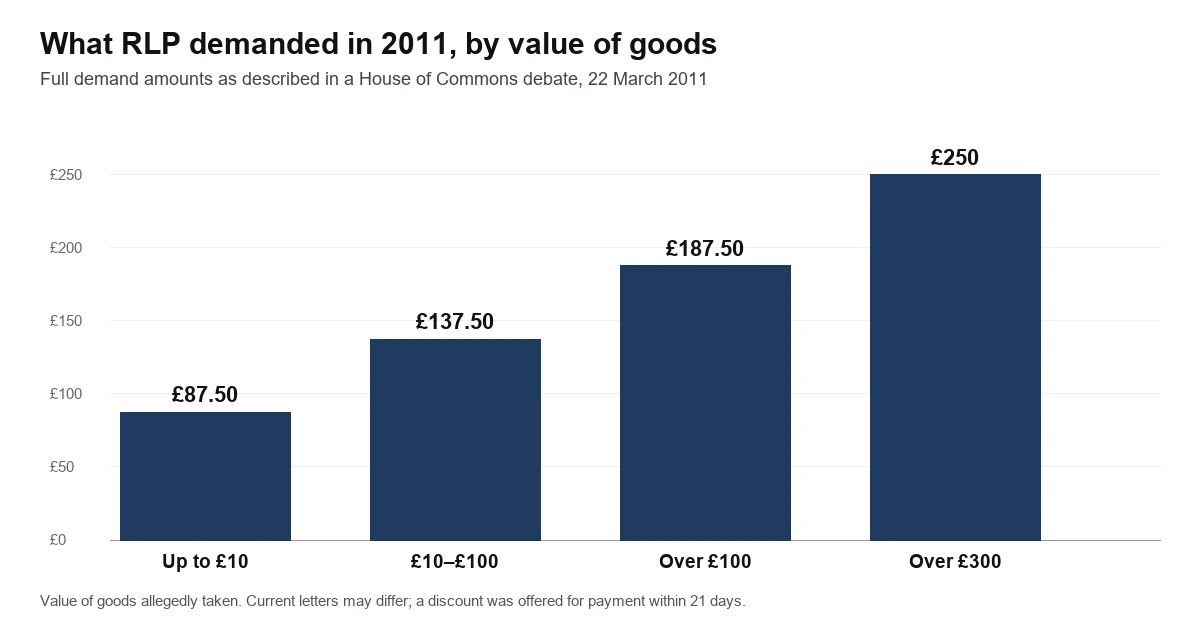
RLP has used fixed sums based on the value of the goods. During a House of Commons debate on civil recovery in 2011, its tariff was described as follows. These figures are more than 15 years old, so your letter may differ:
| Value of goods (2011 tariff) | Full demand |
|---|---|
| Up to £10 | £87.50 |
| £10 to £100 | £137.50 |
| Over £100 | £187.50 |
| Over £300 | £250 |
The letters typically offer a discount if you pay within 21 days. Citizens Advice’s 2010 report found that RLP kept about 40 per cent of the money paid, with the rest going to the retailer. More recent reports from people who have received civil recovery letters mention amounts such as £99.50 and £150.
The important point is what the money is for. It is not the value of the goods; that is often listed as “nil” because they were recovered. It is a claimed share of the retailer’s general costs of staff, security and paperwork.
Do I Have to Pay an RLP Letter?
You do not have to pay just because you received the letter. Only a court can order you to pay (and genuine court claims arrive formally, sometimes by a process server). Citizens Advice puts it plainly: “The business can only claim compensation from you if they can prove in court that they’re entitled to it.”
That said, I would not tell you to simply throw it away without thinking. Whether you pay is your decision, and the right choice depends on what happened, what evidence the shop has, and how worried you are about the small chance of court action. These are the main facts to weigh up:
- The retailer must prove its losses. Citizens Advice says a business must show its costs were reasonable and “can’t claim fixed costs” for staff time, administration and security. A fixed tariff sum may be hard to justify.
- The legal basis is disputed. In a 2012 county court trial, the first civil recovery case to reach a full hearing, Judge Charles Harris QC dismissed a retailer’s claim against two young women. The claim was mostly for staff time, and he found the retailer had not shown that its security staff were taken away from their normal work. A county court ruling does not bind other courts, so retailers can still try.
- Court action has been rare. Citizens Advice’s 2010 report said that of more than 600,000 civil recovery demands since 2000, it could find only four unpaid demands that had been successfully pursued through a contested county court trial, none of them for low-value shoplifting. RLP had confirmed it had never won a fully contested claim over an unpaid demand at that point. Things can change, and this was a snapshot, not a guarantee.
- If you are sued and lose, it costs more. If a retailer did take you to court and won, you could be ordered to pay its legal costs as well as the claim. That risk is why some people choose to pay or negotiate.
Your Four Options
Citizens Advice describes four ways to respond. This is how they compare:
| Option | What it means | Pros | Cons |
|---|---|---|---|
| Ignore it | Do not reply | No cost; court action has been rare | More letters, possibly from a debt collector; a small risk of a court claim |
| Deny liability | Write back saying you do not accept the claim | Puts your position on record; the retailer must decide whether to sue | May prompt more letters; get advice first |
| Make an offer | Deny liability, then offer a smaller amount in a separate letter marked “without prejudice” | Can end the matter for less | You still pay something |
| Pay in full | Pay the amount demanded, possibly in instalments | Ends the letters | You may pay more than the shop could prove in court |
Citizens Advice suggests getting help from an experienced adviser if you want to deny the claim, and it explains how to set out a “without prejudice” offer correctly.
What to Do Step by Step
- Do not panic, and do not pay on the spot. The deadlines in the letter are set by RLP, not by a court.
- Check who it is from. Make sure it names Retail Loss Prevention and a real retailer, and that it relates to an incident you recognise. If it looks wrong, treat it as a possible scam and do not use any payment links. Our guide on how to stay safe online explains the warning signs.
- Write down what happened while you remember it: the date, the store, what was said, whether you signed anything, and whether the police were involved.
- Get free advice from Citizens Advice before you reply, especially if you deny the allegation or the letter is about your job.
- Reply in writing if you decide to respond, and keep copies of everything.
- If you receive court papers, do not ignore them. Get advice straight away, because a deadline for your defence will apply.
RLP Letters and Children
Civil recovery letters are often sent to teenagers, or to their parents. Citizens Advice found in 2010 that around one in four people it helped with these letters were teenagers, most of them aged 14 to 16.
If your child has received a letter, get advice before you pay or reply. Parents are not automatically responsible for their child’s debts. Use it as a chance to talk to your child about what happened, but don’t feel pressured into paying a demand addressed to them.
What About the “National Database” Warning?
Some RLP letters say your details will be kept on a national database of incidents of dishonesty. Records like this can be shared between retailers, and some employers check them when screening job applicants, so it is worth knowing what is held about you.
You have the right to know what information is held about you. You can make a subject access request to find out, and if you think your data is wrong or being used unfairly, you can complain to the Information Commissioner’s Office (ICO). Citizens Advice points to this right in its guidance.
RLP Letters for Retail Staff
If you work in a shop and your employer accuses you of theft or of causing a loss, the letter may come from RLP or Drydens on your employer’s behalf. These claims are usually higher and can include the value of stock or cash allegedly taken.
Take these seriously and get advice quickly. If you are also facing disciplinary action or dismissal, a trade union representative, Acas (the free workplace advice service) or an employment solicitor can help with that side of things.
Is Civil Recovery Fair? Both Sides
Retailers argue that shop theft costs them billions every year, costs that are passed on to honest customers, and that people who steal should contribute to the cost of dealing with it. They also say civil recovery is lawful and can deter repeat offending.
Critics, led by Citizens Advice, argue that most demands are for low-value incidents, many of them disputed or genuine mistakes at self-service tills, and that the letters rely on fear of court action that rarely follows. Citizens Advice has called for civil recovery to be limited to serious or persistent offenders who have been convicted in a criminal court.
My honest view: if you did take something, paying a fair sum may feel like the right thing to do, and that is your choice. If you did not, or the amount looks inflated, you are entitled to challenge it, and you should not be bullied by deadlines.
Know your rights in other areas of UK law too: our guide to the legal rights of squatters explains another situation where civil and criminal law overlap.
Frequently Asked Questions
What is an RLP letter?
It is a civil recovery demand from Retail Loss Prevention Ltd, asking you to pay compensation to a retailer after an accusation of shoplifting or employee theft. It is not a fine or a criminal penalty.
Do I legally have to pay an RLP letter?
No law makes you pay just because you received the letter. The retailer would have to sue you in the county court and prove its losses before you could be ordered to pay.
Will RLP take me to court?
They can, but Citizens Advice found that court action over unpaid low-value shoplifting demands has been very rare. You cannot rule it out completely, so get advice if you are worried.
Will an RLP letter give me a criminal record?
No. Civil recovery is separate from the criminal justice system. Any police caution or charge is a separate matter that paying or not paying RLP does not change.
Does an RLP letter affect my credit score?
Not by itself. Only an unpaid county court judgment would appear on your credit file, and that would require the retailer to sue you and win.
How much is an RLP letter?
Amounts vary. RLP’s 2011 tariff ranged from £87.50 to £250 depending on the value of the goods, and recent letters have asked for sums such as £99.50 or £150.
Is an RLP letter a scam?
RLP is a real company, so a genuine letter is not a scam. But check the details carefully, because fraudsters can copy any letter. If you do not recognise the incident, get advice and do not click payment links.
What if I was not shoplifting?
You can deny liability in writing. Write down what happened and get advice from Citizens Advice before replying.
My child got an RLP letter. What should I do?
Get advice before paying or replying. Parents are not automatically liable for their children’s debts, and you should not feel pressured by the deadlines in the letter.
What happens if I ignore an RLP letter?
You will probably receive more letters, possibly from a debt collector. A court claim is possible but has been rare. If you ever receive court papers, get advice immediately.
Final Thoughts
An RLP letter is designed to be unsettling, with deadlines, legal language and talk of escalating costs. But it is a request for compensation, not a fine, and only a court can make you pay. Take a breath, write down what happened, and get free advice from Citizens Advice before deciding whether to pay, negotiate, deny or ignore it. Whatever you choose, keep copies of everything.
This guide is general information, not legal advice. For advice on your own situation, contact Citizens Advice or a solicitor.
Sources: Citizens Advice, “A business takes legal action against you to recover losses for theft” (England), accessed 26 November 2026; Citizens Advice, “Uncivil recovery” evidence briefing (December 2010); Citizens Advice, “Unreasonable demands?” (December 2009); House of Commons debate on civil recovery (22 March 2011); Wikipedia, Civil recovery (accessed 26 November 2026), citing Bates Wells Braithwaite (May 2012).