Mould Testing for Children: Health Risks, Tests and Awaab’s Law
When mould in the home affects a child: the symptoms to watch, why test kits rarely help, what to do, and the Awaab's Law deadlines that make social landlords act fast.
 11 min read
Comments: 0Views: 8
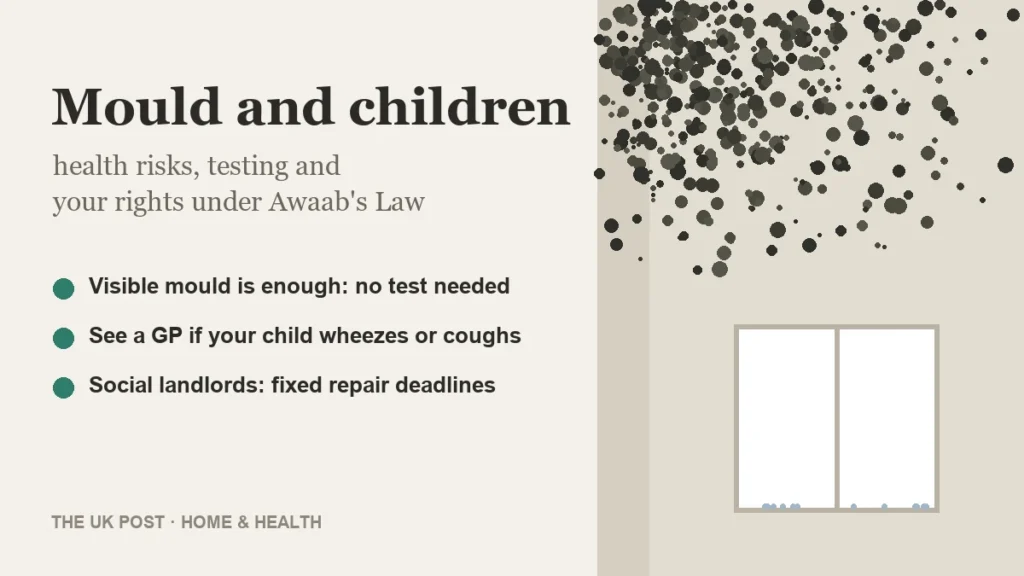
Short answer: if you can see or smell mould in your home, you do not need a test to prove it is a risk to your child: the priority is finding and fixing the damp that causes it. Babies, young children and children with asthma are more vulnerable to mould, which can trigger coughing, wheezing, a blocked nose, skin rashes and asthma attacks. See your GP if your child has symptoms, and get urgent help if they are struggling to breathe. DIY mould test kits are of little use, because mould spores are in every home. If you rent from a council or housing association in England, Awaab’s Law has since 27 October 2025 required your landlord to investigate significant damp and mould within 10 working days and make it safe within 5 more, with stricter rules for emergencies. More hazards come under the law on 30 November 2026.
Why Mould Matters More for Children
Damp and mould release spores and other particles into the air. Anyone can react to them, but government health guidance identifies children, and especially babies, as being at greater risk, along with people with asthma or other lung conditions, weakened immune systems or skin conditions such as eczema. Children breathe faster than adults, their lungs are still developing, and they often spend long hours in one room, such as a damp bedroom.
The UK learned this at terrible cost. Awaab Ishak, aged two, died in December 2020 in Rochdale, Greater Manchester. In November 2022 the coroner concluded that he had died from a severe respiratory condition caused by prolonged exposure to mould in his family’s housing association flat, after his parents had complained about it for years. His family’s campaign led to Awaab’s Law, which puts legal deadlines on social landlords to deal with damp, mould and other dangerous hazards.
Symptoms to Watch For
Possible signs that damp and mould are affecting a child
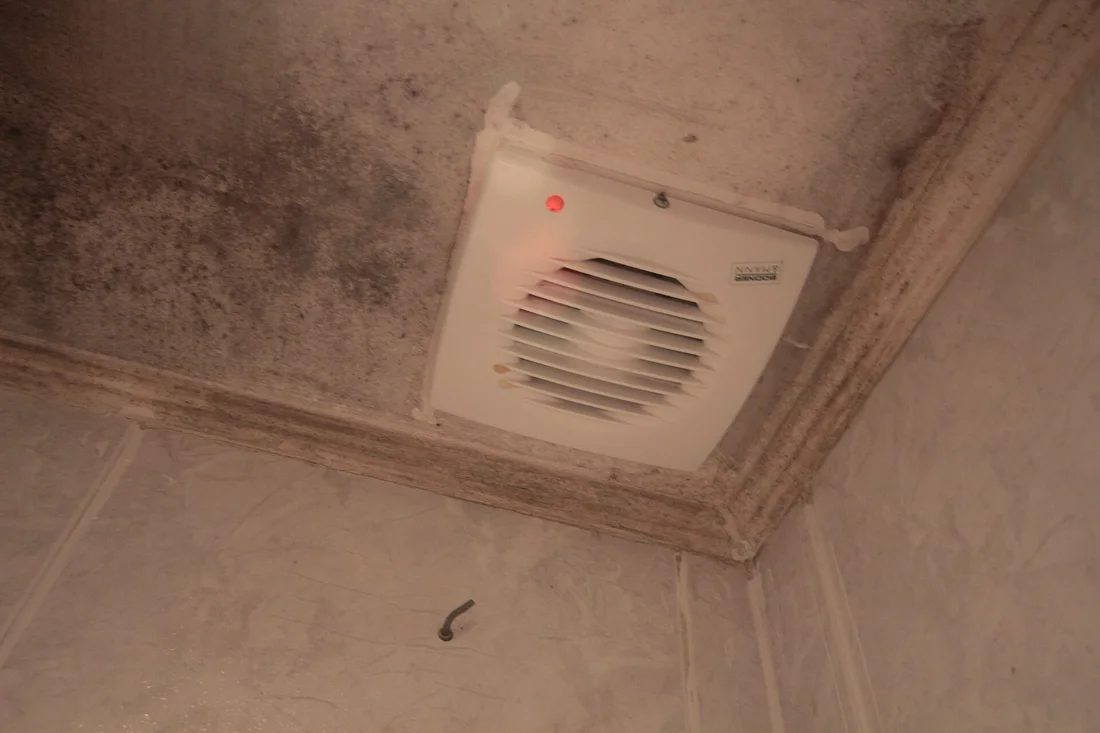
These symptoms are common in childhood and have many causes, so they do not prove mould is to blame. Clues that it might be: symptoms that are worse at home, worse in a particular room, or better when you are away. Keep a simple diary of symptoms and where your child spent the night; it helps your GP.
Get urgent help (call 999 or go to A&E) if your child is struggling to breathe, is too breathless to talk, eat or drink, has blue or grey lips, or is unusually drowsy. For worrying symptoms that are not an emergency, contact your GP or NHS 111.
Do You Need Mould Testing?
For most families, no. Here is how the different kinds of “testing” compare:
| Type | What it does | Useful? |
|---|---|---|
| DIY mould test kits (petri dishes, swabs) | Grow whatever spores land on them | Rarely. Spores are everywhere, so a kit almost always grows something and does not tell you about health risk |
| Professional air or surface sampling | Lab identifies mould types and spore counts | Occasionally, for hidden mould or disputes; not needed when mould is visible |
| Damp survey by a qualified surveyor | Finds the cause: condensation, leaks, penetrating or rising damp | Yes, if the cause is unclear or keeps coming back |
| Landlord investigation | The landlord inspects and decides what work is needed | Yes. For social tenants in England, it is a legal duty with deadlines |
| Medical tests for your child | A GP or specialist may arrange allergy tests (skin prick or blood tests) or breathing tests | Yes, if your child has persistent symptoms or asthma |
Government guidance for landlords focuses on tackling damp and mould and their causes quickly, not on identifying the species. Be wary of companies selling expensive “toxic mould” tests: the colour of mould does not tell you how harmful it is, and all indoor mould should be dealt with.
My honest advice: spend your energy getting the damp fixed and your child seen by a GP, not on a test kit.
Your Rights: Awaab’s Law Explained
Awaab’s Law applies to social housing in England: homes let by councils and housing associations, including temporary and supported accommodation let under a tenancy. Phase 1 began on 27 October 2025 and covers emergency hazards and significant damp and mould.
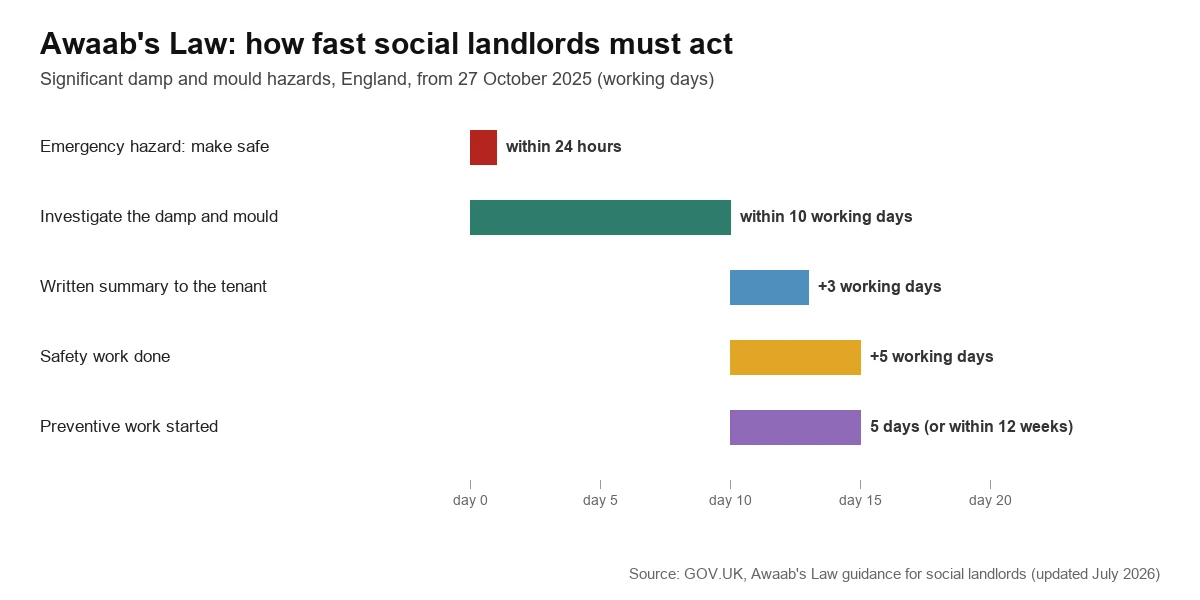
- Emergency hazards, including serious damp and mould that poses an imminent risk, must be investigated and made safe within 24 hours.
- Significant damp and mould must be investigated within 10 working days of the landlord becoming aware of it.
- You must get a written summary of the findings within 3 working days of the investigation.
- Safety work must be done within 5 working days of the investigation. Longer-term repairs must start within 5 working days or, if that is impossible, within 12 weeks.
- If the home cannot be made safe in time, the landlord must offer suitable alternative accommodation at its own cost until it is.
Children count. Landlords must consider the age and health of the people living in the home. A hazard that might wait for an adult can become an emergency when a baby, young child or pregnant woman lives there. Landlords are also told not to blame damp and mould on tenants’ “lifestyle”.
Phase 2 starts on 30 November 2026, extending the deadlines to more hazards, including excess cold and heat, falls, structural collapse, fire, electrical hazards and poor domestic hygiene. A third phase will cover almost all remaining hazards.
If your landlord does not act: use their complaints procedure, then go to the free Housing Ombudsman. Because the duties are written into your tenancy, you can also take your landlord to court for breach of contract. Shelter’s free helpline (0808 800 4444) can advise.
Social tenant? How to use Awaab’s Law
Private Renters, Homeowners and the Rest of the UK
Private renters in England: Awaab’s Law does not yet apply to you. The Renters’ Rights Act 2025 allows the government to extend it, and a consultation on how to do so runs until 18 December 2026, with 2027 the earliest likely start. Meanwhile, your landlord must keep the home fit to live in and in repair, and you can ask your council’s environmental health team to inspect. They can order a landlord to fix serious hazards, including damp and mould.
Homeowners: the cause is usually condensation, a leak, or water getting in through walls, roofs or gutters. A qualified surveyor can find the source; tackle that, not just the visible mould.
Wales, Scotland and Northern Ireland have their own housing laws and standards. Contact your council, or Shelter Cymru, Shelter Scotland or Housing Rights in Northern Ireland, for advice.
If you are a landlord or manage buildings, our guide to digital facilities management covers how UK duties are pushing landlords to keep better repair records, and our explainer on squatters’ legal rights covers another area where landlords must follow the right legal route.
How to Reduce Damp and Mould at Home
Much household mould starts with condensation. These habits help, whoever is responsible for repairs:
- Ventilate: use extractor fans when cooking and showering, keep trickle vents open, and open windows for a few minutes each day.
- Heat steadily: cold rooms attract condensation. If energy bills are a worry, ask your energy supplier and council about help available.
- Dry clothes outside or in a ventilated room with the door shut, not on radiators in bedrooms.
- Put lids on pans and close kitchen and bathroom doors when steamy.
- Leave a gap between furniture and outside walls so air can circulate.
- Wipe condensation off windows each morning.
- Report problems early and in writing, with dated photos. For social tenants, the legal clock starts when your landlord becomes aware.
If you clean a small patch of mould yourself, wear gloves, goggles and a mask, keep children (and anyone with asthma) out of the room, and do not brush dry mould, which spreads spores. Larger areas, or mould that keeps returning, need the cause fixing professionally.
Frequently Asked Questions
Is mould dangerous for babies and children?
It can be. Children, especially babies, are more vulnerable to mould, which can cause breathing problems, allergies and asthma attacks. Any mould in a child’s home should be dealt with promptly.
Should I get my home tested for mould?
Usually not. If you can see or smell mould, that is enough. Focus on finding and fixing the damp. A damp survey can help if the cause is unclear.
Are home mould test kits accurate?
They are not very useful. Mould spores are in every home, so kits almost always grow something and cannot tell you the health risk.
Can a doctor test my child for mould exposure?
There is no simple test for exposure, but a GP can assess symptoms and may refer your child for allergy or breathing tests, especially if they have asthma.
What is Awaab’s Law?
A law in England, named after two-year-old Awaab Ishak, that sets deadlines for social landlords to investigate and fix damp, mould and other dangerous hazards. It began on 27 October 2025.
How long does my landlord have to fix mould under Awaab’s Law?
For significant damp and mould: investigate within 10 working days, send a written summary within 3 working days, and make it safe within 5 working days of the investigation. Emergencies must be made safe within 24 hours.
Does Awaab’s Law apply to private renters?
Not yet. The government is consulting on extending it to private renting, with 2027 the earliest likely date. Private landlords already have to keep homes fit to live in.
What if my landlord ignores the damp?
Complain in writing, then go to the Housing Ombudsman (social tenants) or your council’s environmental health team (private renters). Shelter can advise on legal action.
Is black mould worse than other mould?
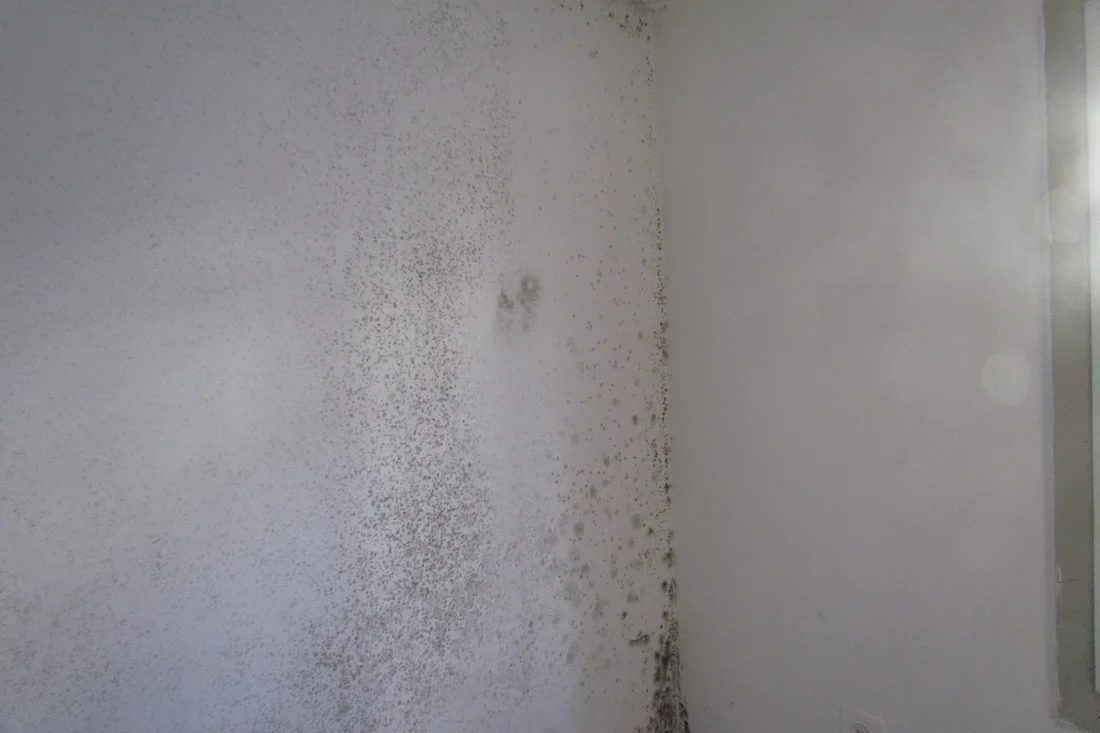
Colour does not reliably show how harmful mould is. All indoor mould should be removed and its cause fixed.
Can I get rehoused because of mould?
Under Awaab’s Law, a social landlord must offer suitable temporary accommodation if it cannot make a hazard safe in time. For a permanent move, speak to your landlord or council housing team, with medical evidence if your child’s health is affected.
Final Thoughts
Awaab Ishak’s death changed the law because his family refused to let it be forgotten. If there is mould in your child’s home, trust what you can see, report it in writing, get your child checked if they have symptoms, and know your rights. You should not have to prove mould is dangerous before someone fixes it.
Sources: GOV.UK, Awaab’s Law guidance for social landlords (updated July 2026); Shelter England, “How Awaab’s Law changes the rules on hazards in social housing” (2025); GOV.UK, “Understanding and addressing the health risks of damp and mould in the home” (2023); NHS advice on breathing difficulties and asthma in children; Housing Ombudsman; consultation on Awaab’s Law in the private rented sector (2026).