Fat Dissolving Injections: Do They Work, Cost and UK Safety Rules
Fat dissolving injections can shrink small fat pockets but are not weight loss. Evidence, UK prices, side effects, Lemon Bottle and 2026 rules.
 12 min read
Comments: 0Views: 3
Short answer: fat dissolving injections can shrink small, stubborn pockets of fat, such as a double chin, but they are not a weight-loss treatment, results take a course of sessions, and the market in the UK is poorly regulated. The best evidence is for deoxycholic acid under the chin: in large trials, about two-thirds of people saw at least a one-grade improvement, compared with about one in five on a placebo. Many products sold in UK salons, including Lemon Bottle, have little or no evidence behind them. Expect to pay roughly £150 to £400 a session, usually for two to four sessions, and choose a qualified prescriber, not a beautician working from social media.
What Are Fat Dissolving Injections?
Fat dissolving injections, sometimes called injection lipolysis or “lipo injections”, are a non-surgical way to reduce a small area of fat. A practitioner injects a solution into the fat just under the skin. The aim is to break down fat cells in that spot so that the body clears them away over the following weeks.
They are used most often on:
- the area under the chin (a double chin, called submental fat)
- the jowls and jawline
- bra fat and the area under the arms
- the tummy, love handles and inner thighs
- knees and upper arms
The important word is small. These injections are designed for pockets of fat that have not shifted with diet and exercise in people who are already close to a healthy weight. They are not a substitute for weight loss.
Fat Dissolving Injections Are Not Weight-Loss Jabs
This is the most common confusion, partly because of the UK’s boom in weight-loss injections. They are completely different treatments:
| Fat dissolving injections | Weight-loss injections (e.g. Wegovy, Mounjaro) | |
|---|---|---|
| How they work | Destroy fat cells in the injected area only | Act on appetite and blood sugar hormones across the whole body |
| Where injected | Directly into the fat you want to reduce | Under the skin, usually the tummy or thigh, once a week |
| Effect on weight | Little or none | Can cause significant weight loss |
| Who gives them | Aesthetic clinics and practitioners | Prescribed by the NHS or a registered pharmacy or doctor |
| Purpose | Cosmetic contouring | Treating obesity and related health conditions |
How Fat Dissolving Injections Work
The best-studied ingredient is deoxycholic acid, a synthetic version of a substance your body makes to help digest fat. Injected into a fat pad, it breaks down the outer walls of fat cells. The body’s immune system then clears the damaged cells away, mainly through the lymphatic system, over several weeks.
Fat cells destroyed in this way do not grow back. But the fat cells left behind can still grow if you put on weight, which is why results depend on keeping your weight steady.
Do Fat Dissolving Injections Work?
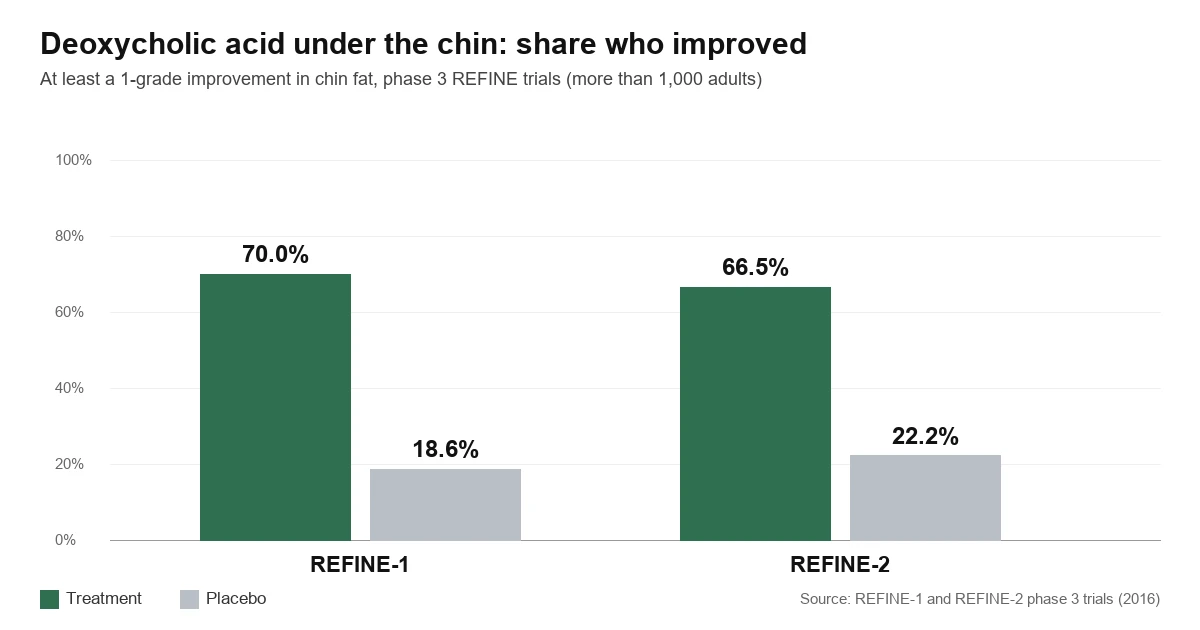
For one product, in one area, there is good evidence. Deoxycholic acid injections for fat under the chin were tested in two large randomised trials, known as REFINE-1 and REFINE-2, with more than 1,000 adults in total. Both clinicians and patients rated the chin area:
| Trial | At least 1-grade improvement: treatment | At least 1-grade improvement: placebo |
|---|---|---|
| REFINE-1 | 70.0% | 18.6% |
| REFINE-2 | 66.5% | 22.2% |
Bigger improvements were less common: about 13 to 19 per cent of treated people improved by two grades or more. Deoxycholic acid is approved in the United States, as Kybella, specifically for fat under the chin. Using it on the tummy, thighs or other areas is outside that approval, and the evidence there is much weaker.
For many other products sold in the UK, there is little or no good evidence at all. My honest advice: if a clinic cannot tell you exactly what is in the injection and point to published research for that product in that area, walk away. The same caution applies to treatments abroad; see our guide to full body scans in Turkey.
Lemon Bottle and Other Unregulated Products
Lemon Bottle is a “fat dissolving” product heavily promoted on social media and sold in some UK salons and online. It is marketed as a cosmetic containing ingredients such as riboflavin, bromelain and lecithin.
Regulators have raised serious concerns about it:
- Switzerland: in March 2024, the Swiss medicines regulator, Swissmedic, classified Lemon Bottle as an unapproved medicinal product and advised against using it. It said no medicinal effect had been scientifically proven, and its laboratory could not detect the declared ingredients in the samples it tested.
- UK pharmacy regulator: in April 2025, the General Pharmaceutical Council warned pharmacy staff about the supply of unregulated, unlicensed products, including Lemon Bottle, that “can potentially cause serious harm”.
- Not a licensed medicine: Lemon Bottle is not licensed by the MHRA, the UK’s medicines regulator, for medical use.
Another widely used product, Aqualyx, is marketed in the UK as a medical device rather than a licensed medicine. Its regulatory status has been questioned. If you are offered either, ask direct questions, and be wary of any practitioner who cannot answer them.
Are Fat Dissolving Injections Regulated in the UK?
Not tightly, and this is the key thing UK readers need to know. In England:
- Anyone can currently offer them. There is no law limiting fat dissolving injections to doctors, nurses or other healthcare professionals.
- A licensing scheme is planned but not yet in force. The Health and Care Act 2022 gave the government power to license non-surgical cosmetic procedures in England, and it consulted on a red, amber and green system in 2023. In its August 2025 response, the government said Botox and fillers would come under local authority licensing.
- They are not on the new “high-risk” list. On 21 October 2026, the Department of Health and Social Care opened a consultation on restricting the highest-risk cosmetic procedures to specified healthcare professionals in CQC-registered settings. The list includes intravenous drips, non-resorbable facial fillers, deep chemical peels and some laser treatments. Fat dissolving injections are not on it. The consultation asks whether other procedures should be added, and it closes at 11:59pm on 13 January 2027.
- Medicines are regulated, though. If a product is a prescription-only medicine, it must be prescribed by a qualified prescriber after a proper consultation.
Rules differ in Scotland, Wales and Northern Ireland, so check locally if you live outside England.
How Much Do Fat Dissolving Injections Cost in the UK?
Prices vary widely by product, area and clinic. Based on prices advertised by UK clinics in 2026:
| Treatment | Typical advertised price per session |
|---|---|
| Chin, unregulated or salon products | From about £100 to £175 |
| Chin, Aqualyx at a medical clinic | About £300 to £420 |
| Larger body areas (tummy, thighs) | Often £300 to £500+ |
| Deoxycholic acid prescription product (where offered) | About £750 to £850 |
Most people need a course of two to four sessions, spaced about four to six weeks apart, so the total cost is often £600 to £1,500 or more. Very cheap offers are a red flag, not a bargain: they often mean an unregulated product or an untrained injector.
Side Effects and Risks
Swelling, bruising, pain, numbness, redness and firmness in the treated area are very common after fat dissolving injections, and can last days to weeks. Swelling after a chin treatment can be dramatic for the first few days.
Less common but more serious risks include:
- Nerve injury in the jaw, causing an uneven smile, usually temporary
- Difficulty swallowing after treatment under the chin
- Skin damage, ulcers or tissue death if the product is injected into a blood vessel or too close to the skin
- Infection, especially with poor hygiene or unregulated products
- Lumps, hardness or uneven results
- Allergic reactions, particularly to undeclared ingredients
If you have severe pain, spreading redness, a fever, skin turning dark or white, or difficulty swallowing or breathing after treatment, seek medical help straight away: call 111, or 999 in an emergency. You can report a suspected side effect to the MHRA through its Yellow Card scheme.
Who Should Not Have Them
Fat dissolving injections are generally not suitable if you:
- are pregnant or breastfeeding
- are under 18
- have an infection in or near the treatment area
- have a bleeding disorder or take blood thinners (check with your doctor)
- have loose skin, as removing fat can make sagging look worse
- want to lose a significant amount of weight
- have had previous surgery or problems in the area, such as thyroid surgery for chin treatment
How to Choose a Safe Practitioner
The NHS advises choosing a practitioner with the right training, skills and insurance, and avoiding people who only advertise on social media or offer treatments in homes and hotels. For injections like these, my checklist is:
- A regulated healthcare professional, such as a doctor, dentist, nurse prescriber or pharmacist prescriber, ideally on a register accredited by the Professional Standards Authority, such as the JCCP or Save Face.
- A face-to-face consultation with a medical history check, before any treatment.
- The exact product named, with its licence or approval status explained.
- Clear information on risks and aftercare, and a plan for what happens if something goes wrong.
- A cooling-off period after the consultation, which the NHS says you should be offered.
- No pressure selling, discount countdowns or “today only” deals.
Alternatives to Consider
Before spending hundreds of pounds, it is worth knowing the other options:
- Steady weight loss and exercise: slow, but it reduces fat everywhere, including stubborn areas, for free. If you are building a routine at home, our guide to home gym equipment brands in the UK is a good starting point.
- Fat freezing (cryolipolysis): a non-invasive treatment that cools fat cells; also needs a course and has its own risks.
- Liposuction: surgery that removes more fat in one go, with longer recovery and greater risks; in England it must be done by CQC-registered providers.
- Medical weight-loss treatment: if your weight is affecting your health, talk to your GP or a registered pharmacy about the options. Our guide to pharmacy delivery services explains how online pharmacies work.
Frequently Asked Questions
Do fat dissolving injections actually work?
For fat under the chin, deoxycholic acid injections have good trial evidence: about two-thirds of people improved by at least one grade, versus about one in five on placebo. For many other products and body areas, the evidence is weak or missing.
Are fat dissolving injections safe?
Short-term swelling, bruising and pain are very common. Serious complications such as nerve injury, skin damage and infection are less common but possible, especially with unregulated products or untrained injectors.
Are fat dissolving injections legal in the UK?
Yes. In England, they are not currently restricted to healthcare professionals, and they are not on the high-risk list in the government’s October 2026 consultation.
How much do fat dissolving injections cost in the UK?
Usually about £150 to £400 per session, and more for large areas or prescription products. Most people need two to four sessions.
How many sessions will I need?
Typically two to four, spaced about four to six weeks apart. In trials of deoxycholic acid under the chin, people had up to six treatments a month apart.
How long do results take?
Swelling settles within days to a couple of weeks, but the fat reduction appears gradually over six to eight weeks after each session as the body clears the damaged fat cells.
Are the results permanent?
The destroyed fat cells do not come back, but the remaining fat cells can grow if you gain weight.
Is Lemon Bottle safe?
Lemon Bottle is not licensed by the MHRA. Swissmedic warned against it in 2024 and found its declared ingredients could not be detected in samples, and the UK pharmacy regulator warned about unregulated products including Lemon Bottle in 2025.
Are fat dissolving injections available on the NHS?
No. The NHS does not provide cosmetic procedures like these routinely; they are only available privately.
Can fat dissolving injections help me lose weight?
No. They reduce small, localised areas of fat. For weight loss, speak to your GP about diet, exercise and medical options.
Final Thoughts
Fat dissolving injections can make a modest, real difference to a small area like a double chin, if the right product is used by the right person. But the UK market is full of unproven products and untrained injectors, and the rules have not caught up. If you go ahead, choose a regulated prescriber, insist on knowing exactly what is being injected, budget for a full course, and keep your expectations realistic. And if you care about how this treatment is regulated, the government’s consultation is open until 13 January 2027.
This guide is general information, not medical advice. Speak to your GP or a qualified healthcare professional before having any cosmetic procedure.
Sources: Department of Health and Social Care, consultation on restrictions on high-risk cosmetic and wellbeing procedures in England (21 October 2026) and licensing consultation response (7 August 2025); GOV.UK press release (6 August 2025); Swissmedic warning on Lemon Bottle (26 March 2024); General Pharmaceutical Council warning (April 2025), as reported by pharmacy trade press; NHS advice on cosmetic procedures; REFINE-1 and REFINE-2 phase 3 trials of ATX-101 (deoxycholic acid), published in peer-reviewed dermatology journals in 2016; UK clinic price listings (2026).