Thomas Washington: The Fictional Disney CEO, and the Real Figures
He never existed — he is from one episode of Atlanta. What the episode actually is, and what Ofcom's published figures say about the gap it satirises.
 Updated
8 min read
Comments: 0Views: 166
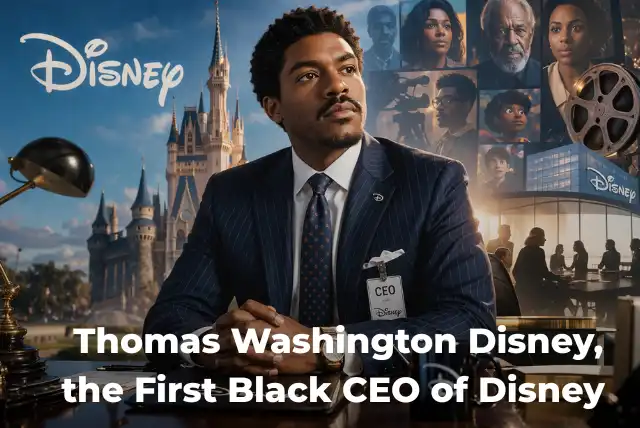
Thomas Washington never existed, and Disney has never had a Black chief executive. He is a character in a single episode of Atlanta — season 4, episode 8, “The Goof Who Sat by the Door”, broadcast on 27 October 2022 and directed by Donald Glover.
The reason people search for him as though he were real is that the episode is shot as a documentary and does not blink. This page sets out what the episode actually is, why it works, and what the published UK figures on representation say — which is the part the fiction is arguing with.
Last updated: 21 October 2026. Episode details and representation data verified on this date.
The short version
- Real? No. Entirely fictional
- From: Atlanta series 4, episode 8
- Title: “The Goof Who Sat by the Door”
- First shown: 27 October 2022
- Directed by: Donald Glover
- The joke: he sets out to make A Goofy Movie — a real film
- The reality: UK TV senior management is about 13% minority ethnic
What this article covers
The Episode, Precisely
| Detail | |
|---|---|
| Series | Atlanta, created by Donald Glover |
| Episode | Season 4, episode 8 — “The Goof Who Sat by the Door” |
| First broadcast | 27 October 2022 |
| Director | Donald Glover |
| Writers | Francesca Sloane and Karen Joseph Adcock |
| Format | A mockumentary, presented as a film on B.A.N. — the fictional network from earlier in the series |
| Cast | None of the series’ main characters appear in it |
| Premise | The Disney board promotes an animator named Thomas Washington by mistake, having intended to appoint a white executive with a similar name |
Published episode records. The episode was widely praised on release for its direction, writing and pacing.
Why It Feels Real
People search for Thomas Washington as a historical figure for specific, deliberate reasons.
- It is shot in documentary grammar. Talking heads, archive framing, a narrator. Every convention that normally signals “this happened”.
- It is attached to a real film. A Goofy Movie genuinely came out in 1995, so the anchor point is verifiable and the story around it is not.
- None of the regular cast appears. That removes the last cue that you are watching a comedy series at all.
- The mechanism is plausible. A board confusing two men with similar names is not a fantastical premise — which is exactly the discomfort the episode is engineering.
- It sits inside a real history. Disney’s animation department did have Black animators decades before this fictional appointment, and the episode knows it.
- The title does serious work, invoking Sam Greenlee’s 1969 novel The Spook Who Sat by the Door about a Black CIA recruit hired as a token.
The Goofy Movie Joke
The central gag is better than its summary. Washington, having been appointed by accident, resolves to use the job to make “the Blackest movie of all time”.
What he makes is A Goofy Movie — the 1995 animated film about a father and son road trip, with a soundtrack and a cultural afterlife that have given it a particular place in Black American nostalgia. The episode invents a reason for something the audience already felt. That is why it lands rather than merely amusing.
What the Actual UK Figures Show
The episode is fiction. The pattern it satirises is measured, published and, in Ofcom’s own word, stalled.
| Measure | Figure | Source |
|---|---|---|
| Minority ethnic representation in UK TV senior management | about 13% | Ofcom, Equity, Diversity and Inclusion in Broadcasting 2024-25 |
| Working-population benchmark | 17% | Same report |
| Across the UK TV workforce as a whole | 19% | Same report — so senior roles lag the workforce beneath them |
| Senior management, radio (2022-23) | 7% | Ofcom, 2022-23 edition, where TV was 13% |
| Ofcom’s own conclusion | Representation in senior decision-making roles has stalled | 2024-25 report |
Ofcom’s Equity, Diversity and Inclusion in Broadcasting 2024-25, published 28 November 2025, and its programme of work on diversity in TV and radio. Figures are as reported by Ofcom and are worth reading in the original, which breaks them down by broadcaster.
Ofcom, Equity, Diversity and Inclusion in Broadcasting 2024-25. The gap between the first bar and the other two is the pattern the Atlanta episode is about.
That is the whole argument of the episode in three numbers. A workforce roughly in line with the population, and a senior tier that is not. The comedy is in the accident; the commentary is in the fact that an accident is how the story has to happen at all.
How to tell a mockumentary from a documentary
This episode fooled a lot of people, and the general skill is worth having — the format is now common enough that the question comes up regularly.
- Check whether the subject exists anywhere outside the programme. A real chief executive of a company that size leaves a trail: filings, news coverage, photographs across decades. Thomas Washington leaves one episode.
- Look at who made it. A mockumentary carries a writer credit. Documentaries have researchers and contributors; this one has Francesca Sloane and Karen Joseph Adcock credited as writers.
- Notice the archive. Genuine archive footage has provenance and inconsistent quality. Constructed archive tends to be too neat and too on-point.
- Watch the interviewees. Real contributors contradict each other and wander. Written ones serve the story.
- Ask what it is attached to. This episode anchors itself to a real film, which is the strongest technique it uses — a verifiable fact beside an invented one borrows credibility from it.
- Search the title, not the character. “The Goof Who Sat by the Door” resolves instantly; “Thomas Washington Disney CEO” returns a decade of people asking each other whether it is true.
Floyd Norman, Who Is Real
The episode’s invention is thrown into relief by a genuine figure the article should name properly.
Floyd Norman was the first Black animator employed by Disney, joining in the 1950s and working on films including Sleeping Beauty and The Jungle Book. He later became the first Black member of the story team. He is the real history the fiction is written against — a career in animation rather than a boardroom, which is rather the point.
For other figures in entertainment covered on this site, see Daniel Radcliffe and Teyana Taylor. And for a museum built on things that genuinely did exist, The Etches Collection. If you know your actual Disney history, try our 100-question Disney quiz.
Disney’s actual leadership, for the record
Since the question is what people are really asking, the plain answer: The Walt Disney Company has never had a Black chief executive. Its chief executives have been a short and well-documented list, and Bob Iger has held the role across two separate periods. No appointment of the kind the episode imagines has ever taken place, at Disney or at any comparable studio.
That is worth stating flatly, because the search traffic for “Thomas Washington Disney CEO” exists precisely because people are checking. The answer is no, and the fact that it needed checking is the episode’s point.
Corrections Made to This Page
| What was there | Why it has changed |
|---|---|
| “In 2026, a report by McKinsey & Company revealed that…” | Linked to the bare homepage, which cannot be read to contain any such finding. Replaced with Ofcom’s published UK figures, which also suit a UK publication better |
| No episode details at all | Series, episode number, title, broadcast date, director and writers now stated |
| Image captions reading “(Image Via google)” | Google is not a source. Captions corrected |
| “Sometimes made-up stories can feel very real” | Rewritten throughout |
Audit carried out 21 October 2026.
Conclusion
Thomas Washington is fiction, and knowing that makes the episode better rather than worse. It is a single, self-contained half-hour of Atlanta — season 4, episode 8, directed by Donald Glover — that borrows the grammar of a documentary to argue about something real.
And the thing it is arguing about is documented. Ofcom puts minority ethnic representation in UK television senior management at around 13%, against 19% across the workforce and a 17% population benchmark, and describes progress at senior level as stalled. The invented CEO is a joke. The gap is not.
Sources
- “The Goof Who Sat by the Door” — episode record
- Ofcom — Equity, Diversity and Inclusion in Broadcasting 2024-25
- Ofcom — work to promote diversity in TV and radio
- Floyd Norman
- McKinsey & Company
Disclaimer
Thomas Washington is a fictional character and nothing on this page should be read as a factual account of The Walt Disney Company’s leadership history. Ofcom figures are as published in its Equity, Diversity and Inclusion in Broadcasting reports; the originals break the data down by broadcaster and are worth reading in full. Information correct as at 21 October 2026. More from The UK Post.