Tree Health: Warning Signs, UK Threats and When to Call an Arborist
How to tell if a tree is healthy, the warning signs to look for, the biggest UK threats from ash dieback to honey fungus, protection rules, arborist costs and how to report a problem.
 13 min read
Comments: 0Views: 5
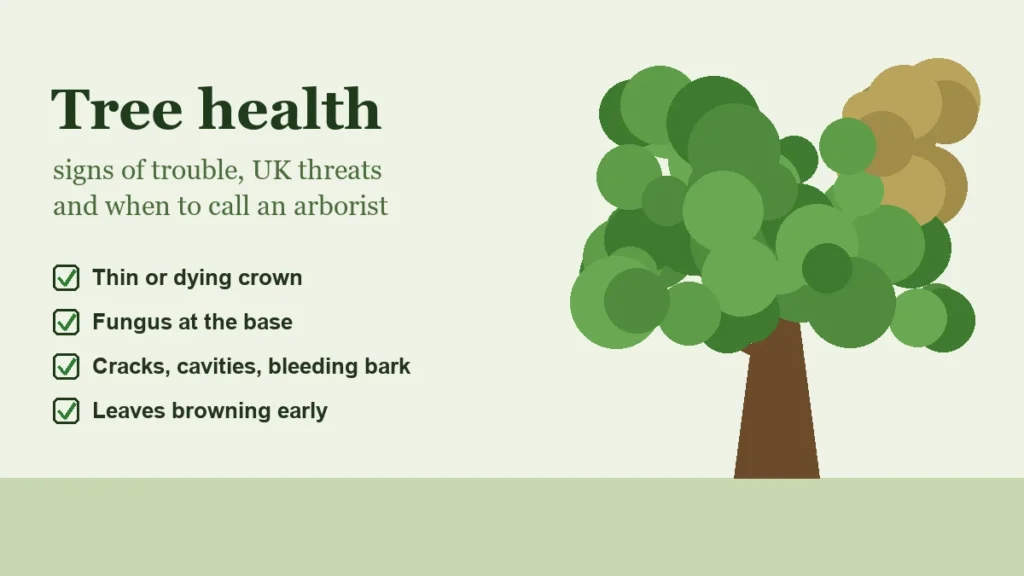
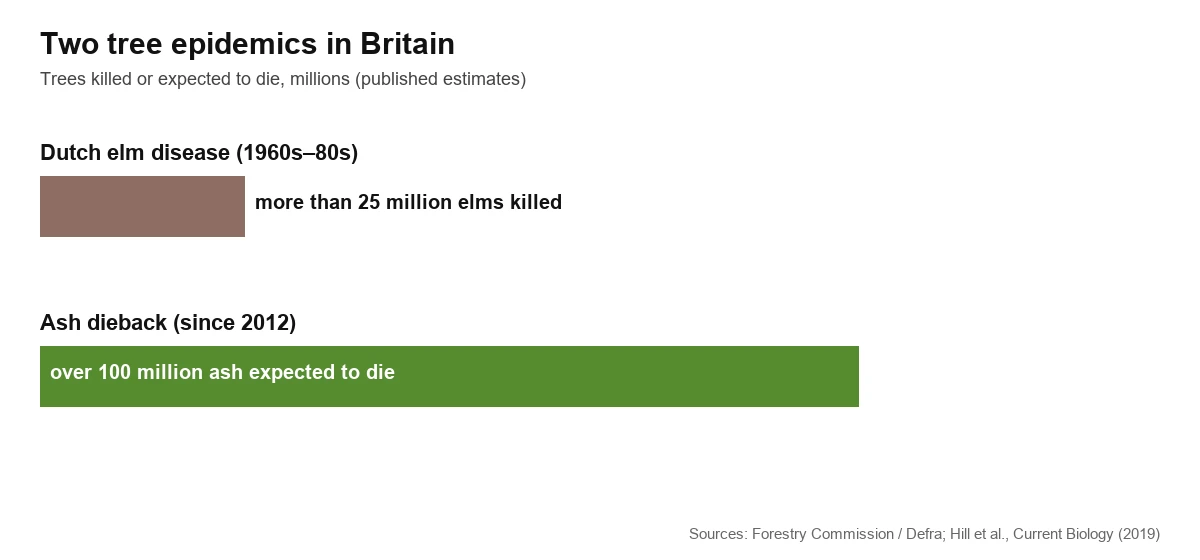
Short answer: a healthy tree has a full, evenly coloured crown, firm bark and no fungus, cracks or weeping wounds on its trunk or roots. The commonest warning signs are dead or thinning branches at the top, leaves browning or falling early, mushrooms or bracket fungi at the base, splits and cavities, and dark “bleeding” patches on the bark. In the UK the biggest threats are ash dieback, which is expected to kill over 100 million ash trees, oak processionary moth, acute oak decline, honey fungus and drought. If you spot something worrying, photograph it, report suspected pests and diseases to the Forestry Commission’s free TreeAlert service, and get an ARB Approved Contractor to look at any tree near a house, road or path. Check whether the tree is protected before anyone cuts it.
How to Tell If a Tree Is Healthy
You do not need to be an expert to do a useful check. Walk around the tree, look up, then look down. Compare it with healthy trees of the same species nearby, at the same time of year: an oak that is bare in October is normal, an oak that is bare in July is not.
| Where to look | Healthy | Warning signs |
|---|---|---|
| Crown (top) | Full, even leaf cover for the species and season | Dead twigs at the tips, thin or patchy leaves, whole dead branches |
| Leaves | Normal size and colour | Small, yellow, spotted or curling leaves; turning brown or dropping weeks early |
| Trunk | Firm bark, no deep wounds | Cracks, splits, cavities, loose or missing bark, dark weeping patches |
| Base and roots | Firm ground, visible root flare | Mushrooms or bracket fungi, lifting or cracked soil, damaged or cut roots |
| Shape | Stable and balanced | A new or worsening lean, heavy branches over a building, tight V-shaped forks |
| Wildlife and pests | Normal insect life | Nests of hairy caterpillars on oak, small exit holes, sawdust at the base |
One sign on its own is not necessarily serious. Lots of healthy old trees have some deadwood, and many fungi are harmless. What matters is a combination of signs, a change from last year, and how close the tree is to people and property.
Worried about a tree? Six steps
The Biggest Threats to Trees in the UK
Britain’s trees face more pests and diseases than ever, largely because of global trade in plants and timber, and a warming climate. These are the ones homeowners are most likely to meet.
Ash dieback
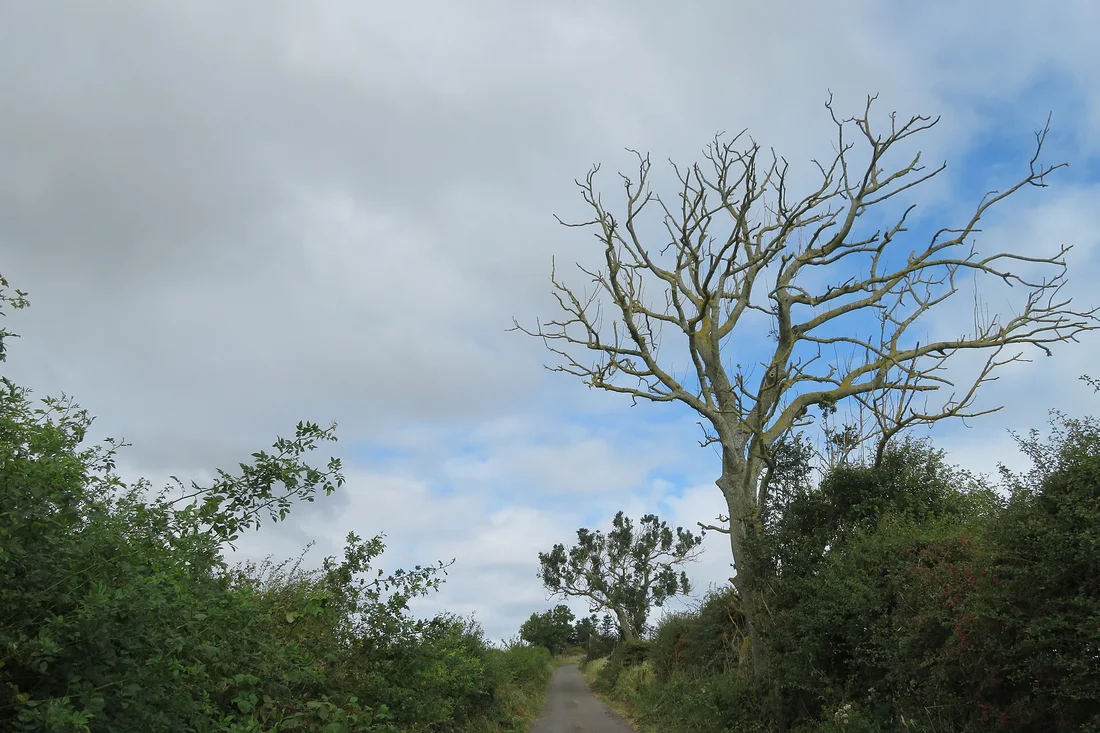
Caused by a fungus (Hymenoscyphus fraxineus) from Asia, ash dieback was first confirmed in Britain in 2012 and is now found across the UK. Look for dark diamond-shaped lesions where side shoots meet the stem, leaves wilting and blackening in summer, and crowns that die back from the tips, often with clumps of new shoots lower down. Estimates of how many trees it will kill vary from 50% to more than 90% of Britain’s ash, and a 2019 study put the cost to the UK at about £15 billion. A small proportion of ash trees show tolerance, and scientists are breeding from them, so do not fell an ash just because it is infected: the advice is to fell only trees that have become unsafe.
Oak processionary moth
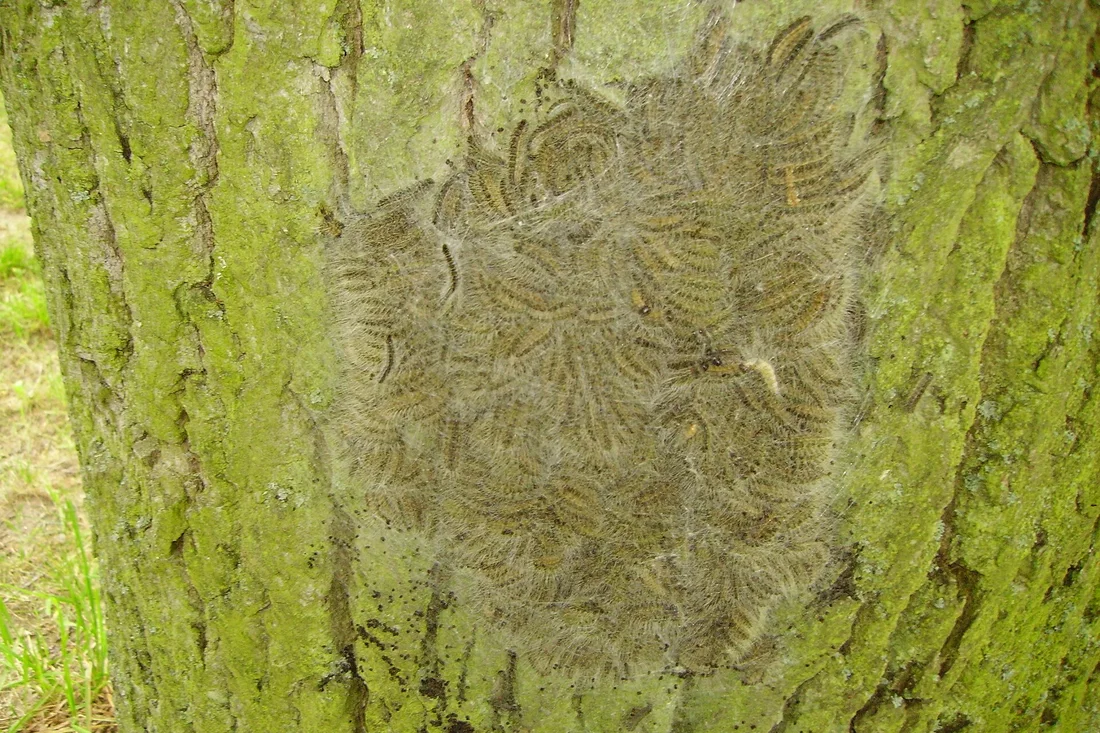
The caterpillars of this moth strip oak leaves and, more importantly, carry thousands of tiny hairs that can cause itchy rashes, eye irritation and breathing problems in people and pets. It was first found in London in 2005 and is now established in London and parts of the South East. The caterpillars move in nose-to-tail lines and build white silken nests on trunks and branches. Do not touch them or the nests. Report sightings through TreeAlert, and if they are in your garden, use a pest controller experienced with this moth.
Acute oak decline
A newer disease of mature native oaks, mainly in central and southern England and Wales. The giveaway is dark fluid weeping from vertical cracks in the bark, sometimes with small D-shaped beetle exit holes nearby. Badly affected trees can die within a few years of the first symptoms.
Honey fungus
The RHS describes it as one of the most destructive fungal diseases in UK gardens, killing trees, shrubs and hedges. Look for clusters of honey-coloured toadstools at the base in autumn, a creamy white fungal sheet under the bark at ground level, and black bootlace-like strands in the soil. There is no chemical cure; infected roots and stumps need removing.
Dutch elm disease and other threats
Dutch elm disease killed more than 25 million British elms from the late 1960s and still kills young elms in hedgerows today. Other threats include Phytophthora ramorum on larch, bleeding canker and leaf miner on horse chestnuts, sweet chestnut blight and the eight-toothed spruce bark beetle. Some of the most feared pests, such as emerald ash borer and the bacterium Xylella, have not yet established here, which is why biosecurity matters.
Drought, compaction and damage
Not every problem is a disease. Hotter, drier summers stress trees, especially young ones and shallow-rooted species such as beech and birch. Building work, new driveways and parked cars compact the soil and crush roots, and the damage often shows years later. Mowers and strimmers wound bark at the base, and ties left on young trees can strangle them.
Fungi on Trees: When to Worry
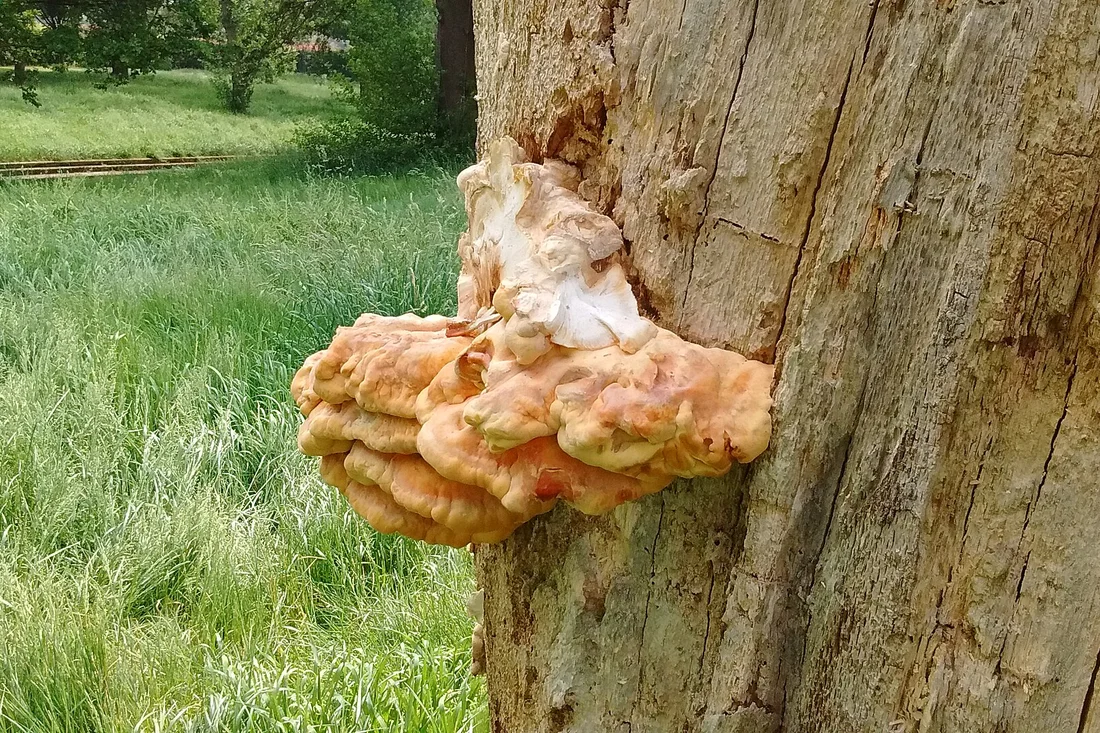
Bracket fungi growing from the trunk, and mushrooms around the base, are often the visible fruiting bodies of rot inside the wood or roots. Some species decay the wood that holds a tree up; others are relatively harmless. Because it is hard to tell them apart, treat any large bracket on a tree near a house, road or play area as a reason to get it inspected. An arborist can identify the fungus and, if necessary, test how much sound wood is left.
How to Keep Your Trees Healthy
- Water young trees in dry spells: for their first two or three summers, a thorough soak once a week does more than a daily sprinkle. If you are planning an automatic system, see our guide to underground sprinkler design, which covers drip lines for trees and beds.
- Mulch, do not mound: spread a ring of bark or wood-chip mulch 5 to 10 cm deep over the root area, keeping it clear of the trunk.
- Protect the roots: avoid digging, parking, storing materials or changing soil levels under the canopy, especially during building work.
- Prune properly: remove dead, diseased and crossing branches with clean cuts just outside the branch collar. Never “top” a tree; it causes weak regrowth and decay.
- Prune at the right time: late autumn and winter suit most trees. Avoid the main bird nesting season (roughly March to August), because damaging an active nest is an offence under the Wildlife and Countryside Act 1981.
- Buy healthy stock: choose UK-grown trees from reputable nurseries, check for a plant passport, and never bring plants or cuttings back from abroad.
- Keep it clean: brush soil off boots, bike tyres and tools after walks in woodland, so you do not carry diseases to your garden.
Trees are not the only way to bring nature into built-up areas: our guide to green roofs in the UK covers another option for wildlife and drainage.
Is Your Tree Protected? Check Before Anyone Cuts
Before you, or a tree surgeon, prune or fell a tree in England, check two things with your local council:
- Tree Preservation Orders (TPOs): you need the council’s consent for most work on a protected tree. Apply through the Planning Portal.
- Conservation areas: you must give the council six weeks’ written notice (a “section 211 notice”) before working on most trees in a conservation area, generally those with a trunk more than 75 mm across at 1.5 metres above the ground.
Cutting down or wilfully damaging a protected tree without permission can lead to an unlimited fine. Dead or dangerous trees have exemptions, but you should tell the council first and keep photos. Scotland, Wales and Northern Ireland have similar rules, so check with your own council.
When to Call an Arborist, and What It Costs
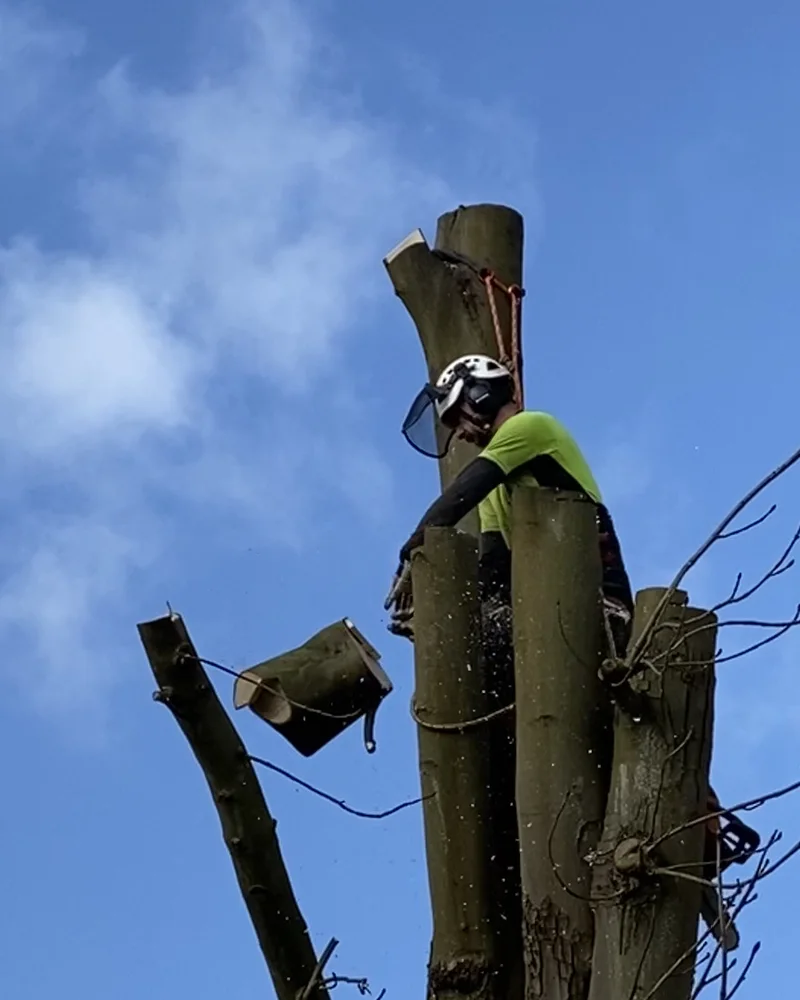
Call a professional if a tree has large dead branches, fungus on the trunk or roots, a crack or cavity in the main stem, a new lean, or overhangs a house, road, path or playground. Owners have a duty of care to people who might be hurt by their trees, and insurers may expect you to have acted on obvious warning signs.
Look for an ARB Approved Contractor (checked by the Arboricultural Association) and ask whether they work to the British Standard for tree work, BS 3998. For a written assessment, for example for a mortgage, an insurer or a neighbour dispute, use a qualified arboricultural consultant.
| Service | Typical UK price (2026) |
|---|---|
| Basic tree inspection and short report | £150 to £350 |
| Detailed report on several trees | £350 to £900 or more |
| Tree surgeon team, per day | £300 to £700 |
| Pruning a single garden tree | About £250 to £500 |
| Removing a small to medium tree | £150 to £1,000 |
| Removing a large tree | £1,000 to £2,500 or more |
Prices are higher in London and the South East and depend on access, size and whether the wood is taken away. Get at least two written quotes, and be wary of anyone who knocks on your door offering to “top” a tree for cash. My advice: if a contractor recommends felling a healthy-looking tree, ask them to explain exactly why, and consider a second opinion. A mature tree takes decades to replace.
How to Report a Tree Pest or Disease
If you think a tree has a serious pest or disease, report it through TreeAlert, run by Forest Research, the research agency of the Forestry Commission. It takes a few minutes: you upload photos of the whole tree and the symptoms, say where it is, and experts review it. Reports from the public help scientists track outbreaks early, which is how many new pests have been found and stopped. Suspected oak processionary moth should always be reported. In Northern Ireland, report to DAERA instead.
For a family day out among healthy trees, many of the places in our guide to UK family holiday destinations have woodland walks, and if you are curious about where good timber ends up, read how wooden toys are made.
Frequently Asked Questions
How can I tell if my tree is dying?
Look for a thinning or dead crown, leaves browning or dropping early, bark falling away, fungus at the base, and cracks or cavities. Scratch a small twig: green underneath means living tissue; brown and brittle means that part is dead.
Can a dying tree be saved?
Sometimes. Trees stressed by drought, compaction or poor pruning often recover with better care. Advanced root rot and some diseases cannot be cured, so get an arborist’s opinion early.
What does ash dieback look like?
Dark diamond-shaped lesions on stems, wilting and blackened leaves in summer, and crowns dying back from the tips, often with bushy new shoots lower down.
Should I cut down a tree with ash dieback?
Not automatically. Only fell trees that have become unsafe, especially near roads, paths and buildings. Some ash trees tolerate the disease and are valuable.
Is fungus on a tree always bad?
No, but large brackets on the trunk or mushrooms at the base can signal decay. Have a tree near people or buildings checked.
Who do I report tree disease to in the UK?
Use Forest Research’s TreeAlert service in Great Britain, or DAERA in Northern Ireland.
Do I need permission to cut down a tree in my garden?
Not usually, unless it has a Tree Preservation Order, is in a conservation area, or felling is restricted by a planning condition or felling licence rules. Always check with your council first.
When is the best time to prune trees in the UK?
Late autumn to late winter for most trees. Avoid the bird nesting season, and prune cherries and plums in summer to reduce the risk of silver leaf disease.
How much does a tree survey cost?
A basic inspection with a short report usually costs £150 to £350, and a detailed report on several trees £350 to £900 or more.
How often should trees be inspected?
Give garden trees a quick look yourself each season and after storms. Large trees near buildings or roads benefit from a professional inspection every few years.
Final Thoughts
Most tree problems give plenty of warning if you know what to look for. Look at your trees properly a few times a year, water young ones in dry spells, keep diggers and cars off their roots, and do not hesitate to report anything that looks like a pest or disease. And before anyone picks up a chainsaw, check the tree is not protected: it costs nothing to ask the council, and a lot to get it wrong.
Sources: Forest Research (TreeAlert, ash dieback and oak processionary moth guidance); Forestry Commission blog (2025); GOV.UK guidance on managing oak processionary moth; Hill et al., Current Biology (2019), on the cost of ash dieback; Planning Portal and council guidance on Tree Preservation Orders and conservation areas; RHS advice on honey fungus; Arboricultural Association; UK cost guides from Checkatrade, Rated People and BookaBuilder (2026).