
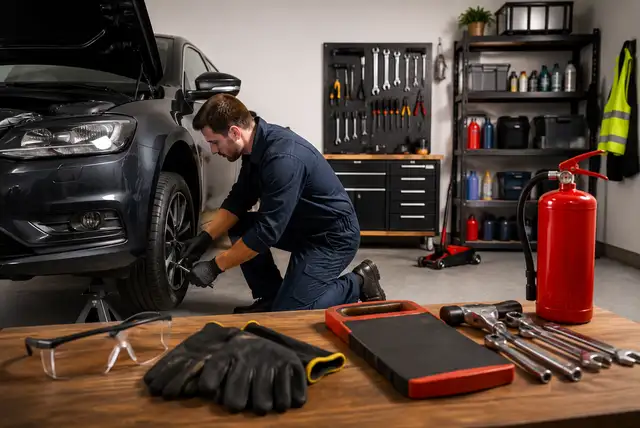
You only plan to do a quick job in the garage. Maybe check a fluid level, grab a tool, or look under the bonnet. Then you notice the floor is cluttered, tools are scattered around, and the lighting is not great. Small things like these are easy to ignore, but they can quickly become problems.
That is why good garage safety tips matter. Whether you enjoy DIY car maintenance or simply use your garage for basic vehicle jobs, a safe workspace helps reduce risk and makes every task easier.
In 2026, home garages are doing more than storing cars. Many people now use them for repairs, maintenance, and projects. A few simple habits can make a big difference.
Start With a Safe Garage Setup
Before touching a tool, look around your garage. The space itself plays a big role in safety.
A safe garage setup starts with simple preparation. Good lighting helps you see clearly and spot problems before they become accidents. Proper ventilation also matters, especially when working around fluids or spending time in enclosed spaces.
- Use bright LED lighting
- Keep exits and walkways clear
- Remove clutter from floors
- Store tools in set locations
- Make sure there is enough space to work safely
Good home garage safety often begins with keeping things simple and organised.
According to AAA, clutter inside garages can create safety hazards and increase accident risks.
Wear Protective Equipment Before Starting Work
It is easy to think a quick job does not need safety gear. But many small injuries happen because people skip the basics.
Protective equipment for garages should become part of your routine, even during simple maintenance work.
- Wear safety glasses to protect your eyes
- Use gloves when handling tools or chemicals
- Wear closed shoes
- Use hearing protection around loud equipment
- Wear dust masks if the job creates particles
Loose clothing can also create risks. Remove jewellery and avoid anything that could get caught in tools or moving parts.
According to New York Automotive and Diesel Institute, proper safety equipment and avoiding distractions are important while working in a garage.
Follow Safe Habits During DIY Car Maintenance
Many people enjoy DIY car maintenance because it saves money and helps build confidence. But rushing into a repair without preparation can create problems.
Vehicle maintenance safety starts before the work begins.
- Read instructions before using products
- Check labels carefully
- Allow hot parts to cool
- Stay focused on the task
- Do not rush repairs
According to Mobil, preparing your workspace and understanding instructions can help reduce risk during DIY work.
Take Vehicle Lifting Safety Seriously
Vehicle lifting safety deserves extra attention. Working around a raised vehicle requires care and patience.
Always use proper support and follow safe lifting practices. Parking on flat ground and checking lifting points before starting can help reduce risk.
- Use jack stands
- Do not rely only on hydraulic lifting equipment
- Use wheel chocks
- Check your vehicle manual
- Take your time during setup
Garage Organisation Tips Can Prevent Accidents
Garages often become storage spaces over time. Boxes pile up, tools move around, and spare items end up on the floor.
Good garage organisation tips help improve both convenience and safety.
- Create storage areas for tools
- Label containers
- Keep pathways open
- Return items after use
- Store chemicals separately
Organisation supports better automotive safety practices and makes jobs easier to manage.
Keep Children Away From Garage Hazards
For families, garages need extra attention. Children may not understand the risks around tools, chemicals, or equipment.
- Store sharp tools in locked spaces
- Keep chemicals out of reach
- Pay attention around garage doors
- Secure dangerous equipment
Simple steps can make the space safer for everyone at home.
Do Not Ignore Fire Risks
Many garages contain fuel, batteries, tools, and chemicals. If these items are stored carelessly, they can create safety problems.
- Keep a fire extinguisher nearby
- Avoid overloaded extension cords
- Dispose of oily rags correctly
- Store fuel carefully
- Install smoke alarms near attached garages
According to fire department guidance, garages can contain materials that increase fire risk when stored incorrectly.
Garage Security Is Part of Safety Too
Many people think about workshop safety but forget security. A garage can also become an entry point into the home.
- Keep garage doors closed
- Avoid leaving openers visible inside vehicles
- Use strong locks
- Check security habits regularly
According to People’s Trust Insurance, garages can become security risks if access points are not managed carefully.
Never Run An Engine In A Closed Garage
Carbon monoxide is the most serious hidden danger in any garage. A running engine produces it in large amounts, and in an enclosed space it can build to dangerous levels within minutes. The gas has no colour or smell. Never run a car, generator or petrol tool with the garage door closed, even briefly, and be cautious with the door open too, as fumes can drift into the house through connecting doors. A carbon monoxide alarm is worth fitting in any home with an attached garage.
Axle Stands, Not Just A Jack
A jack is designed to lift a car, not to hold it. Anyone working under a vehicle should support it on properly rated axle stands placed at the manufacturer’s recommended points, on firm, level ground, with the wheels chocked and the handbrake on. Give the car a firm push before going underneath to check it is stable. Many serious DIY injuries happen when a car falls from a jack alone, and axle stands are an inexpensive way to prevent them.
Storing Petrol Safely At Home
Petrol vapour is heavier than air and highly flammable, and it can be ignited by a spark from a light switch or a boiler. In the UK you can store up to 30 litres of petrol at home without notifying the authorities, provided it is kept in suitable containers, which means approved metal or plastic containers of limited size. Store it away from any source of ignition, never inside the house, and keep the garage well ventilated.
Heat Alarms, Not Smoke Alarms
Smoke alarms are a poor choice for garages because dust, fumes and exhaust can set them off repeatedly, which tempts people to disable them. Fire services generally recommend a heat alarm in garages and kitchens instead, which responds to a rise in temperature rather than smoke. Interlinking it with the alarms inside the house means a garage fire is heard throughout the home. Keep a suitable fire extinguisher near the garage exit.
Electrics And EV Charging
Garages often have older wiring and overloaded extension leads, which are a common cause of fires. Avoid daisy-chaining extension leads, keep cables off wet floors, and make sure sockets are protected by an RCD. If you charge an electric car at home, use a dedicated charge point installed by a qualified electrician rather than a domestic socket and extension lead for regular charging. New electrical circuits in homes in England and Wales must meet building regulations, which a registered electrician can certify.
Know When To Stop And Call A Professional
DIY car maintenance saves money, but some jobs carry risks that are not worth taking. Work on airbags, high-voltage systems in hybrid and electric vehicles, fuel systems and anything involving compressed springs is best left to trained mechanics. If a job needs a tool you do not have or a step you do not understand, stop. For more practical vehicle guides, see our comparison of roof rails versus roof racks, which covers load limits and insecure-load law.
FAQs
Why are garage safety tips important?
Garage safety tips help reduce accidents, improve organisation, and create a safer environment for DIY vehicle work.
What protective equipment should I use in a garage?
Safety glasses, gloves, closed footwear, hearing protection, and dust masks can help reduce common risks.
Why does garage organisation matter?
Organisation helps keep walkways clear and reduces hazards caused by clutter.
What should be kept away from children in garages?
Chemicals, sharp tools, and potentially dangerous equipment should be stored securely and out of reach.
Final Thoughts
A safe garage does not depend on expensive equipment. It often comes down to good habits. Keep the space organised, stay focused, and think about safety before every job. Small steps taken early can help create a safer and more practical workspace for every car owner and DIY enthusiast.
Clearing out the garage? See our guide to affordable waste removal and skip hire.