
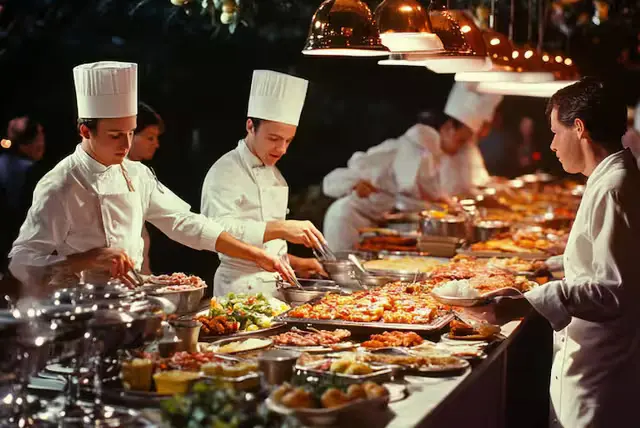
Corporate catering has evolved well beyond the basics. It is no longer enough to deliver warm food on time. Today, every element of the event environment is evaluated, consciously or not, by the people in the room. The tablecloth, the linen, the logo on the serving station — these details shape perception in ways that many businesses are only beginning to take seriously.
For hospitality managers, event coordinators, and corporate communications teams, branded table linens have become a quiet but meaningful tool. When a company logo appears on the cloth beneath the food, it anchors the presentation to a professional identity. Guests, whether clients, investors, or colleagues, absorb that signal immediately. The event stops feeling like a routine obligation and starts feeling like a considered experience.
The Role of Visual Identity in Business Events
The corporate events industry is competitive. Hotels, specialist caterers, in-house hospitality teams, and external event agencies all work to make their clients’ occasions stand out. Food quality and service are expected standards. What differentiates a memorable event from a forgettable one is increasingly the coherence of the visual environment.
Branded table linens contribute to that coherence without demanding attention. A logo stitched or printed onto quality fabric communicates organisation and care. It reinforces the company’s presence in the room without the need for additional signage or promotional material. The message is understated, which in a professional context, tends to be more effective.
There are cautionary examples, of course. Event planners occasionally describe occasions where the catering setup was undermined by mismatched or borrowed table coverings. However polished the food and service, an inconsistent visual presentation can make a room feel unfinished. The detail is small, but so are the cracks it can create in an otherwise strong impression.
Operational Benefits for Recurring Events
For companies that run events regularly, branded table linens sourced through specialist suppliers offer efficiency alongside consistent brand presentation. Ordering in volume gives procurement teams greater control over cost and quality, while ensuring that every occasion, from executive breakfast to end-of-year dinner, carries the same visual standard.
There is a practical benefit for event staff as well. When the branded components of a setup are already in place, the team can focus on logistics and service rather than improvising a look. The result is a more consistent atmosphere and a smoother operation, particularly useful when events run frequently or across multiple locations.
Guests notice this consistency even when they cannot articulate it. A catering table that looks deliberate and well-organised communicates reliability before the first conversation begins. For companies in client-facing roles, that kind of ambient credibility has genuine value.
The Atmosphere That Stays With Guests
What people retain from an event is rarely the menu. It is the feeling of the room. Whether the occasion felt well-run, whether it felt personal, whether it seemed like something genuinely prepared for them. Branded linens are part of the environment that produces those feelings, and that is not a small thing.
At a well-executed corporate luncheon, the visual elements that work best tend to be those that feel integrated rather than added on. Branded table linens that echo the company’s colour palette, paired with considered centrepieces and purposefully designed food stations, create an environment where everything appears to belong together. Guests pick up on that coherence, even in passing, and it stays with them.
For catering teams who care about their reputation, this matters. Events that generate positive word of mouth almost always share this quality: they felt finished. Not extravagant necessarily, but complete. The emotional response that follows is what drives the referral, the repeat booking, the favourable mention in the meeting room the following week.
Selecting Branded Linens That Reflect the Company
Not all branded table linens are equal, and the best results come from matching the product to the brand’s character. A professional services firm might choose plain white cloth with a restrained embroidered logo, while a design or technology company may prefer something bolder in colour or print. Neither approach is wrong; what matters is that the linen feels like a natural extension of the organisation it represents.
Material quality is worth taking seriously. A thin or poorly finished cloth can undercut the impression that the branding is trying to create. The logo is only as effective as the surface it appears on. Companies that invest in quality fabric tend to find that the result reflects well on everything else in the setup.
Practical durability matters too. Corporate catering environments are demanding. Spills, frequent transport, and tight turnaround times mean that linens need to hold up well. Reusable, well-constructed branded covers are a sensible investment compared with repeatedly sourcing generic alternatives that contribute nothing to brand recognition.
The Commercial Case for Branded Event Linens
There is sometimes a reluctance to view event materials as anything more than a cost. Branded linens, however, function as a reusable asset that earns its place over time. For organisations attending trade shows, hosting client dinners, running internal conferences, or participating in sector events throughout the year, a consistent stock of quality branded covers removes a recurring decision and reduces dependency on hired-in alternatives.
The per-unit cost of ordering in volume is typically lower, and the inventory builds over time rather than starting from scratch before each occasion. For finance teams reviewing event expenditure, that argument tends to hold up.
Beyond cost, there is the question of accumulated recognition. Guests who encounter the same brand presented consistently across multiple events, whether or not they are conscious of it, develop a familiarity that reinforces trust. That is a marketing principle applied quietly, through nothing more elaborate than a well-chosen cloth on a table.
What Gets Noticed When You Are Not Looking
The most telling moments in event presentation often happen without any formal attention. A guest pausing at a buffet, noticing how polished the setup looks. A comment made between colleagues about how a company clearly takes its events seriously. These exchanges are not planned, but they are not accidental either. They are the product of decisions made well in advance, including the decision to brand the table properly.
Catering is, at its core, a sensory experience. People see the setup before they taste anything. They read the room before they take their seat. Those first impressions, formed in seconds, can be difficult to revise. Getting the visual environment right is not an afterthought; it is part of the service.
When the presentation is intentional, catering does more than feed people. It represents the organisation. It demonstrates attention. It earns trust in a room before a single word has been exchanged.
Choosing The Fabric
Fabric decides how the linen looks after its twentieth event, not its first. Polyester and polyester blends are the workhorses of corporate catering: they resist creasing, hold printed colour well, wash at high temperatures and dry quickly. Cotton and linen look and feel more premium and suit formal dinners, but crease easily and cost more to maintain. Spun polyester that mimics the hand of cotton is a common compromise. For venues with fire-safety requirements, ask the supplier for documentation of the fabric’s flame-retardant testing before ordering.
Print, Embroidery Or Woven Logos
How the brand goes onto the cloth affects cost, durability and the impression it gives. Dye-sublimation printing bonds colour into polyester fibres, allowing full-colour designs and edge-to-edge branding that survive repeated washing. Embroidery gives a raised, premium finish suited to small logos on corners or runners, and wears very well. Screen printing is economical for simple one- or two-colour logos on larger runs. Match the method to how the linen will be used: a trade-show throw and a boardroom dinner cloth call for different choices.
Getting The Size And Drop Right
Poorly sized table linens undermine the whole effect. Measure the table and decide on the drop, the length the cloth hangs over each side: a shorter drop suits casual buffet service, while a full-length drop to the floor looks formal and hides table legs and storage underneath. Fitted and stretch covers give a sharp, contemporary look for trade stands and poseur tables. Runners and toppers let you brand a table without committing to a full printed cloth, and are a cheaper way to add identity to existing plain linens.
Matching The Brand Exactly
Colour is where branded linen most often disappoints. Screen and print colours differ, and fabric absorbs dye differently from paper. Give the supplier exact colour references from your brand guidelines, typically Pantone values, ask for a printed sample on the actual fabric before the full run, and check it under the lighting of the venues where it will be used. A logo slightly off-brand on every table is noticed by exactly the people you most wanted to impress.
Care, Storage And Lifespan
Linens are an investment that pays back only if they last. Follow the supplier’s washing instructions, particularly temperatures, since high heat can fade some prints. Treat stains promptly, because food and wine stains set quickly on busy event days. Store cloths clean and dry, folded or rolled consistently to avoid permanent creases, and rotate stock so the same pieces are not worn out first. A simple inventory, even a spreadsheet, stops pieces going missing between venues.
Lead Times And Minimum Orders
Custom linens are made to order, so plan ahead. Production and delivery commonly take several weeks, longer around the busy Christmas and summer event seasons, and suppliers usually set minimum order quantities for printed or embroidered runs. Ordering a core stock well before a major event, with a small reserve for replacements, avoids last-minute premium charges. For more on running the business side of a catering or events operation, see our strategies for success in a new business.
Conclusion
Branded table linens occupy a small space in the event budget but a meaningful one in the overall impression. For corporate caterers and hospitality managers looking to raise the standard of their presentation, they offer a straightforward way to make the brand visible without making it intrusive.
In an environment where business events are expected to feel polished and purposeful, the details that look effortless are usually the ones that were planned most carefully. A well-chosen branded cloth on a catering table is one of those details. It does not demand to be noticed. It simply ensures that when guests look, they see a company that knows how to present itself.