
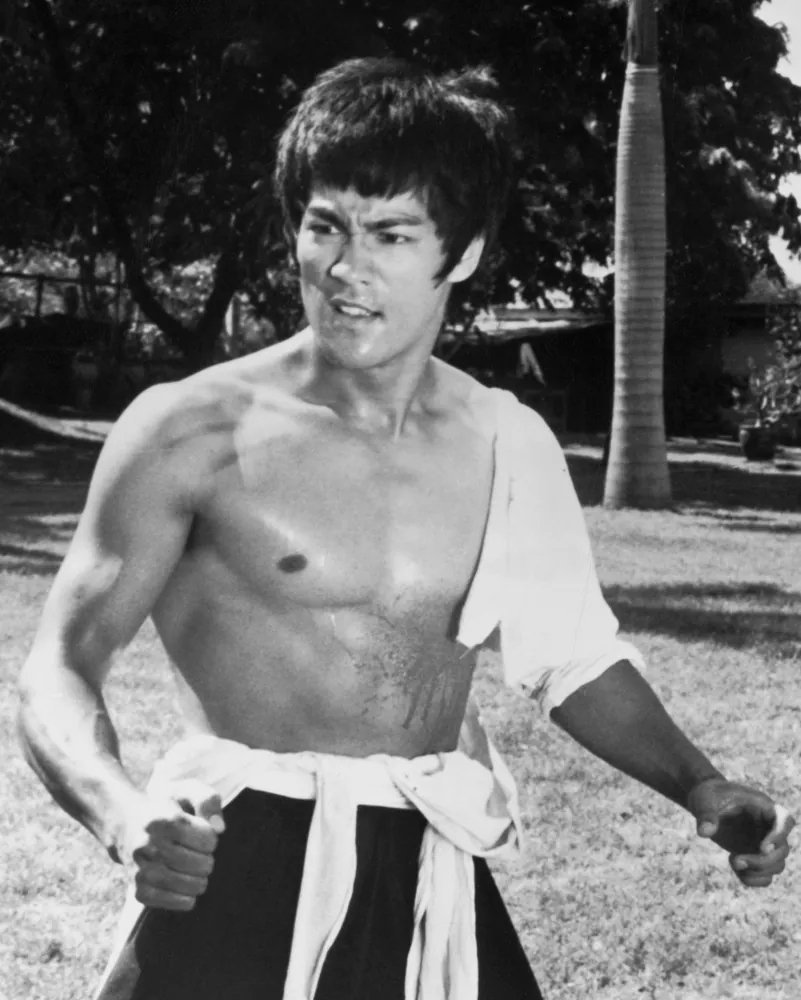
Bruce Lee is far more than a martial arts star; he is a global icon whose influence still inspires millions worldwide. Even in 2026, more than 100 million people watch his movies, share his quotes, or engage with his digital legacy annually. While his net worth during his short life was modest compared to modern stars, today his estate and brand continue to generate steady income from films, licensing, and merchandise.
As of 2026, Bruce Lee’s estate is estimated to be worth around $10 million, reflecting the enduring value of his legacy and intellectual property. This article explores his biography, career, net worth, and lasting influence.
Biography

Image source: pexels.com
Early Life and Education
Image source: pexels.com
Bruce Lee was born November 27, 1940, in San Francisco’s Chinatown while his parents were touring with a Cantonese opera troupe. Just months later, his family returned to Hong Kong, where Bruce grew up.
His father, Lee Hoi-chuen, was a respected opera star who introduced him to performing arts. Bruce made his first screen appearance as a baby in Golden Gate Girl (1941) and later co-starred in The Kid (1950). By age 18, he had already acted in about 20 Hong Kong films.
Prone to street fights, Bruce sought discipline through martial arts and began training in Wing Chun under Ip Man at age 13. In 1959, after repeated trouble, his parents sent him to Seattle. He finished high school, worked in a restaurant, and later studied philosophy at the University of Washington—laying the groundwork for his martial philosophy, Jeet Kune Do.
Career

Image source: pexels.com
Martial Arts Teacher
While in college, Bruce began teaching martial arts informally, earning recognition for his speed, philosophy, and innovative methods. He opened schools in Seattle, Oakland, and Los Angeles, training celebrities such as Steve McQueen, James Coburn, and Kareem Abdul-Jabbar.
Hollywood Breakthrough
In the 1960s, Bruce landed the role of Kato in The Green Hornet. Although the series lasted only one season, it gave American audiences their first real taste of his martial arts brilliance.
Despite his talent, Bruce faced stereotypes and limited opportunities in Hollywood, leading him to return to Hong Kong.
Hong Kong Stardom
Back in Hong Kong, Bruce rose to superstardom. Films like The Big Boss (1971), Fist of Fury (1972), and Way of the Dragon (1972) broke box-office records. His iconic fight against Chuck Norris in Way of the Dragon became legendary.
In 1973, he starred in Enter the Dragon, a U.S.–Hong Kong co-production that remains one of the greatest martial arts films of all time. Sadly, Bruce died just weeks before its release.
Personal Life and Family

Image source: pexels.com
Bruce married Linda Emery (Linda Lee Cadwell) in 1964. They had two children:
-
Brandon Lee (1965–1993) – Actor, tragically killed in an on-set accident while filming The Crow.
-
Shannon Lee (1969–present) – Actress and businesswoman, now manages the Bruce Lee Foundation and the estate.
On July 20, 1973, Bruce collapsed in Hong Kong and died at age 32. The official cause was cerebral edema (brain swelling), likely triggered by a reaction to the painkiller Equagesic.
Bruce Lee Net Worth (2026)

Image source: pexels.com
At the time of his death, Bruce Lee’s fortune was modest compared to today’s celebrities. But over five decades later, his estate is valued at around $10 million.
Sources of revenue include:
-
Film royalties and re-releases
-
Licensing and merchandise deals
-
Books, documentaries, and courses based on his teachings
-
Appearances in video games, digital media, and collectibles
Note: Estimates vary, but financial reports consistently place the Bruce Lee Estate in the multi-million dollar range.
Real Estate & Production Ventures

Image source: pexels.com
Bruce owned:
-
A house in Los Angeles, where he lived and trained with family.
-
A home in Kowloon Tong, Hong Kong, purchased during his peak fame.
He also co-founded Concord Production Inc. with Raymond Chow in 1972, retaining rights to Way of the Dragon, Game of Death footage, and a stake in Enter the Dragon.
Comparison with Other Martial Arts Stars (2026)

Image source: pexels.com
Though Bruce’s estate is smaller in numbers, his cultural influence is unmatched.
Bruce Lee’s Influence & Philosophy

Image source: pexels.com
Bruce Lee was not only an actor and fighter—he was a philosopher. His martial philosophy, Jeet Kune Do, emphasized adaptability:
“Using no way as way, having no limitation as limitation.”
Today, his teachings influence:
-
Martial artists and MMA fighters
-
Entrepreneurs and innovators
-
Motivational coaches and creatives worldwide
His quotes dominate social media, inspiring new generations with timeless wisdom.
7 Fascinating Facts About Bruce Lee

Image source: pexels.com
-
Reports suggest he could perform 1,000+ push-ups in a single session.
-
He read over 2,000 books on philosophy, martial arts, and self-growth.
-
He was a champion cha-cha dancer in his youth.
-
He wrote screenplays and fight choreography himself.
-
His one-inch punch amazed even professional athletes.
-
He remains a global pop culture icon featured in video games and comics.
-
The Bruce Lee Foundation actively preserves his legacy through education.
Read Also: James Earl Jones Net Worth in 2025: Life, Career & Legacy After Death
Social Media Presence in 2026

Image source: pexels.com
Bruce Lee’s estate maintains a powerful online presence:
-
Instagram (@brucelee): Over 12 million followers
-
Facebook: Millions of active fans
-
YouTube: Official channel with rare interviews, training clips, and documentaries
The Films, In Order

Image source: pexels.com
The screen career that made him a global figure was astonishingly short. The Big Boss in 1971 and Fist of Fury in 1972 made him a star in Hong Kong. The Way of the Dragon in 1972, which he also directed, brought the famous Colosseum fight. Enter the Dragon, released in 1973 shortly after his death, was the Hollywood co-production that made him an international icon. Game of Death was assembled from footage and released posthumously in 1978. Almost everything he is remembered for was made in about three years.
His Death At Thirty-Two
Image source: pexels.com
Bruce Lee died on 20 July 1973 in Kowloon, Hong Kong, aged thirty-two. The recorded cause was cerebral oedema, swelling of the brain. The suddenness of his death, weeks before the release of Enter the Dragon, has generated decades of speculation, but the medical explanation on record is the one given here. His death also meant that he never earned from the film that would make him most famous, which is central to understanding why his wealth became an estate story rather than a life story.
Jeet Kune Do

Image source: pexels.com
In 1967 Lee founded Jeet Kune Do, meaning the way of the intercepting fist. It drew on boxing, fencing footwork and kung fu, and rejected rigid traditional forms in favour of what he called the style of no style. Its influence on modern martial arts, including the mixed martial arts that emerged decades later, is widely acknowledged. It is also part of the estate’s intellectual property today, through books, teaching and the name itself.
Who Runs The Estate Now

Image source: pexels.com
Lee married Linda Emery in 1964, and they had two children, Brandon and Shannon. Brandon, also an actor, died in 1993 in an accident on the set of The Crow. Shannon Lee manages the Bruce Lee Foundation and oversees the family’s work on his legacy and intellectual property. Among the projects developed from his ideas is the television drama Warrior, which ran from 2019 to 2023 and was based on a concept Lee himself had written.
How A Legacy Earns Money

Image source: pexels.com
A figure who died in 1973 still generates income because his name, image and likeness are licensed. Merchandise, video games, advertising, documentaries, books and new productions based on his ideas all pay for the use of Bruce Lee’s identity. The value of an estate like this is not the money Lee earned during his life, which was modest by later standards, but the continuing value of the brand, which is why published estate figures differ so widely.
Honours And Place In History
Image source: pexels.com
Time magazine named him one of the 100 most important people of the twentieth century. He has a star on the Hollywood Walk of Fame and on Hong Kong’s Avenue of Stars, which reflects a career that belonged to both film industries. Few performers have influenced film, sport and popular culture across so many countries from such a short body of work, and that influence is the real asset the estate manages.
Where To Read Next

Image source: pexels.com
For other long-lasting entertainment legacies valued in similar ways, see our profiles of Wayne Newton and Dennis Quaid. And for a modern sporting figure whose earnings are built on titles and sponsorship rather than film, see our profile of Luke Littler.
Conclusion
Bruce Lee’s journey—from a child actor in Hong Kong to a global martial arts legend—is nothing short of extraordinary. His net worth of $10 million in 2026 reflects not only financial value but also the continued demand for his teachings, films, and philosophy.
Yet, his true wealth lies in the millions who practice his techniques, share his quotes, and live by his principles of discipline, adaptability, and self-growth.
Half a century later, Bruce Lee stands as a symbol of strength, wisdom, and inspiration—a legend who will never fade.
FAQs
Q1: What is Bruce Lee’s net worth in 2026?
A: Bruce Lee’s net worth Around $10 million, managed by his estate.
Q2: Who manages Bruce Lee’s estate today?
A: His daughter, Shannon Lee, via the Bruce Lee Foundation.
Q3: What martial art did Bruce Lee create?
A: Jeet Kune Do, a philosophy of adaptability and efficiency.
Q4: What was Bruce Lee’s most iconic film?
A: Enter the Dragon (1973).
Q5: Did Bruce Lee own properties?
A: Yes, homes in Los Angeles and Hong Kong.