
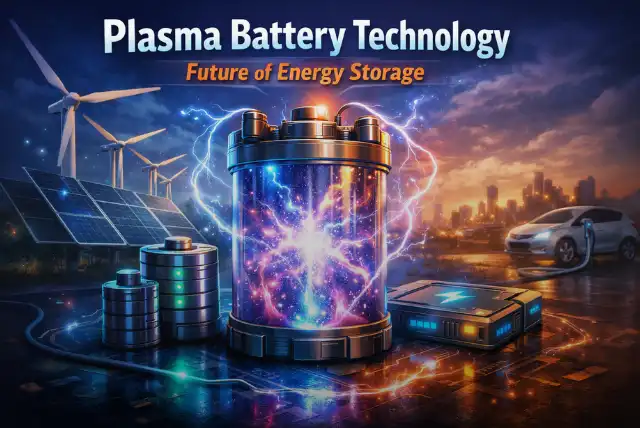
How Plasma Battery Technology Works
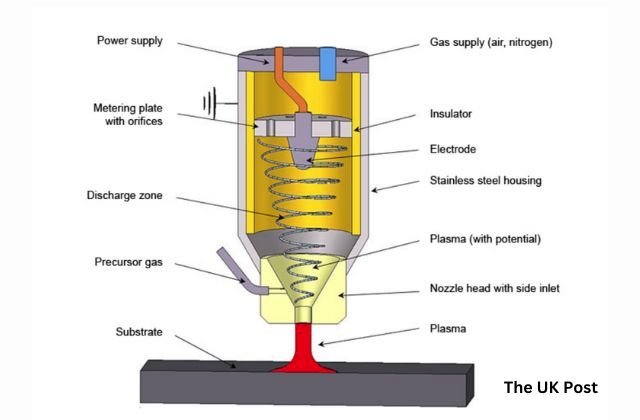
Plasma is often called the fourth state of matter, consisting of ionized gas particles that are electrically charged. Plasma battery technology leverages these properties to create an efficient energy storage system. By using plasma to enhance the electron flow within the battery, it can store and release energy more effectively than traditional batteries. This process not only increases the battery’s efficiency but also reduces heat production, which can improve the lifespan of the battery.
Advantages of Plasma Battery Technology

One of the key advantages of plasma battery technology is its efficiency. Traditional batteries often lose energy through heat dissipation, which reduces their overall capacity. Plasma batteries minimize this loss, allowing for a more efficient energy transfer. Additionally, plasma batteries are expected to have a longer lifespan compared to traditional lithium-ion batteries, making them a more sustainable option for the future.
- Improved energy efficiency due to reduced heat production
- Longer battery life, reducing the need for frequent replacements
- Potential to handle higher energy capacities without overheating
Applications of Plasma Battery Technology

Plasma battery technology has the potential to revolutionize several industries. For example, in the automotive industry, it could lead to more efficient electric vehicles with longer driving ranges and faster charging times. In renewable energy, plasma batteries could store solar and wind energy more effectively, ensuring a reliable power supply even when natural conditions are not ideal. Additionally, portable electronics such as smartphones and laptops could benefit from longer battery life and faster charging speeds.
- Electric vehicles with enhanced driving ranges
- Renewable energy storage for consistent power supply
- Portable electronics with improved battery performance
Environmental Impact of Plasma Batteries
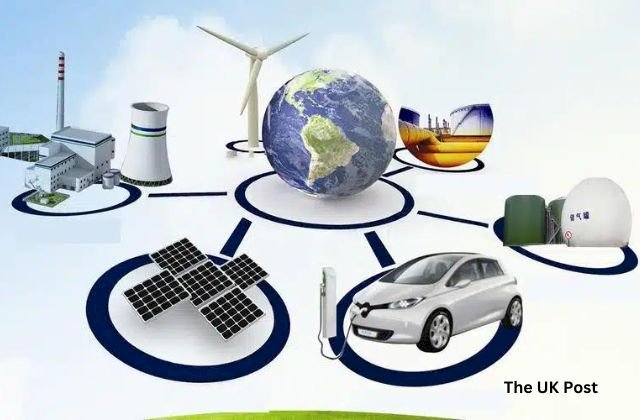
Environmental concerns are a significant driving force behind the development of plasma battery technology. Traditional batteries, especially lithium-ion batteries, pose environmental risks due to their reliance on rare and toxic materials. Plasma batteries, on the other hand, have the potential to reduce reliance on harmful substances, making them a greener alternative. Moreover, their longer lifespan and higher efficiency mean less waste and fewer resources used in the long run.
- Reduced reliance on rare and toxic materials
- Lower environmental impact due to longer lifespan and higher efficiency
- Potential to decrease battery waste and pollution
Challenges and Limitations

Despite its potential, plasma battery technology is still in its early stages of development. There are several challenges that researchers must overcome before it can be widely adopted. For instance, the cost of producing plasma batteries is currently high, which could make them less accessible to consumers. Additionally, more research is needed to ensure that these batteries are safe and reliable for everyday use.
- High production costs limiting accessibility
- Need for further research to ensure safety and reliability
- Development challenges that must be addressed before widespread adoption
Future of Plasma Battery Technology
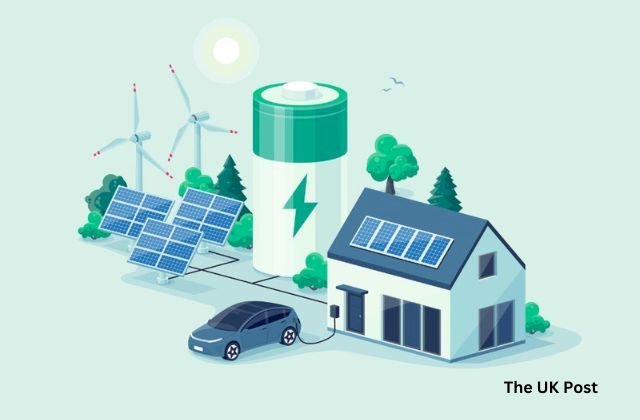
The future of plasma battery technology is bright, with ongoing research and development aimed at overcoming current challenges. As technology advances, plasma batteries are expected to become more affordable and efficient, making them a viable alternative to traditional energy storage methods. The potential applications are vast, and as the world shifts towards renewable energy, plasma batteries could play a crucial role in ensuring a sustainable future.
- Ongoing research and development to improve efficiency and affordability
- Potential to become a key player in the renewable energy sector
- Continuous advancements could lead to widespread adoption across various industries
Plasma Battery Technology in Comparison to Traditional Batteries
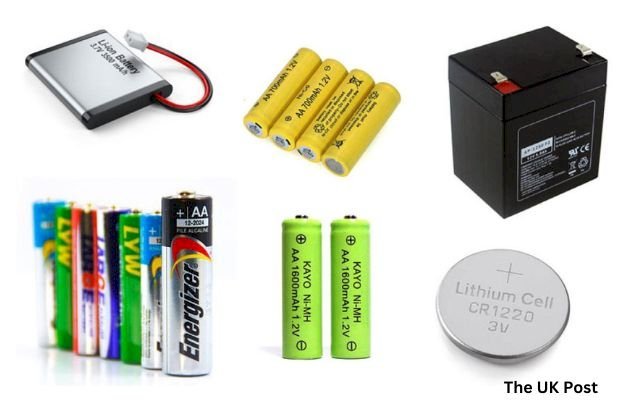
When compared to traditional batteries like lithium-ion, plasma battery technology offers several advantages. For one, plasma batteries are expected to have a longer lifespan, reducing the frequency of replacements. Additionally, they are more efficient at storing and transferring energy, which could lead to significant improvements in performance. However, traditional batteries are currently more affordable and widely available, giving them an edge in the short term.
- Plasma batteries offer longer lifespans and improved efficiency
- Traditional batteries remain more affordable and accessible for now
- The future could see a shift towards plasma batteries as technology advances
Industry Adoption and Market Potential
The adoption of plasma battery technology will depend on several factors, including cost, reliability, and industry support. Major industries like automotive, renewable energy, and electronics are likely to be early adopters if the technology proves to be viable. The market potential for plasma batteries is significant, with the global demand for efficient and sustainable energy storage solutions continuing to grow.
- Key industries likely to drive early adoption
- Significant market potential due to growing demand for sustainable energy solutions
- Plasma battery technology could become a dominant force in energy storage in the future
Is Plasma Battery Technology Real?
It is important to be clear: there is no widely available commercial plasma battery on the market today, and much of the discussion is speculative or at an early research stage. Plasma, an ionised gas, is used in battery manufacturing, for example to treat electrode surfaces and improve coatings, but that is different from a battery that stores energy using plasma. Treat bold claims about plasma batteries with caution until independent testing is published.
The Technologies Actually Powering Storage
Most energy storage today uses lithium-ion batteries, including lithium iron phosphate, which is common in home and grid storage because of its safety and long life. Sodium-ion batteries are emerging as a cheaper alternative, solid-state batteries promise higher energy density for vehicles, and flow batteries suit long-duration grid storage. These are the technologies to watch for real-world deployment.
Home Battery Storage In The UK
UK households increasingly pair solar panels with home batteries to store daytime generation for the evening. Installation should be carried out by a certified installer, and batteries need adequate ventilation and space. Compare usable capacity, warranty length and cycle life, not just price. For portable options, see our EcoFlow DELTA 3 review.
How To Judge New Battery Claims
When you read about a breakthrough battery, look for peer-reviewed research, independent testing, a working prototype at meaningful scale and a realistic timeline to production. Many lab breakthroughs take a decade or more to reach the market, and some never do.
How We Keep This Guide Up To Date
Rules, prices and services change, so we review guides like this regularly and update them when official sources change. Where the law or official guidance is involved, the relevant government or regulator’s website is always the final word, and it is worth checking there before making an important decision. If something here has changed, the official source will reflect it first.
A Quick Checklist Before You Decide
Before acting on anything in this guide, run through three quick checks. First, is the information current, and does it apply where you live in the UK, since rules often differ between England, Scotland, Wales and Northern Ireland? Second, have you compared more than one option or provider? Third, do you need professional advice for your specific situation? Taking ten minutes over these questions avoids most expensive mistakes.
Conclusion
Plasma battery technology represents a promising step forward in the world of energy storage. With its potential for improved efficiency, longer lifespan, and reduced environmental impact, it could revolutionize industries ranging from automotive to renewable energy. However, challenges remain, and further research and development are needed to bring this technology to the mainstream. As the world continues to seek sustainable solutions, plasma battery technology could play a crucial role in shaping the future of energy storage.
FAQ
What is plasma battery technology?
Plasma battery technology is an innovative energy storage solution that uses plasma, the fourth state of matter, to improve energy efficiency and battery lifespan.
How does plasma battery technology differ from traditional batteries?
Plasma batteries offer improved efficiency by reducing heat production, leading to longer battery life. They also have the potential to handle higher energy capacities compared to traditional batteries.
What are the potential applications of plasma battery technology?
Potential applications include electric vehicles, renewable energy storage, and portable electronics. Plasma batteries could enhance battery performance and efficiency in these industries.
What are the environmental benefits of plasma batteries?
Plasma batteries could reduce reliance on harmful materials and produce less waste, making them a greener alternative to traditional batteries.
What challenges does plasma battery technology face?
Challenges include high production costs, the need for further research to ensure safety, and development hurdles that must be overcome before widespread adoption.
What is the future outlook for plasma battery technology?
The future of plasma battery technology is promising, with ongoing research focused on improving affordability and efficiency. It has the potential to become a key player in sustainable energy storage solutions.