
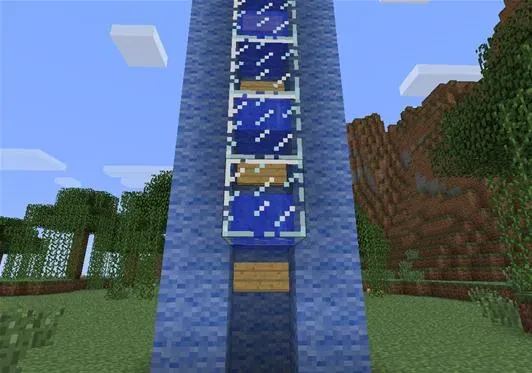
In Minecraft, creating efficient ways to move vertically is essential, especially when dealing with tall builds, underwater bases, or deep mines. One of the most useful tools for this purpose is a water elevator. It is easy to build, practical, and adds a unique element to your base. Using the game’s mechanics of water physics and bubble columns, you can create an elevator that lets you travel up or down quickly and safely.
In this comprehensive guide, we’ll show you how to make a water elevator in Minecraft, explain the materials you’ll need, provide step-by-step instructions, and even share advanced tips to take your elevator design to the next level. Whether you’re a beginner or an experienced player, this guide will help you craft the perfect elevator to suit your needs!
What Is a Water Elevator and Why Use One?

A water elevator is a vertical transportation system built using water, soul sand, and magma blocks. It relies on bubble column physics, which push players and mobs upward or downward depending on the block used. Here’s why water elevators are a popular choice:
- Speed: Faster than ladders or stairs.
- Convenience: Easy to enter and exit.
- Versatility: Can be incorporated into creative builds like underwater bases or skyscrapers.
Understanding the mechanics of water elevators will make building one much easier.
Materials You’ll Need

Before you start, gather the following materials:
- Water buckets: At least two.
- Soul sand block: Found in the Nether; used for upward movement.
- Magma block: Found in the Nether; used for downward movement.
- Kelp: Harvested underwater; used to convert flowing water into source blocks.
- Glass blocks (or other building blocks): For the elevator shaft.
- Signs or doors: To prevent water from spilling out.
How to Collect the Materials:
- Soul Sand and Magma Blocks:
Found in the Nether, typically in soul sand valleys or near lava pools. Use a diamond or netherite pickaxe for faster mining. - Kelp:
Found in oceans or underwater biomes. Break it with your hand or a sword. - Water Buckets:
Craft buckets with iron ingots and fill them from a water source. - Glass Blocks:
Smelt sand in a furnace to create glass. You can also use any building block if glass is unavailable. - Signs or Doors:
Crafted using wood planks.
Read Also: The Story Behind Minecraft (2009) Icons and Banners
Step-by-Step Instructions to Build a Water Elevator
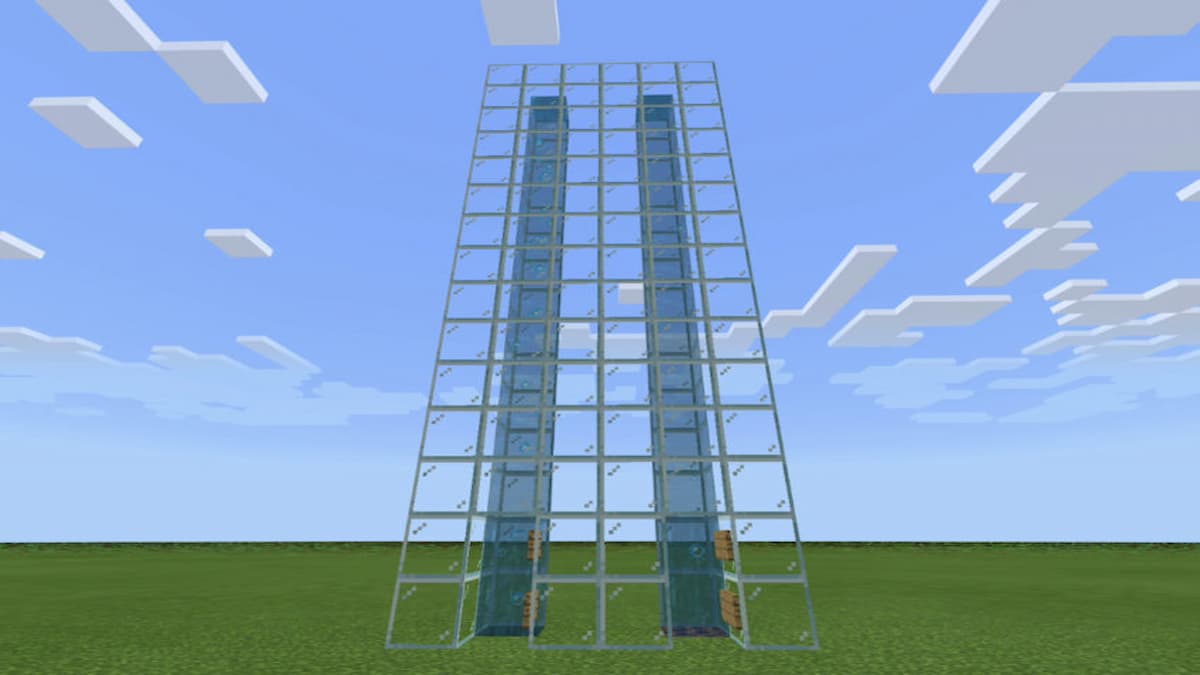
Follow these steps to create a working water elevator in Minecraft.
Step 1: Build the Elevator Shaft
- Choose a location for your elevator, ensuring it fits within your structure.
- Construct a vertical shaft using glass blocks or other materials.
- Make the shaft at least two blocks wide for easy movement.
Step 2: Add Water to the Shaft
- Place water source blocks at the top of the shaft.
- Use kelp to convert the flowing water into source blocks by planting it from the bottom to the top. Once done, break the kelp.
Step 3: Create the Bubble Columns
- Replace the bottom block of the shaft with soul sand for upward movement or a magma block for downward movement.
- Bubble columns will appear, pushing you upward or pulling you downward.
Step 4: Add Entry and Exit Points
- Place signs or trapdoors at the entrance to keep water contained.
- Create a platform at the top and bottom of the elevator for safe entry and exit.
Advanced Tips and Variations

1. Double-Shaft Elevators
- Build two adjacent shafts—one for upward movement (soul sand) and one for downward movement (magma block).
- This design is especially useful for large bases or multiplayer servers.
2. Hidden Water Elevators
- Conceal your elevator inside walls for a seamless look. Use blocks that match your build’s theme.
3. Underwater Bases
- Combine the water elevator with underwater bases by enclosing it in glass for a visually stunning effect.
4. Automation with Redstone
- Use redstone mechanisms to add automated doors or lights to your elevator for a high-tech look.
Read Also: Bobfusdie7.9 Download: How to Install, Features, and Player Stats
Troubleshooting Common Issues

-
Water Not Flowing Correctly:
- Ensure all water blocks are source blocks using kelp. Flowing water won’t create bubble columns.
-
Bubble Columns Not Forming:
- Check if soul sand or magma block is placed correctly at the bottom.
-
Water Spilling Out:
- Place signs or doors at the entrance to contain the water.
-
Difficulty Entering the Elevator:
- Expand the shaft to three blocks wide for more space.
Read Also: Creative Minecraft House Ideas You Can Build
Creative Uses for Water Elevators

-
Skyscrapers:
Use elevators to access different floors quickly. -
Mining Bases:
Build an elevator to travel between surface-level bases and deep mines. -
Transportation Hubs:
Create a network of water elevators to move between structures in your world.
The Core Mechanic In One Sentence
A water elevator works because of bubble columns: a column of water source blocks above soul sand pushes players and items upwards, while the same column above a magma block drags them down. Everything else in a water elevator design is about building a sealed column of source blocks so the bubbles run the full height. If an elevator is not working, the cause is almost always a missing source block or the wrong block at the bottom.
Why Your Elevator Is Not Working
Most failures have the same few causes. Flowing water instead of source blocks breaks the bubble column, so every block in the shaft must be a source, which kelp placed and then broken can help create quickly. Signs or doors placed incorrectly can let water out. A block at the very bottom other than soul sand or magma will stop the effect entirely. Check the column from the bottom up, one block at a time.
Getting Off Safely At The Top
The simplest exit is to leave the top of the shaft open into a room, so the upward current carries you out and you step off onto a floor. For a down elevator, make sure the bottom is safe to land on and that you can walk out of the column, since magma blocks damage players who stand on them without sneaking or suitable protection. Adding a door or sign to seal the water at the exit keeps the column clean.
Java And Bedrock Differences
Water elevators work in both main editions, but small behaviours can differ between Java Edition and Bedrock Edition, including how quickly entities rise and how some blocks interact with water. If a design from a video does not work in your world, check which edition it was built for. Keeping your game updated also matters, as mechanics are occasionally adjusted between versions.
Items And Mobs, Not Just Players
Bubble columns move items and mobs too, which makes them useful in farms and storage systems, lifting drops from a farm up to a collection point, for example. Some mobs cannot be moved in the same way, and designs for mob transport often need extra care. For more on the game’s history and its famous visual style, see our guides to Minecraft’s icons and banners and Minecraft house ideas.
Conclusion
Building a water elevator in Minecraft is a fun and functional project that enhances your gameplay. By following this step-by-step guide, you can create an efficient transportation system for your base. Whether you’re using it for practical purposes or as part of a creative build, a water elevator is a must-have tool in any Minecraft world.
Now that you know how to make a water elevator in Minecraft, it’s time to gather your materials and start building. Experiment with designs, troubleshoot common issues, and enjoy the convenience of fast vertical movement in your game!
FAQs
Q1: Can I use flowing water instead of source blocks?
No, bubble columns only form with source blocks. Use kelp to convert flowing water into source blocks.
Q2: Where can I find soul sand and magma blocks?
Both are found in the Nether, typically in soul sand valleys or near lava pools.
Q3: How do I prevent water from spilling out of the elevator?
Place signs or trapdoors at the entrance of the elevator.
Q4: Are water elevators faster than ladders?
Yes, especially when using soul sand bubble columns for upward movement.
Q5: Can I make a multi-floor water elevator?
Yes, by adding multiple entry points along the shaft, though it requires careful placement of water and blocks.