
Picture this. It is a chilly morning before work, and you walk outside with coffee in one hand and car keys in the other. Then you notice it — a tyre sitting lower than normal. Suddenly, your simple morning feels different. Or maybe it is a quiet Saturday in your garage and you finally decide to rotate your tyres or inspect your brakes. Most drivers have experienced that moment where they think, “This should only take a few minutes.” You pull out the jack, gather a few tools, and start working. But many accidents happen during these exact moments. Not because people are careless, but because comfort often creates shortcuts. That is exactly why learning proper car jack safety tips matters in 2026. Whether you are dealing with a roadside emergency or working at home, a few small safety habits can protect both you and your vehicle.
Not Every Car Jack Has the Same Story
A neighbour once bought a compact jack online because it looked affordable and had good reviews. A few days later, he rolled it toward his SUV and quickly realised something was wrong. The jack looked too small. It struggled with the vehicle’s size, and suddenly a “money-saving purchase” became a safety concern.
This happens more often than people think. Many drivers assume a jack is simply a tool that lifts a car. But different jacks serve different purposes. Scissor jacks usually come with many vehicles and are mainly designed for emergency tyre changes. Floor jacks and trolley jacks provide better stability and smoother movement, which is why many people prefer them for home garage use. Bottle jacks offer stronger lifting power and often work better for trucks and larger vehicles. Hi-Lift jacks are also popular among off-road enthusiasts because they can lift taller vehicles.
The wrong tool can create problems before the car even leaves the ground. Experienced mechanics often say preparation takes longer than the repair itself. Learning about equipment and using car-jacks safely at home can help drivers understand which tools make sense for their vehicle and work style.
The Ground Under Your Car Matters More Than Most People Realise
A driver once shared a story online about changing a tyre on a slightly uneven driveway. Everything looked stable at first. The jack was positioned carefully and the setup looked fine. Then the vehicle shifted slightly. Nothing serious happened, but that small movement instantly changed confidence into panic.
Many people focus entirely on the car itself and forget what sits underneath the jack. Even the strongest equipment cannot perform safely on weak or uneven ground. Gravel, dirt, grass, wet surfaces, and uneven pavement can cause movement or sinking.
For home garage work, a clean concrete floor is usually one of the safest choices. Drivers should also apply the parking brake and place the vehicle in Park or first gear before lifting. Experienced DIY mechanics often spend more time preparing the area than doing the repair itself.
According to Wrenchers, lifting on flat and stable ground significantly reduces the chances of unwanted vehicle movement.
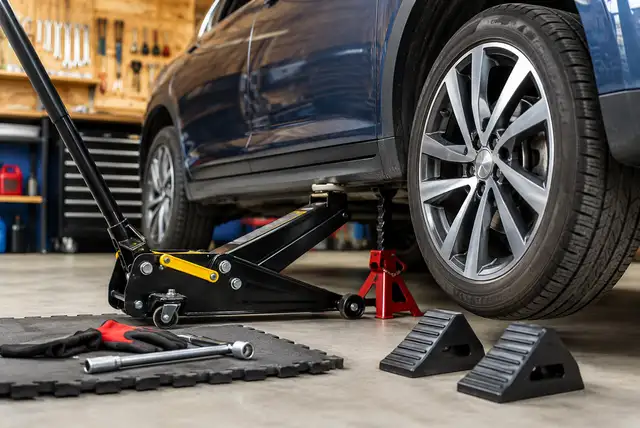
Many people also forget something simple but important: wheel chocks. Imagine lifting the front of a vehicle and seeing it roll slightly backward. That tiny movement can create panic instantly. Wheel chocks help stop that movement and create an extra layer of security. If lifting the front wheels, block the rear wheels. If lifting the rear, block the front.
Lifting Points Can Save You from Expensive and Dangerous Mistakes
Almost every beginner has experienced this thought at least once: “That part looks strong enough.” It feels logical. You slide underneath the car, spot a solid-looking metal section, and assume it can support the weight.
Unfortunately, vehicles do not work that way. Cars have specific lifting points designed to safely support weight. Manufacturers reinforce these areas because they know where pressure should be applied. These locations usually appear inside the owner’s manual and sometimes have visible markings underneath the side panels.
Using the wrong area can bend body parts, damage components, or create dangerous instability. Suspension pieces, oil pans, steering components, and random underbody sections should never be used.
According to Product Safety Australia, drivers should always use manufacturer-approved lifting points because they are specifically designed for safe support.
I have seen many DIY drivers spend hundreds on tools while skipping basic checks like lifting point locations. Ironically, a thirty-second check often prevents expensive repair bills.
Jack Stands Are the Quiet Heroes Most Drivers Ignore
Ask experienced mechanics about safety and many tell similar stories. Someone lifts a car and says, “I’ll only be under there for one minute.” Those words usually make professionals uncomfortable.
A car jack lifts a vehicle, but it is not built to support weight for long periods. Hydraulic systems can slowly lose pressure. Equipment can shift. Small movements can happen without warning.
That is where jack stands become incredibly important. Once the vehicle reaches the right height, lower it carefully onto properly placed stands. Then do something many experienced DIY drivers recommend — gently shake the vehicle. If movement exists, fix the setup before continuing.
Before every use, inspect equipment carefully. Check for hydraulic leaks, worn seals, bent metal, cracks, or visible damage. A jack should be treated like a ladder. You would never climb one with broken steps, and lifting equipment deserves the same attention.
Some mechanics also place removed wheels beneath the car as an additional backup safety step. Small habits often become the biggest safety measures.
The Common Mistakes Drivers Repeat Again and Again
Most repair accidents do not happen because a task becomes complicated. They happen because someone feels rushed.
Imagine finishing work after a long day and deciding to quickly inspect a strange wheel noise before dinner. You feel tired, the job seems small, and suddenly safety checks start feeling optional. That is usually when mistakes happen. Experienced mechanics often say people become careless not when jobs are difficult, but when jobs feel easy.
One person skips wheel chocks because the repair will take only five minutes. Another driver ignores load ratings because the jack “looks strong enough.” Someone else works beneath a vehicle supported only by a jack.
These shortcuts usually happen after people become comfortable. They tell themselves, “Nothing happened last time.” Unfortunately, accidents rarely send warnings first.
As reported by Race Ramps, planning the lifting setup carefully before beginning can improve safety and reduce avoidable mistakes.
The best car jack safety tips often sound simple: slow down, inspect your setup, double-check equipment, and never rush because you want to save a few minutes.
Home Garage Work Feels Comfortable, Which Can Create Hidden Risk
More UK drivers now handle simple maintenance at home. People save money by rotating tyres, changing filters, and handling small repair jobs in their garages.
People naturally relax in familiar places. When you have worked in the same garage many times before, it becomes easy to skip small checks without noticing.
A garage feels safe because it is familiar. You know where the tools sit. You know the floor. You have worked there before. That comfort can quietly make people ignore simple safety habits.
Good lighting matters. Organised tools matter. Clean floors matter too. Drivers often spend more time preparing the workspace than lifting the vehicle itself.
If you are creating a safer workspace at home, following garage safety practices at home can help make everyday DIY work safer and more organised.
Sometimes Safety Really Is About Five Extra Minutes
Think back to that person standing beside the car, holding a jack and thinking, “This should only take a few minutes.” Most people never expect problems before starting. Yet many situations come down to tiny decisions. Choosing the right tool. Using wheel chocks. Checking lifting points. Adding jack stands. Taking a few extra moments before rushing into the job.
Following proper car jack safety tips in 2026 is not about becoming overly cautious. It is about making sure you finish the job, put your tools away, wash your hands, and continue your day safely. Next time you pull out your tools, slow down for a moment. Those extra few minutes may become the smartest decision you make.
What is the safest type of car jack for home garage use?
Many drivers prefer floor jacks because they provide stronger stability and easier positioning. The right option still depends on vehicle size, weight, and the type of repair work.
Is it safe to work under a car supported only by a jack?
No. One of the most important car jack safety tips is avoiding work beneath a vehicle supported only by a jack. Always use properly placed jack stands.
What are vehicle lifting points?
Lifting points are reinforced sections under a vehicle designed to safely support weight during lifting. These locations are usually listed inside the owner’s manual.
Why do mechanics place wheels under a car after lifting?
Some experienced mechanics place removed wheels beneath the vehicle as an additional backup layer. While it should never replace jack stands, it can provide extra protection.
Should I inspect a jack before every use?
Yes. Check for leaks, cracks, bent metal, worn parts, or signs of damage before lifting. Small problems often become serious risks when weight is applied.
Why does a vehicle move while being lifted?
Movement often happens because of unstable ground, missing wheel chocks, incorrect lifting points, or poor equipment positioning.