
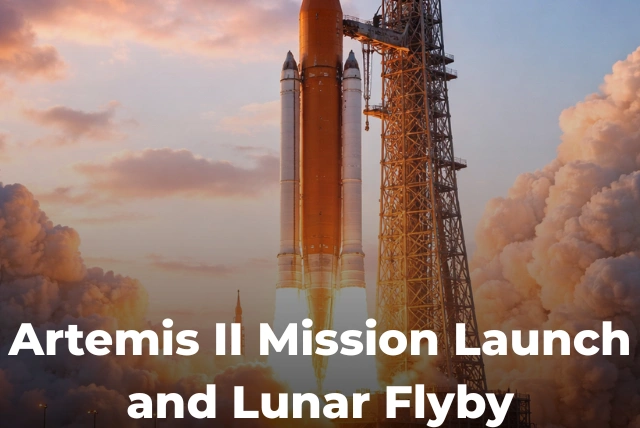
On a quiet evening, imagine looking up at the Moon and wondering what it would feel like to go there again—not in a movie, but for real. That same curiosity is now turning into reality with the Artemis II mission. After more than 50 years since humans last traveled toward the Moon, this mission brings back that old dream with a modern twist. Artemis II is not just a trending topic—it represents hope, progress, and a new chapter in space history. This time, it is not just about reaching space, but about testing, learning, and preparing for something even bigger. And for many people watching from Earth, it feels like history is about to repeat itself—but in a very different way.
A Mission That Feels Like Déjà Vu for Space Lovers
For those who grew up hearing stories of the Apollo missions, Artemis II feels familiar yet new. It is the first time in decades that astronauts will travel around the Moon again. According to The Guardian, this mission marks the return of human spaceflight to lunar distance after more than 50 years.
But this is not just a repeat of history. Artemis II is designed with modern technology, new goals, and a broader vision. It is part of a bigger plan that includes building a long-term presence on the Moon. For many people, watching this mission feels like reliving a moment they never experienced themselves—like being part of a story that once belonged only to the past.
The excitement is real. Families, students, and space fans around the world are waiting to see humans travel that far again. It is not just science—it is emotion, curiosity, and human ambition coming together.
What Makes Artemis II Different From Past Missions
At first glance, Artemis II may look like the Apollo missions, but the truth is very different. This mission is focused on testing systems, not landing on the Moon. According to NASA, the goal is to ensure that everything works perfectly before future landing missions begin.
Think of it like a final test drive before a long journey. Astronauts will check how the spacecraft performs, how systems respond, and how safe the mission really is. This step is important because future missions will carry even bigger risks.
In simple terms, Artemis II is about preparation. It is about making sure that when humans finally step on the Moon again, everything goes as planned. That makes this mission less about the destination and more about getting things right along the way.
The Crew That Represents a New Era
One of the most powerful aspects of Artemis II is its crew. This is not just another group of astronauts—it is a symbol of change. According to Reuters, the mission includes the first woman, the first Black astronaut, and the first Canadian to travel around the Moon.
This is a big moment. It shows that space is no longer limited to a small group of people. Instead, it reflects the diversity of the world we live in today. For young people watching, it sends a strong message—space is for everyone.
Imagine a child watching the launch and seeing someone like them going to space. That moment can inspire a lifetime of dreams. Artemis II is not just about science; it is about representation and hope.
The Power Behind the Launch: SLS Rocket
When Artemis II lifts off, it will do so with incredible force. The Space Launch System (SLS) is one of the most powerful rockets ever built. As reported by New York Post, this rocket plays a key role in sending humans back toward the Moon.
The scale of the launch is hard to imagine. The sound, the vibration, and the sheer energy make it one of the most dramatic moments in space missions. People watching from miles away can feel the impact.
This rocket is not just about power. It is about reliability and precision. Every part of it is designed to ensure that astronauts reach space safely. For engineers and scientists, it represents years of work coming together in a single moment.
Inside the Orion Spacecraft Journey
While the rocket grabs attention, the Orion spacecraft is where the real journey happens. According to NASA’s Artemis II overview, Orion will carry astronauts far beyond the Moon and safely back to Earth.
Inside Orion, astronauts will live, work, and test systems in deep space. It is like a small home traveling through the universe. Every button, screen, and system is designed to support human life in one of the harshest environments possible.
Imagine being inside a spacecraft, looking out at Earth from thousands of miles away. That experience is both exciting and humbling. Orion makes that possible, turning science fiction into real life.
The Lunar Flyby: A Close but Careful Approach
Artemis II will not land on the Moon, but it will come very close. The mission includes a lunar flyby, where the spacecraft travels around the Moon before heading back. According to Times of India, this approach allows NASA to test systems safely.
Think of it as circling a destination before deciding to land. This gives scientists valuable data without taking unnecessary risks. The mission will last around 10 days, covering a huge distance in space.
For viewers on Earth, it will be a thrilling moment. Watching humans travel around the Moon again brings a sense of wonder that is hard to describe.
Why Artemis II Matters More Than Ever
In today’s world, space missions are about more than exploration. They are about progress, cooperation, and future possibilities. According to Britannica, Artemis II is part of a larger plan to support future missions to Mars.
This mission helps test everything needed for long-term space travel. It also brings countries together, showing that space is a shared goal. The importance goes beyond science—it touches politics, education, and global collaboration.
For many people, Artemis II is a reminder that humanity still dreams big. It shows that even in challenging times, we continue to look beyond our planet.
The Cultural Impact of Artemis II
Not every mission captures public imagination, but Artemis II is different. According to Vogue, astronauts today are seen as modern explorers who inspire millions.
This mission connects with people on an emotional level. It is about curiosity, courage, and the desire to explore the unknown. Social media, news channels, and classrooms are all buzzing with excitement.
It also influences other areas of life. For example, advancements in technology from space missions often impact everyday tools, similar to trends discussed in digital entertainment and innovation-driven industries.
In many ways, Artemis II is not just a mission—it is a global event.
Technology and Innovation Inspired by Space
Space missions often lead to innovations that we use daily. Artemis II is no exception. From communication systems to advanced materials, many technologies developed for space find their way into everyday life.
For example, advancements in AI and automation can connect to topics like artificial intelligence in business. These technologies improve efficiency and decision-making across industries.
Even consumer tech, like smart glasses, reflects how innovation continues to evolve.
This shows that space exploration is not just about distant planets. It directly impacts how we live, work, and interact with technology on Earth.
What Comes Next After Artemis II
Artemis II is only the beginning of a bigger journey. The next mission, Artemis III, aims to land humans on the Moon. According to NASA, this step-by-step approach ensures safety and success.
The long-term goal is even bigger—building a sustainable presence on the Moon and eventually sending humans to Mars. Each mission builds on the last, creating a path toward deeper space exploration.
For those watching today, it feels like witnessing the early chapters of a much larger story. Artemis II is not the end—it is the start of something extraordinary.
How The Mission Went

Image source: pexels.com
Artemis II launched from Kennedy Space Center’s Launch Complex 39B on 1 April 2026, carrying commander Reid Wiseman, pilot Victor Glover and mission specialist Christina Koch of NASA, and mission specialist Jeremy Hansen of the Canadian Space Agency. It was the first crewed flight of the Space Launch System and Orion, and the first crewed mission beyond low Earth orbit since Apollo 17 in 1972.
Records Around The Moon

Image source: pexels.com
On 6 April 2026 Orion flew around the far side of the Moon, passing about 6,545 kilometres above the lunar surface. At its farthest point the crew was 406,771 kilometres from Earth, beating the distance record set by Apollo 13 in 1970 for the farthest humans have travelled from our planet.
Splashdown And What Comes Next

Image source: pexels.com
After a mission lasting just over nine days, Orion splashed down in the Pacific Ocean south-west of San Diego on 11 April 2026, and the crew were recovered safely by the USS John P. Murtha. The mission validated the spacecraft and procedures needed for future Artemis missions intended to return astronauts to the lunar surface.
Final Thoughts on Artemis II
The Artemis II mission is more than a journey around the Moon. It is a story of preparation, courage, and human progress. From its diverse crew to its advanced technology, every part of the mission reflects how far we have come. As we watch Artemis II unfold, it reminds us that exploration is part of who we are. And perhaps, the next time you look at the Moon, you will not just see a distant object—but a place we are ready to return to. Stay curious, because this is only the beginning.
FAQs About Artemis II
What is Artemis II mission?
Artemis II is NASA’s first crewed mission in the Artemis program. It will send astronauts around the Moon to test systems before future landing missions.
Will Artemis II land on the Moon?
No, Artemis II will not land on the Moon. It will perform a lunar flyby and return to Earth safely.
How long is the Artemis II mission?
The mission is expected to last around 10 days, including travel to the Moon and back.
Who are the Artemis II crew members?
The crew includes astronauts representing diversity, including the first woman and first Black astronaut to travel around the Moon.
Why is Artemis II important?
Artemis II is important because it tests critical systems needed for future Moon landings and prepares for long-term space exploration.
What comes after Artemis II?
The next mission is Artemis III, which aims to land humans on the Moon and continue NASA’s exploration goals.