
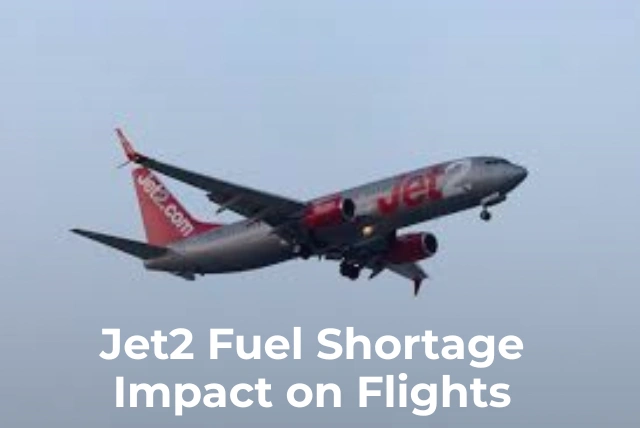
Is there a Jet2 fuel shortage? No. As of 12 October 2026, there is no confirmed Jet2 fuel shortage, and no credible report of Jet2 flights being cancelled because of one. Jet2 said in May 2026 that it expected to run its summer programme as normal. The fuel story that worried many holidaymakers was mainly about higher fuel prices, not fuel running out. If your flight is booked, check its status in your booking, and do not cancel because of a social media post.
Quick answer (last updated 12 October 2026)
- Jet2 fuel shortage confirmed? No.
- Jet2 flights cancelled because of fuel? No credible report found.
- Extra fuel surcharge on booked holidays? No. Jet2 said it removed the surcharge provision.
- Named UK airport with a Jet2 fuel problem? None confirmed.
- What to do: check your flight status and watch for official Jet2 emails or texts.
Jet2 Fuel Shortage: What We Know Right Now
Here is the position, split into what is confirmed and what is not.
| Claim | Status | What the evidence says |
|---|---|---|
| Jet2 has run out of fuel | Not confirmed | No Jet2, airport, CAA or major news source reports this. |
| Jet2 is cancelling flights due to fuel | Not confirmed | Airlines UK was reported as saying no flights were being cancelled due to fuel shortages. |
| Fuel prices rose in 2026 | Confirmed | Reports linked this to the Middle East conflict and disruption around the Strait of Hormuz. |
| Jet2 hedged most of its fuel | Confirmed | Reuters reported about 93% of annual fuel needs hedged (3 September 2026). |
| Jet2 added fuel surcharges | Not true | Jet2 said booked customers pay the price they were quoted. |
Are Jet2 Flights Being Cancelled Because of a Fuel Shortage?
No credible source shows Jet2 cancelling flights for this reason. The Times reported in May 2026 that airlines and industry bodies said holidays would go ahead, and that reports of fuel-related cancellations were incorrect.
That does not mean flights never run late. Delays still happen for everyday reasons such as weather and air traffic control restrictions. In September 2026, for example, Jet2 repatriated customers after a NATS air traffic control failure. That was a separate problem and had nothing to do with fuel.
Which Airports and Destinations Are Affected?
None have been confirmed. No reliable source names an airport with a Jet2 fuel supply problem, and there is no confirmed issue for Jet2 flights to Spain or the Canary Islands. Posts that name airports or resorts without a source should be treated as rumour.
One local event is worth knowing about. In early August 2026, Gatwick was reported to have a short technical fault at an airport fuel farm. It was reported as fixed quickly, with no cancellations, and it was not a national shortage.
What Has Jet2 Said About Its Fuel Supply?
Jet2’s main statement was published on 20 May 2026. You can read it in full on the official Jet2 fuel supply statement. In short, the airline said:
- Its fuel suppliers reported higher production and extra imports from areas not hit by the Middle East conflict.
- It planned to run its summer flying programme as normal.
- Customers would pay the price they booked at, and the surcharge provision was removed.
- If a cancellation did happen, customers would still get flexibility and quick refunds.
Why Did the Jet2 Fuel Shortage Rumours Start?
The worry began in April 2026. Industry bodies warned that Europe could face tight jet fuel supplies, linked to the Middle East conflict and problems around the Strait of Hormuz, a key route for global oil. Wider security headlines, such as reports of a US jet shot down in Iran and RAF jets scrambled near the UK, added to the anxiety.
Those April and May warnings were about possible problems. They were not proof of a real shortage, but the headlines still appear in search results today. That is why many people still believe the story is current.
How the 2026 fuel story developed
| Date | What happened |
|---|---|
| April 2026 | Warnings about possible tight jet fuel supply in Europe. Jet2 tells customers flights are planned to run as normal. |
| 19 May 2026 | CAA sends guidance to airlines on passenger rights if fuel-related cancellations happen. |
| 20 May 2026 | Jet2 says its summer is on, with no surcharges. |
| 22 May 2026 | The Times reports no flights being cancelled because of fuel shortages. |
| Early Aug 2026 | Short fuel farm fault reported at Gatwick, resolved with no cancellations. |
| 3 Sept 2026 | Reuters reports Jet2 has about 93% of its annual fuel hedged. |
Fuel Shortage vs Rising Fuel Prices: What Is the Difference?
These two things are often mixed up, and the difference matters for your holiday.
| Fuel shortage | Higher fuel prices | |
|---|---|---|
| What it means | There is not enough fuel at an airport to fill planes | Fuel is available but costs the airline more |
| Effect on flights | Delays or cancellations possible | Usually higher fares or fewer planned routes |
| Effect on you | Disruption on the day | Mainly the price you pay when booking |
| Status for Jet2 | Not confirmed | Confirmed as a wider industry issue |
Prices can rise even when supplies are fine. Crude oil costs feed into jet fuel prices, and our guide to what crude oil is and why its price moves explains the link in plain terms.
How Fuel Hedging Protects Jet2
Hedging means locking in a fuel price in advance. It protects an airline from sudden price jumps. It does not create extra fuel, so it is a cost tool, not a supply tool. Reuters reported that Jet2 had about 93% of its annual fuel needs hedged at an average of $753 per tonne.
Jet2 annual fuel needs hedged
Hedged: about 93%
Not hedged: about 7%
Average hedged price: $753 per tonne. Source: Reuters, 3 September 2026.
Are Other UK Airlines Affected?
Coverage in 2026 also mentioned easyJet, Ryanair, TUI, British Airways and Virgin Atlantic. The main concern for all of them was the cost of fuel. The available reports do not show a shared event where these airlines cancelled flights because fuel ran out. Each airline’s position can differ, so always check your own booking.
What Should You Do If Your Jet2 Flight Is Delayed or Cancelled?
- Check your flight status on the Jet2 website or app before you leave for the airport.
- Read your emails and texts. Jet2 says it tries to email customers about changes known more than 48 hours ahead.
- Contact Jet2 only through official channels, using details from your booking confirmation.
- Keep receipts for reasonable costs, such as food or a hotel, while you wait.
- Do not cancel your holiday because of a rumour. Cancelling yourself can affect what you get back.
Our Jet2 review covering flights, holidays and baggage is useful if you want to know more about how the airline works before you fly.
Jet2 Refunds, Rebooking and Compensation Rules
If Jet2 cancels your flight, the airline must offer a refund or an alternative flight. It must also give you meals, and a hotel if you are stuck overnight. Jet2 also says a refund may be available if your flight is delayed by more than five hours and you choose not to travel.
Compensation is separate. Under UK261, fixed payments depend on the distance of your flight, but they are not paid in every case.
UK261 fixed compensation by flight distance (when eligible)
Most Jet2 holiday routes from the UK to Europe fall in the first two bands. Compensation may not apply if you were given enough notice or the cause was outside the airline’s control.
Would a Fuel-Related Cancellation Qualify for Compensation?
It depends on the facts. In its May 2026 letter to airlines, the CAA noted that airlines would typically be expected to give at least 14 days’ notice of planned cancellations, in which case fixed compensation would not apply. The CAA says each case is judged on its own cause and the airline’s response, so nobody can promise a payout in advance. See the CAA’s flight delay and cancellation guidance for the official rules, and our piece on flight cancellation advice for practical tips.
What If Your Jet2holidays Package Is Cancelled?
A package holiday (flight plus hotel) is treated differently from a flight-only booking. The tour operator is responsible for the whole trip. If it cannot go ahead as booked, you should be offered an alternative holiday or a refund. ATOL protection also covers you if the company fails. Check your booking confirmation for the exact protection, and see the ABTA website for package holiday advice. Jet2 has not published a package-specific fuel notice, so follow its standard disruption guidance.
| Booking type | Who is responsible | Your main options |
|---|---|---|
| Flight only | Jet2 as the airline | Refund or alternative flight, plus care while you wait |
| Package holiday | Jet2holidays as the tour operator | Alternative holiday or refund, with ATOL protection |
How to Check Your Jet2 Flight Status Today
- Open the Jet2 website or app and use your booking details.
- Look at your departure airport’s official updates.
- Watch for emails and texts from Jet2.
- Check again on the day you travel, before leaving for the airport.
For help with packing and planning around possible delays, see our travel essentials checklist and these smart travel hacks.
How to Avoid Fuel Shortage Scams and Fake News
No Jet2-specific fuel refund scam has been confirmed, but rumours like this are often used by scammers. Stay safe by following these steps:
- Do not trust cancellation posts that name no source.
- Never click refund links in unexpected messages.
- Never share card details with an unverified account.
- Use only the contact details in your booking confirmation or on the official Jet2 website.
If you are still deciding where to go, our list of cheap European trips may help you plan with more flexibility.
Final Verdict on the Jet2 Fuel Shortage
There is no confirmed Jet2 fuel shortage as of 12 October 2026. The story grew from early 2026 warnings and higher fuel prices, and Jet2 has said it expects to operate normally. Check your own booking, rely on official updates, and keep your receipts if anything does go wrong. We will update this page if the situation changes.
FAQs
Is there a Jet2 fuel shortage today?
No. As of 12 October 2026, no credible source confirms a Jet2 fuel shortage.
Are Jet2 flights cancelled because of fuel shortages?
No credible report shows this. Airlines UK was reported as saying no flights were being cancelled for this reason.
Will my Jet2 holiday go ahead as planned?
Jet2 has said it plans to operate normally. Check your booking before you travel, as any change would be sent to you directly.
Is there a jet fuel shortage in the UK?
Not a confirmed physical one. Reports in 2026 described supply risk and higher costs, not UK airports running dry.
Will Jet2 charge extra because of higher fuel prices?
Not on existing bookings. Jet2 said customers pay the price they booked at and that it removed the surcharge provision.
Which UK airports are affected by fuel shortages?
None are confirmed for Jet2. A short Gatwick fuel farm fault in August 2026 was reported as fixed quickly.
Can I get a refund if Jet2 cancels my flight?
Yes. You should be offered a refund or an alternative flight, plus meals and a hotel if you are stuck overnight.
Can I claim compensation for a fuel-related cancellation?
It depends on the cause and how much notice you got. The CAA says each case is judged on its own facts.
Are Jet2 flights to Spain and the Canary Islands affected?
No fuel-related problem has been confirmed for either.
Where can I check Jet2 flight status today?
Use the official Jet2 website or app, and check your departure airport’s updates too.