
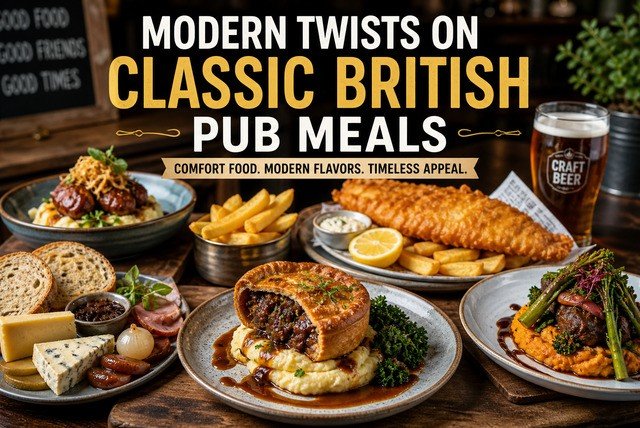
On a rainy evening in London, a young couple walked into what looked like a traditional pub. They expected the usual—fish and chips, maybe a pie. But when the food arrived, something felt different. The fish was lighter, the chips were crispier, and there was a surprising hint of herbs in the sauce. That moment captures a bigger shift happening across the UK. Modern twists on classic British pub meals are quietly transforming menus, blending nostalgia with innovation. These changes are not just about food—they reflect how people eat, think, and experience dining today. From cozy pubs to stylish gastropubs, the story of British comfort food is being rewritten in exciting ways.
The Shift from Traditional to Modern Pub Dining

Image source: pexels.com
Not long ago, pubs were known for simple, hearty meals served without much fuss. But today, walk into many British pubs and you will notice a clear change. The menus are more refined, the ingredients feel fresher, and the dishes look carefully presented. This shift did not happen overnight. As eating habits changed, pubs had to adapt to survive.
Many pub owners began noticing fewer customers, especially younger people who wanted better dining experiences. As reported by Time, the decline of traditional pubs pushed businesses to rethink their approach. Food became the center of this transformation. Instead of basic meals, pubs started offering reinvented British pub food that feels both familiar and exciting.
This change is not just about survival. It is about creating a place where people can enjoy comfort food in a modern way. Today’s pub dining is a mix of tradition and creativity, giving customers a reason to come back again.
How Gastropubs Changed the Game

Image source: pexels.com
A few years ago, the word “gastropub” started appearing everywhere. At first, many people did not understand what it meant. But once they experienced it, the difference was clear. Imagine walking into a pub and being served a dish that looks like it came from a fine dining restaurant, yet tastes like home.
Gastropubs brought a new level of quality to British pub food. Chefs began using better ingredients, trying new techniques, and focusing on presentation. According to Tastecard, gastropub menus combine comfort food with restaurant-quality cooking.
This shift changed expectations. People no longer go to pubs just for drinks. They go for the food experience. Gastropub modern British dishes are now a key part of the dining culture, offering meals that feel both comforting and refined.
Reinventing Fish and Chips for a New Generation
Fish and chips has always been a symbol of British food. But today, it is being reimagined in ways that surprise many diners. One chef in Manchester shared how customers often smile when they taste a lighter, crispier version of the classic dish.
The changes may seem small, but they make a big difference. Chefs are using fresh fish, experimenting with batters, and adding creative sides. According to National Geographic, this dish remains a staple, but modern versions focus on quality and detail.
These updated pub classics recipes keep the heart of the dish alive while making it more appealing to modern tastes. It is still fish and chips, but with a fresh identity that connects with today’s diners.
A Fresh Take on Shepherd’s Pie
For many people, shepherd’s pie brings back memories of family dinners and warm kitchens. But today, chefs are giving this classic dish a creative twist. Imagine a version topped with sweet potato mash or filled with plant-based ingredients.
These changes are not just about being trendy. They reflect a growing demand for healthier and more diverse options. As highlighted by Daily Dish, modern versions of traditional meals often focus on lighter ingredients and seasonal produce.
This approach keeps the dish comforting while making it suitable for different diets. It shows how contemporary British comfort food can evolve without losing its emotional connection.
The Modern Sunday Roast Experience
Sunday roast is more than just a meal—it is a tradition. Families gather, stories are shared, and the table feels complete. But even this classic is changing. Today, chefs are adding new flavors and creative touches to make it stand out.
Some restaurants now serve roast dinners with unique marinades or unexpected sides. According to BBC Good Food, modern twists often include global flavors while keeping the traditional base intact.
This balance is important. People still want the feeling of a Sunday roast, but they also enjoy discovering something new. It is a perfect example of how fusion British pub cuisine ideas are shaping the future of dining.
The Rise of Fusion British Pub Cuisine
One evening, a diner in London ordered a steak pie and was surprised by a hint of ginger and soy in the sauce. It was unexpected, but it worked beautifully. This is the power of fusion in modern pub cooking.
Chefs are now mixing British recipes with global flavors, creating dishes that feel both familiar and exciting. According to Opulence Magazine, combining British and Asian influences is becoming a popular trend.
This approach opens up endless possibilities. It allows chefs to experiment while still respecting tradition. Fusion is not about replacing classics—it is about giving them a new voice.
Simple Dishes Like Ploughman’s Lunch Get an Upgrade
The ploughman’s lunch has always been simple and satisfying. Bread, cheese, and pickles—nothing fancy. But today, even this humble dish is getting a modern makeover.
Now, you might find artisan bread, premium cheeses, and creative additions on the plate. According to Serious Eats, modern versions focus on variety and high-quality ingredients.
This shows that even the simplest dishes can evolve. By improving quality and presentation, chefs turn everyday meals into something special without losing their charm.
How Home Cooks Are Adopting These Trends
It is not just restaurants that are changing. Home cooks are also exploring modern twists on classic British pub meals. A busy parent might try a quicker version of a traditional dish using pantry staples.
Many people now look for simple ways to upgrade their meals. Recipes like one-pan British dinners using pantry staples show how easy it is to bring these ideas home.
Others prefer quick comfort meals such as 5-ingredient British recipes for busy evenings. These approaches make modern cooking accessible to everyone, not just professional chefs.
The Role of Presentation and Experience
Today, food is not just about taste. It is also about how it looks and feels. Walk into a modern pub, and you will notice the difference immediately. Plates are carefully arranged, and every detail matters.
This focus on presentation comes from the influence of fine dining. It turns a simple meal into an experience. People enjoy sharing photos, talking about the food, and remembering the moment.
This shift shows that modern British dishes are not just about flavor. They are about creating memories. It is a small change that makes a big impact on how people connect with food.
Why These Changes Matter for the Future
The evolution of British pub food is more than just a trend. It reflects how society is changing. People want better quality, more variety, and new experiences when they dine out.
By updating classic dishes, pubs can stay relevant and attract new customers. At the same time, they preserve the traditions that make British food unique. This balance is what makes modern pub cuisine so exciting.
It is clear that reinvented British pub food is here to stay. It offers something for everyone—comfort, creativity, and a sense of connection.
Calorie Labelling On Menus

Image source: pexels.com
Since April 2022, large food businesses in England with 250 or more employees, including pub chains, must show calorie information on menus. Many independent pubs now do the same, and lighter versions of pub classics, such as grilled rather than battered fish, are increasingly popular.
Allergen Rules

Image source: pexels.com
Pubs must be able to tell customers if dishes contain any of the 14 major allergens, such as gluten in batter, mustard in dressings and celery in stocks. Clear menus and trained staff build trust with customers who have allergies.
Cutting Food Waste

Image source: pexels.com
Using whole ingredients, running specials with surplus stock, offering smaller portions and letting customers take leftovers home reduce waste and costs. For more food ideas, see our guide to the best pizza in Manchester.
Conclusion
That rainy evening in the pub was not just about a meal—it was about experiencing something familiar in a new way. Modern twists on classic British pub meals are doing exactly that across the UK. They are keeping traditions alive while opening the door to creativity and innovation. Whether you are dining out or cooking at home, these changes make British food more exciting than ever. If you have not tried these updated classics yet, now might be the perfect time to explore and rediscover your favorites.
FAQs
What are modern twists on classic British pub meals?
They are updated versions of traditional pub dishes that include new ingredients, better presentation, and global flavors. These changes keep the original taste but make the meals more appealing to modern diners.
Why are British pub meals being reinvented?
Pubs are adapting to changing customer preferences. People now want healthier, more creative, and high-quality food, which has led to the rise of reinvented British pub food.
What is gastropub modern British food?
Gastropub food combines traditional pub meals with restaurant-quality cooking. It focuses on fresh ingredients, creative recipes, and better presentation.
Can I try these modern pub dishes at home?
Yes, many updated pub classics recipes are simple to make at home. Using better ingredients and small changes can help you create contemporary British comfort food easily.
Is fusion British pub cuisine popular?
Yes, fusion cuisine is growing fast. Many chefs mix British dishes with global flavors, creating unique and exciting meals that attract modern diners.