
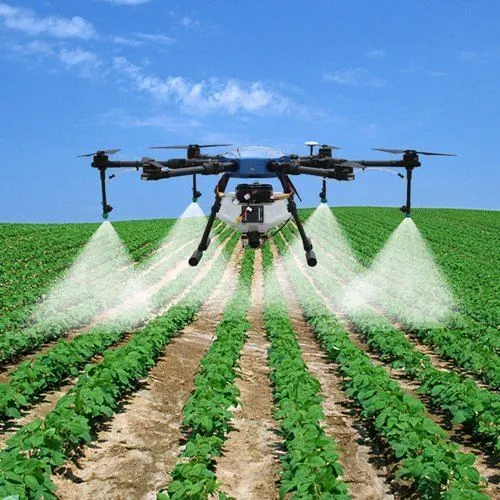
Farming is changing fast. As global population grows and environmental pressures rise, farms must work smarter, not just harder. That’s where agriculture technology companies come in. These firms build machines, sensors, software, data platforms and biological solutions that help farms increase yield, reduce waste, and adapt to climate change.
In 2026, agriculture technology companies are more than a trend — they are essential partners for modern farms. From autonomous tractors and digital fields to carbon-sequestering programs, these companies are transforming agriculture. This article presents eight of the most impactful agriculture technology companies today — who they are, what they do, why they matter — so you can understand how they are shaping farming now and what to watch for next.
Market Context for Agriculture Technology Companies

Image source: Pinterest.com
To appreciate what’s at stake, consider the broader market trends. The global agritech market is projected to nearly reach USD 48.98 billion by 2030, growing at around 12.3% CAGR. This growth is driven by demand for precision farming, sustainable methods and digital solutions.
At the same time, venture funding has been uneven. For example, agrifoodtech VC funding fell by nearly 49% in 2023 to about USD 15.6 billion, and in 2024 investment was around USD 16 billion — showing the sector is under pressure but still active.
These figures show two things: first, the opportunity for agriculture technology companies is large; second, those companies must deliver real value to thrive in a cautious funding climate.
1. John Deere (USA)

Image source: Pinterest.com
John Deere, founded in 1837 and based in Moline, Illinois, is among the oldest agriculture equipment makers. Today it is one of the most advanced agriculture technology companies in terms of combining hardware, autonomy and connectivity.
What stands out:
-
In January 2025 at the CES trade show, John Deere revealed a second-generation autonomy kit for large tractors that uses computer vision, 16-camera arrays and AI-based navigation.
-
The autonomy kit supports retrofitting existing tractors (8R, 9R, 9RX series).
-
The company emphasizes addressing labour shortages and improving efficiency through fully autonomous machines.
Why it matters:
John Deere is a clear example of how a traditional equipment manufacturer has evolved into a full-stack agriculture technology company. Farms working with Deere can access higher levels of automation, which matters especially for large operations with scale pressure and labour scarcity.
2. Indigo Agriculture (USA)

Image source: Pinterest.com
Indigo Agriculture, headquartered in Boston, Massachusetts, focuses on biology (seed treatments, microbial solutions) and digital platforms (carbon credit programs, sustainability tracking). It is one of the agriculture technology companies pushing into newer domains of agtech.
What stands out:
-
Indigo’s “Carbon by Indigo” program allows farmers to generate soil-based carbon credits via regenerative practices; in April 2025 the company had issued hundreds of thousands of such credits.
-
On 27 May 2025, Indigo announced that Microsoft committed to purchase 60,000 soil carbon credits from Indigo.
-
The platform links agribusinesses, buyers and farmers, enabling crop improvements and new revenue streams for farms.
Why it matters:
Indigo shows that agriculture technology companies are expanding beyond machinery into sustainability, biology and data-led revenue models. For farms looking to improve soil health, participate in carbon markets, or add digital layers, Indigo is a strong example.
3. Bayer CropScience (Germany)

Image source: Pinterest.com
Bayer CropScience, part of the Bayer Group (Leverkusen, Germany), is one of the global players among agriculture technology companies, combining seeds, crop protection chemicals, and digital farming services.
What stands out:
-
Bayer provides integrated solutions for seed genetics, crop protection, and digital farming via platforms like Xarvio.
-
As regulation and sustainability pressure grows, Bayer’s digital and service offerings help farms optimise input use and reduce environmental impact.
-
Because Bayer operates globally, it offers reach and scale to many farm types and geographies.
Why it matters:
For many farms, especially medium to large scale, partnering with an agriculture technology company that offers both inputs and digital tools simplifies operations. Bayer’s model shows the benefits of integration across seed, protection and data.
4. Trimble Inc. (USA)

Image source: Pinterest.com
Trimble Inc., with headquarters in Sunnyvale, California, is one of the agriculture technology companies specialising in precision agriculture: GPS guidance, sensors, mapping, data management and software solutions.
What stands out:
-
Trimble’s hardware and software help farms implement variable-rate seeding, fertiliser and irrigation through mapping and sensor data.
-
The company enables smaller step-changes in technology adoption — not full autonomy, but improved efficiency and data insight.
-
For agriculture technology companies focused on digital field mapping, connectivity and software rather than heavy machinery, Trimble is a key example.
Why it matters:
Not every farm is ready for full automation. Many benefit from precision tools and data. Trimble demonstrates how agriculture technology companies serve a broad market with manageable investment and strong ROI potential.
5. AGCO Corporation (USA)

Image source: Pinterest.com
AGCO Corporation (based in Duluth, Georgia) is another major equipment manufacturer that qualifies as an agriculture technology company by blending machinery with digital precision tools and connectivity services.
What stands out:
-
AGCO’s Fuse® platform offers connectivity, telematics and smart machine features alongside conventional agricultural equipment.
-
The company is delivering solutions suitable for large farms that want to migrate from traditional to smart-farm operations.
-
By offering both equipment and digital services, AGCO meets the definition of an agriculture technology company serving mid- to large-scale operations.
Why it matters:
For farms that already own conventional machines but desire an upgrade path, an agriculture technology company like AGCO offers a flexible route — incremental rather than radical change.
Read Also: Top 10 Solar Energy Companies: Reviews, Costs & Global Guide
6. Solinftec (Brazil)

Image source: Pinterest.com
Solinftec (based in Brazil) is among the agriculture technology companies leading in robotics, AI and operational automation for large farms, especially in Latin America.
What stands out:
-
Solinftec’s technology includes autonomous field robots (Solix) that scout, monitor and act in real-time across large farm areas.
-
The firm serves large acreage operations where labour is scarcer and scale matters.
-
Its presence in Latin-America demonstrates how agriculture technology companies are expanding beyond North America and Europe into emerging-market contexts.
Why it matters:
Scale and automation matter for very large farms or farms in remote regions. Solinftec shows how agriculture technology companies can deliver autonomous operations even where infrastructure and labour are constrained.
7. Cropin Technology Solutions (India)

Image source: Pinterest.com
Cropin (based in Bengaluru, India) is one of the agriculture technology companies focusing on digital platforms, data analytics and small-to-medium farm adoption — particularly in emerging markets.
What stands out:
-
Cropin uses satellite imagery, weather data, farm-level sensors and analytics to provide a smart agriculture platform for farms and agribusinesses.
-
Because many farms in Asia and Africa are smaller and fragmented, Cropin’s model shows how agriculture technology companies can scale digitally across many farms rather than heavy hardware per farm.
-
Its presence emphasises that innovation from agriculture technology companies is not just for large farms in the West, but for global food-systems.
Why it matters:
If your interest is in adopting technology in emerging-market farms or smaller-scale operations, agriculture technology companies like Cropin offer more accessible models than fully automated machinery.
8. CNH Industrial / (via Raven Technologies) (USA/Global)

Image source: Pinterest.com
While not purely a standalone precision-software company, CNH Industrial has integrated the precision-ag tech firm Raven Industries (acquired in 2021) and thus qualifies among agriculture technology companies by offering advanced input-management and automation systems.
What stands out:
-
CNH Industrial completed its acquisition of Raven Industries in November 2021 for ~USD 2.1 billion, giving it advanced precision agriculture and autonomous capabilities.
-
Farms using CNH brands can benefit from Raven’s tech in sensor-based application, inputs management and automation.
-
This reflects how agriculture technology companies are being built by mergers of traditional equipment plus precision-tech.
Why it matters:
The acquisition shows how consolidation is happening: agriculture technology companies may be younger firms acquired by large players. For farms, working with a stable large company that has advanced tech means lower risk.
Agritech In The UK

Image source: pexels.com
British farming is a growing market for agricultural technology. The Genetic Technology (Precision Breeding) Act 2023 created a new framework for gene-edited crops in England, and government farming innovation funding supports robotics, sensors and data projects. Environmental schemes that pay farmers for practices such as cover cropping and soil monitoring are also pushing demand for precise measurement tools.
How Farmers Should Judge New Technology

Image source: pexels.com
Before investing, farmers should ask who owns the data a system collects, whether it works with existing machinery from other brands, what the running and subscription costs are, and how quickly it is likely to pay back through lower input costs or higher yields. Trials on part of the farm and advice from independent agronomists reduce the risk of expensive mistakes. For more on UK business technology, see our guide to the future of transport technology.
Conclusion
In 2026, the role of agriculture technology companies is clear and growing: they help farms become more efficient, productive and sustainable. From John Deere’s autonomous tractors to Indigo’s carbon-sequestering programs, from precision tools by Trimble to digital platforms by Cropin, these eight companies show a wide spectrum of how technology is changing farming.
The market opportunity is large (USD 48.98 billion by 2030) but also competitive and selective — agriculture technology companies must show measurable value to thrive. Farms, agribusinesses and investors benefit by identifying the right tech partner: one that fits scale, geography, budget and goals.
Before you adopt technology from any agriculture technology company, ask: What problem am I solving (labour, yield, soil health)? What is the ROI and risk? How will it scale in my region and farm size? With the right choice, the right company and the right tech, farming in 2026 can be smarter, leaner and more resilient.
FAQs
Q: What are agriculture technology companies?
A: These are firms that build and offer technological solutions for farming — including machines, sensors, software, data platforms, biological treatments and services — which help farms operate smarter and more efficiently.
Q: Why is this important now?
A: Farms face rising input costs, labour shortages, climate challenges and pressure to produce more with less. Agriculture technology companies give tools to meet those pressures: precision, automation, data-driven decisions, sustainabilty.
Q: Are these solutions only for large farms?
A: No. While many agriculture technology companies target large commercial farms, many (such as Cropin) serve small- and medium-scale farms in emerging markets. The right company and model depend on farm size, infrastructure and budget.
Q: What should a farm look for when choosing a technology company?
A: Key criteria:
-
Clear value (yield gain, cost reduction, risk mitigation)
-
Fit with your farm scale, region and infrastructure
-
Proven track record and vendor reputation
-
Data access, ownership and interoperability
-
Return on investment and payback time
-
Local support and training
-
Sustainability credentials (soil health, water use, emissions)
Q: What is the outlook for agriculture technology companies?
A: Strong. Adoption is accelerating, especially in emerging markets. Technologies such as robotic systems, digital twins, farm-service platforms, carbon programs and biologics will drive next wave of growth for agriculture technology companies.