
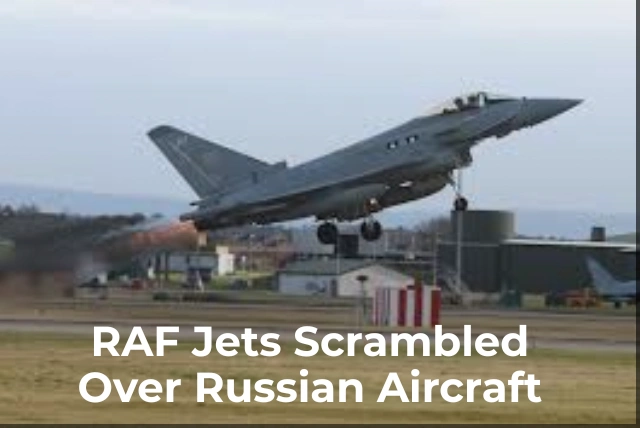
It was just another quiet morning over the North Sea—until radar screens lit up. Within minutes, RAF jets scrambled, engines roaring into the sky, cutting through clouds toward an unknown presence. For most people on the ground, nothing felt different. But behind the scenes, a tense and carefully controlled operation was already underway. This is not a rare movie-like moment—it’s a real, repeated event that shows how closely the UK watches its skies. When reports of Russian aircraft near UK airspace emerge, the response is immediate and precise. The phrase “raf jets scrambled” may sound routine, but every mission carries urgency, strategy, and a silent message between nations.
A Sudden Alert That Changes Everything
Imagine sitting in a control room, watching calm radar lines suddenly shift. That’s often how these incidents begin. Within seconds, alarms sound and decisions must be made. RAF crews don’t have the luxury of time—they act instantly. According to The Guardian, RAF jets were scrambled twice in just one week after Russian aircraft approached UK-monitored airspace. It’s a reminder that these situations are not one-off events.
The pilots, already on standby, rush to their jets. There’s no panic, only training and focus. Within minutes, Typhoon fighters are airborne, heading toward a target they haven’t yet seen. This rapid response is what keeps the skies secure, even when tensions rise quietly in the background.
What Happens When RAF Typhoons Intercept
Once in the air, the mission becomes deeply personal for the pilots. They are no longer looking at radar dots—they are flying toward real aircraft with unknown intentions. As reported by The Independent, RAF Typhoons often intercept Russian bombers capable of carrying nuclear payloads. That alone adds weight to every second of the mission.
Pilots approach carefully, identifying the aircraft visually. There’s no aggression, just controlled observation. They may fly alongside, matching speed and direction, silently communicating presence. These encounters are tense but professional. No words are exchanged, yet both sides understand the message: you are being watched.
The Silent Power of Quick Reaction Alert
Behind every RAF jets scrambled moment is a system called Quick Reaction Alert. It operates 24 hours a day, every single day. Pilots live with the constant possibility that their routine could change in seconds. As highlighted by AirLive, jets can be airborne within minutes of detection.
This readiness is not just about speed—it’s about trust. The public may never see these missions, but they rely on them. The crews eat, rest, and wait, knowing that at any moment, they could be called to defend national airspace. It’s a quiet but powerful form of protection.
NATO’s Role in These High-Stakes Moments
These interceptions are not carried out alone. When RAF jets scrambled, they are often part of a wider NATO effort. According to LBC News, NATO countries work together to monitor and respond to aircraft near shared airspace.
This cooperation means that what happens near the UK can involve multiple nations. It’s like a neighborhood watch, but on a global scale. Each country contributes resources and intelligence, ensuring that no unusual movement goes unnoticed. It’s not just about defense—it’s about unity.
Why Russian Aircraft Keep Appearing
For many readers, the question is simple: why does this keep happening? The answer lies in strategy. These flights are often seen as a way to test response times and send signals. As noted by The Guardian, such encounters have been happening for decades, even during the Cold War.
Russian bombers usually stay in international airspace, which makes the situation complex. They are not breaking laws, but they are pushing boundaries. It creates a tense balance—one where every move is watched, but no one crosses the line.
RAF Lossiemouth: Where It All Begins
Most of these missions start from RAF Lossiemouth in Scotland. It’s a place where readiness is a way of life. Jets sit armed and ready, pilots nearby, waiting for the call. According to The Guardian, many recent scrambles have launched from this base.
For locals, the sound of jets taking off at high speed is not unusual. It’s a reminder that while daily life continues, something much bigger is always happening just beyond sight. The base plays a key role in keeping northern airspace secure.
Moments of Tension in the Sky
When two military aircraft meet mid-air, it’s not just routine—it’s intense. Pilots must stay calm, focused, and precise. According to The Independent, these encounters are handled professionally to avoid escalation.
There are no sudden moves, no aggressive actions. Just controlled flying and careful observation. It’s like two drivers on a narrow road—each aware of the other, both trying to avoid conflict. The difference is, this happens thousands of feet above the ground.
How Often Do RAF Jets Get Scrambled?
These incidents may sound rare, but they happen more often than people think. As reported by AirLive, there have been cases where RAF jets scrambled multiple times within just 48 hours.
This frequency shows how active and unpredictable airspace can be. It also highlights the importance of constant readiness. For the RAF, this is not an occasional task—it’s part of everyday operations.
The Bigger Picture Behind These Missions
Beyond the immediate action, these events reflect larger global tensions. They are not just about aircraft—they are about politics, strategy, and influence. According to LBC News, such missions are closely linked to ongoing tensions between NATO and Russia.
For readers interested in wider defence stories, you can explore related updates like recent US radar jet activity or incidents involving US jets in Iran. These stories connect to the same global picture of air defence and military readiness.
What It Means for Everyday People
For most people, life continues normally during these events. Flights land, cities move, and nothing seems out of place. But behind the scenes, a silent system is always active. As noted by The Guardian, these missions are routine but essential.
They ensure that any potential threat is identified early and handled safely. It’s a quiet reassurance that even when tensions rise, there are systems in place to protect the skies above.
How Quick Reaction Alert Works
Image source: pexels.com
The RAF keeps Typhoon fighters on Quick Reaction Alert around the clock, from RAF Lossiemouth in Scotland and RAF Coningsby in Lincolnshire, ready to launch within minutes. When unidentified aircraft approach UK airspace without flight plans or radio contact, crews are scrambled to identify and escort them, often supported by air-to-air refuelling tankers.
Why Russian Aircraft Are Intercepted

Image source: pexels.com
Russian military aircraft frequently fly in international airspace near the UK without filing flight plans or talking to air traffic control, which creates a safety risk for civilian flights. Interceptions are about identification and safety; the aircraft are usually escorted until they leave the UK’s area of interest, and such flights are not normally illegal.
Part Of NATO Air Policing

Image source: pexels.com
The UK’s air defence works alongside NATO allies, and RAF jets also deploy abroad on NATO air policing missions, including over the Baltic states and Eastern Europe. Shared radar pictures and allied cooperation mean aircraft are tracked long before they approach UK airspace.
Reading Defence News Carefully

Image source: pexels.com
Reports of scrambles can sound dramatic, but most interceptions end without incident. Official statements from the Ministry of Defence and the RAF are the most reliable sources for what happened. For more UK news explainers, see our look at how UK news presenters work.
Conclusion
Every time RAF jets scrambled, it tells a story of readiness, precision, and silent strength. These missions may happen far above us, but they play a crucial role in keeping the UK secure. From rapid takeoffs at Lossiemouth to tense mid-air encounters, each moment reflects a balance between caution and control. As global tensions continue, these responses remind us that protection doesn’t always make headlines—it often happens quietly, in the background. If you want to stay informed about such critical developments, keep following updates and understand the forces that work tirelessly to keep the skies safe.
FAQs
What does “RAF jets scrambled” mean?
It means fighter jets are quickly sent into the air to respond to a potential threat or unidentified aircraft. This is part of the RAF’s Quick Reaction Alert system, designed to act within minutes.
Why do RAF jets intercept Russian aircraft?
RAF jets intercept Russian aircraft to identify and monitor them when they approach UK or NATO airspace. These missions ensure safety and prevent any unexpected incidents.
Is UK airspace ever breached in these incidents?
In most cases, Russian aircraft stay in international airspace. RAF jets scrambled mainly as a precaution to monitor and escort them away if needed.
How fast can RAF jets respond?
RAF Typhoon jets can take off within minutes of an alert. Pilots remain on standby at all times under the Quick Reaction Alert system.
Are these interceptions dangerous?
They can be tense but are handled professionally. Pilots follow strict rules to avoid conflict while ensuring the situation stays under control.
How often do RAF jets get scrambled?
It varies, but there have been cases where RAF jets scrambled multiple times within days. It depends on activity near UK and NATO airspace.