
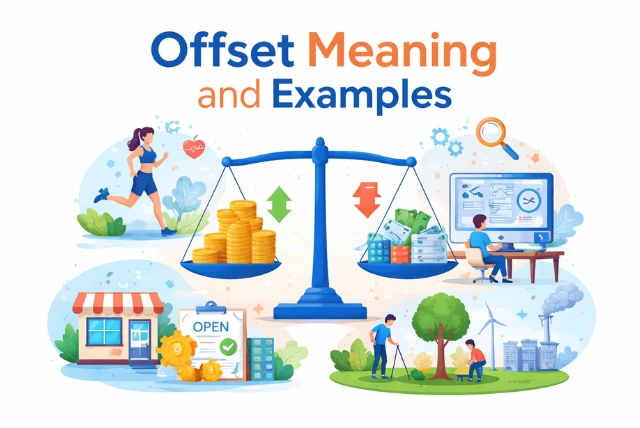
Have you ever had one of those days where everything seems to go wrong—until something small suddenly makes it better? Maybe you had a stressful morning, but a kind message from a friend changed your mood. That simple moment is a perfect way to understand the word offset. It’s a term we hear in finance, technology, and even everyday conversations, yet many people don’t fully understand what it means. So, what does offset really mean, and why is it used in so many different areas? Let’s break it down in a simple, real-life way so you can easily understand and use it in your daily life.
Offset Meaning: More Than Just a Word

Image source: pexels.com
Imagine losing money on something but then gaining it back somewhere else. That feeling of balance is exactly what offset means. In simple terms, offset is about reducing the impact of something negative by adding something positive. It’s not just a dictionary word—it’s something we experience all the time.
For example, think about rising living costs. When expenses go up, people often look for ways to offset them, like cutting spending or finding extra income. This everyday struggle shows how practical the concept is. According to Merriam-Webster, offset refers to something that serves as a counterbalance, helping to even things out.
This idea of balance is why the word is so widely used. Whether it’s money, emotions, or even time, offset helps bring things back into control.
What Does Offset Mean in Daily Life?
Think about a situation where you eat a heavy meal and later decide to go for a walk. That small action is your way of offsetting the impact of the meal. These everyday choices reflect how naturally we use this concept without even noticing.
Life is full of such balancing acts. A stressful job might be offset by a peaceful weekend. A bad day can be offset by good news. These moments show how offset works emotionally as well as practically.
As explained by the Cambridge Dictionary, offset means reducing the effect of something by having an opposite effect. This definition perfectly matches real-life situations where we constantly try to restore balance.
It’s not just a word—it’s a way people manage life’s ups and downs.
Offset Definition in a Practical Sense
Let’s bring this closer to real-world scenarios. Imagine a small business owner facing a loss one month but making a profit the next. That profit helps offset the earlier loss. It’s a simple but powerful idea that keeps businesses running.
This concept is also common in personal finance. Many people try to offset rising costs by saving money or finding better deals. It’s all about adjusting one side to balance the other.
According to Collins Dictionary, offset can mean a factor that cancels or neutralizes another factor. This shows how the term is not just about money but about any situation where balance is needed.
In reality, offset is less about perfection and more about managing change.
Offset Examples That Feel Real
Picture this: you had a long, exhausting day at work, but when you get home, your favorite show is waiting for you. That small moment of comfort offsets the stress you felt earlier. These everyday experiences make the idea of offset easy to understand.
Another common example is health. People often try to offset unhealthy habits by exercising or eating better later. It may not erase everything, but it helps reduce the impact.
As highlighted by Vocabulary.com, offset often describes something that makes a bad situation better by adding something positive. This explains why the word is so relatable.
Offset is not about removing problems completely—it’s about making them easier to handle.
Offset in Accounting: Balancing the Numbers
In the world of money, offset becomes even more important. Imagine checking your bank account and seeing both expenses and income. The goal is to ensure your income offsets your spending so you don’t fall into loss.
Businesses use this idea every day. They offset costs with revenue, and losses with gains. Without this balance, managing finances would be nearly impossible.
According to Dictionary.com, offset in finance can refer to reducing a debt or claim by another amount. This shows how deeply the concept is connected to financial stability.
Even in everyday life, people use this principle when budgeting and planning their expenses.
Offset in Computing: Understanding Position and Data
Now imagine opening a file on your computer. Behind the scenes, your system is locating data using something called an offset. It tells the system how far a piece of data is from a starting point.
This might sound technical, but it’s actually simple. Think of it like finding a house in a long street—you need to know how far it is from the beginning. That distance is the offset.
As explained on Wikipedia’s computer science page, offset represents the number of positions away from a base location. This concept is essential in programming and data storage.
Even if you don’t code, understanding this helps you see how technology organizes information efficiently.
Offset in Printing: A Hidden Process Behind Everyday Items
Every time you read a newspaper or open a magazine, you’re seeing offset printing in action. But most people never realize what happens behind the scenes.
Offset printing uses a special process where ink is transferred from a plate to a surface before reaching the paper. This indirect method creates clear and high-quality prints.
According to Label Planet, this method is widely used for large-scale printing like labels and packaging. It’s efficient and reliable, which is why it remains popular.
This is a great example of how the idea of “offset” goes beyond meaning—it becomes a real-world process.
Offset in Environment and Modern Life
In recent years, you may have heard about carbon offsetting. It’s a way people and companies try to balance the pollution they create by supporting environmental projects.
For example, someone might offset their carbon emissions by planting trees or investing in renewable energy. It’s not a perfect solution, but it helps reduce environmental impact.
According to Wikipedia, offset can also refer to compensation in environmental and economic contexts. This shows how the concept has evolved with modern challenges.
It’s a powerful reminder that offset is not just about numbers—it’s about responsibility and balance in the real world.
Why Understanding Offset Matters Today
In today’s fast-moving world, the idea of balance is more important than ever. Whether it’s managing money, handling stress, or understanding technology, offset plays a key role.
For instance, while reading about new tech like smart glasses innovations, knowing terms like offset can help you understand how systems are designed. Similarly, in everyday news like major product recalls, the idea of offset often appears in discussions about compensation and costs.
Understanding offset helps you make better decisions and see situations more clearly. It gives you a simple way to think about balance in a complicated world.
The Emotional Side of Offset We Often Ignore
Beyond numbers and systems, offset also works on an emotional level. Think about how people deal with disappointment. A kind gesture, a small success, or even a laugh can offset a tough moment.
Stories in the media, like BBC career journeys, often show how people balance challenges with achievements. These human experiences highlight the deeper meaning of offset.
It reminds us that life is not about avoiding problems but about finding ways to balance them. And sometimes, even a small positive moment can make a big difference.
Carbon Offsets

Image source: pexels.com
In environmental terms, an offset is a credit representing a reduction or removal of greenhouse gas emissions elsewhere, which companies and individuals buy to balance their own emissions. Quality varies widely, and UK regulators warn businesses that claims such as carbon neutral must be accurate and backed by evidence under consumer protection law.
Offset In Printing And Engineering

Image source: pexels.com
Offset printing transfers ink from a plate to a rubber blanket and then onto paper, and remains the standard for high-volume printed materials such as magazines and packaging. In engineering and design, an offset is a parallel displacement, such as an offset line in CAD drawings or an offset in wheel fitment, which affects how a wheel sits in the arch.
Offset The Rapper
Image source: pexels.com
Offset is also the stage name of Atlanta rapper Kiari Cephus, formerly of Migos. For his story, see our profile of Offset.
Conclusion
The word offset may seem simple at first, but it carries a powerful meaning across different areas of life. From balancing money in accounting to managing data in computing and even handling emotions in daily life, offset is all about restoring balance. We see it in small moments and big decisions alike. Understanding offset helps you look at challenges differently—not as problems to eliminate, but as situations to balance. So next time life feels uneven, remember this simple idea: sometimes, all it takes is one small positive step to offset the negative. And that can make all the difference.
FAQs
What is offset in simple terms?
Offset means to reduce or balance the effect of something. It can be used in daily life, finance, or technology to describe how one thing cancels out or improves another.
What does offset mean in accounting?
In accounting, offset refers to reducing one financial amount with another. For example, profits can offset losses, helping maintain balance in financial records.
What is offset in computing?
In computing, offset shows the position of data from a starting point. It helps systems locate and manage data efficiently in memory or files.
Why is offset important?
Offset is important because it helps create balance. Whether in money, emotions, or systems, it allows people and processes to manage differences effectively.
Can offset be used in everyday language?
Yes, offset is commonly used in daily conversations. People often use it to describe how one thing makes up for or reduces the effect of another.